
U.S. unemployment rate remained stable at 3.8% in March

/ Our Today
administratorJob gains were observed in health care, government and construction
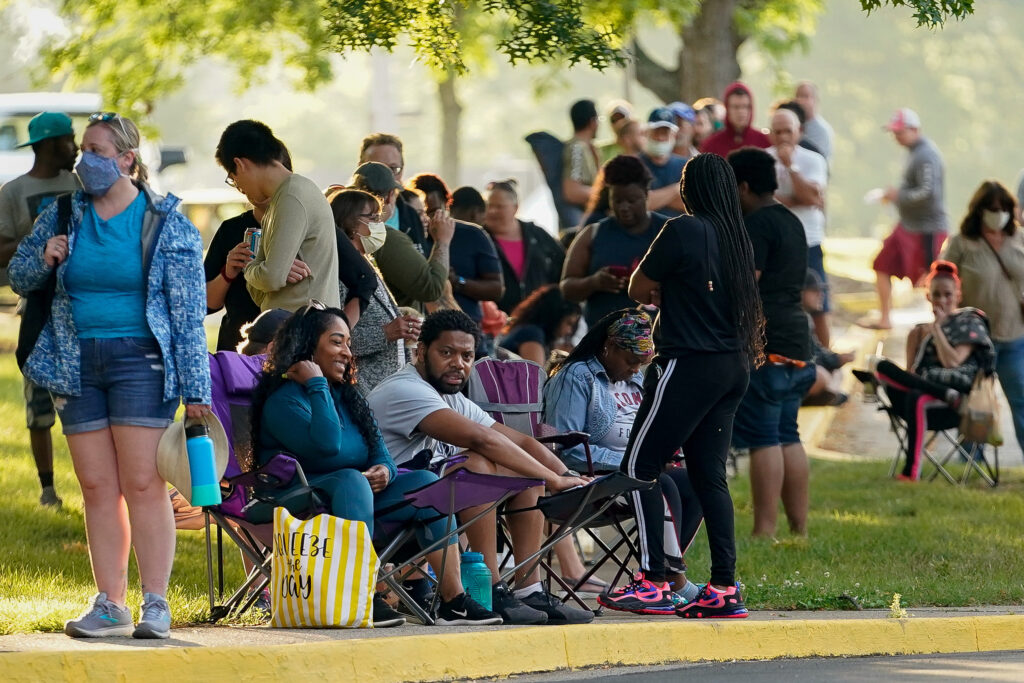
The U.S. Bureau of Labour Statistics (BLS) is reporting a 303,000 increase in the total nonfarm payroll employment in March, resulting in America’s unemployment rate remaining relatively stable at 3.8 percent for the month.
Job gains were observed particularly in sectors such as health care, government, and construction. The BLS says these findings based on two monthly surveys: the household survey, which assesses labor force status, including unemployment by demographic characteristics, and the establishment survey, which measures nonfarm employment, hours, and earnings by industry.
Household survey data

In March, the U.S. labour market displayed stability, with the unemployment rate holding steady at 3.8 per cent, and the number of unemployed individuals remaining at 6.4 million. These figures have remained within a narrow range since August 2023.
Among various demographic groups, the unemployment rate for Blacks increased, while it decreased for Asians and Hispanics. However, rates for adult men, adult women, teenagers, and Whites saw minimal fluctuations.
The number of long-term unemployed remained relatively unchanged, accounting for about 19.5 percent of the total unemployed population. Additionally, key metrics such as the labour force participation rate and the employment-population ratio showed little variation both over the month and compared to the previous year, indicating overall steadiness in the labour market.
In March, the number of individuals employed part-time for economic reasons remained relatively stable at 4.3 million, indicating little change in their situation of desiring full-time employment but working fewer hours or being unable to secure full-time jobs. Additionally, the number of people not in the labour force but seeking employment saw minimal fluctuation, with 5.4 million individuals expressing a desire for a job but not actively looking for work.
Among this group, the number of marginally attached individuals, who were available and seeking work but hadn’t actively searched in the past month, remained unchanged at 1.6 million, with 337,000 of them being discouraged workers who believed no jobs were available for them.
Establishment survey data
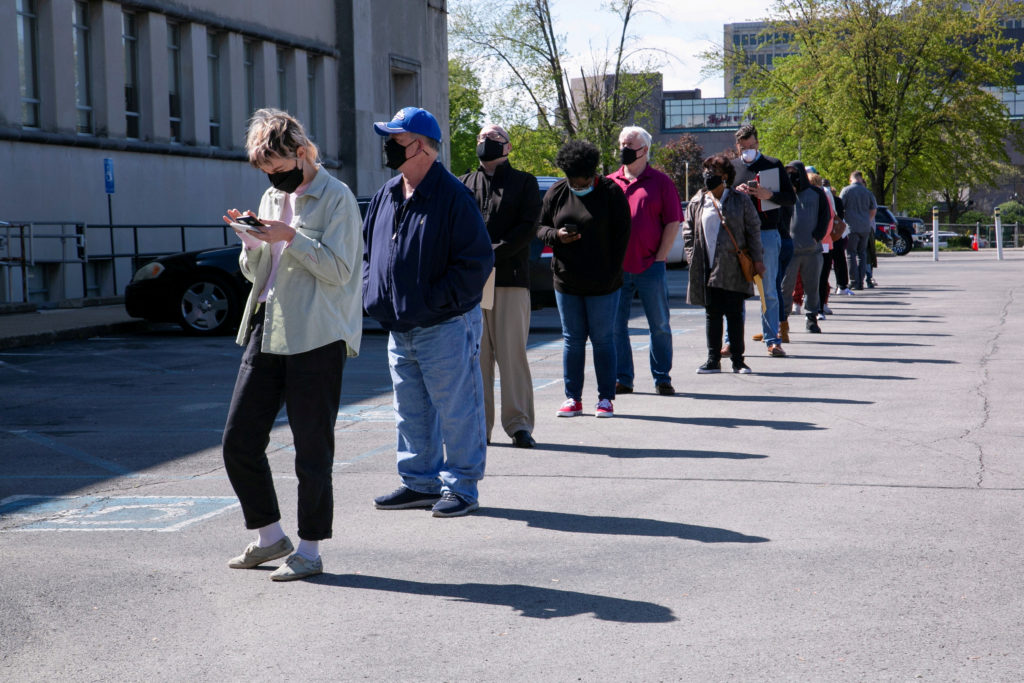
In March, total nonfarm payroll employment in the United States surged by 303,000, surpassing the average monthly gain of 231,000 observed over the past year. Notably, job growth was prominent in key sectors such as health care, government, and construction.
Health care saw an addition of 72,000 jobs, with notable gains in ambulatory healthcare services, hospitals, and nursing and residential care facilities. Government employment rose by 71,000, primarily driven by increases in local and federal government positions. Construction added 39,000 jobs, double the average monthly gain, largely attributed to growth in non-residential speciality trade contractors.
Sectors such as leisure and hospitality, other services, and social assistance also experienced employment increases. However, industries like retail trade saw minimal change in employment, with some subsectors reporting gains offset by losses. Overall, employment remained relatively stable in other major industries.
In March, there was a notable increase in average hourly earnings for all employees on private nonfarm payrolls, rising by 12 cents or 0.3 per cent to $34.69. Over the past year, there has been a significant uptick of 4.1 per cent in average hourly earnings.
Similarly, average hourly earnings for private-sector production and nonsupervisory employees also saw a modest increase, rising by 7 cents or 0.2 per cent to $29.79. Additionally, the average workweek for all employees on private nonfarm payrolls edged up slightly by 0.1 hours to 34.4 hours, while manufacturing saw no change in the average workweek, remaining at 40.0 hours.
Overtime in manufacturing decreased slightly by 0.1 hours to 2.9 hours. The average workweek for production and nonsupervisory employees on private nonfarm payrolls increased by 0.1 hours to 33.9 hours.





Comments