
Green paper charting development of Jamaica’s Culture, Entertainment and Creative Economy tabled in parliament

/ Our Today
administrator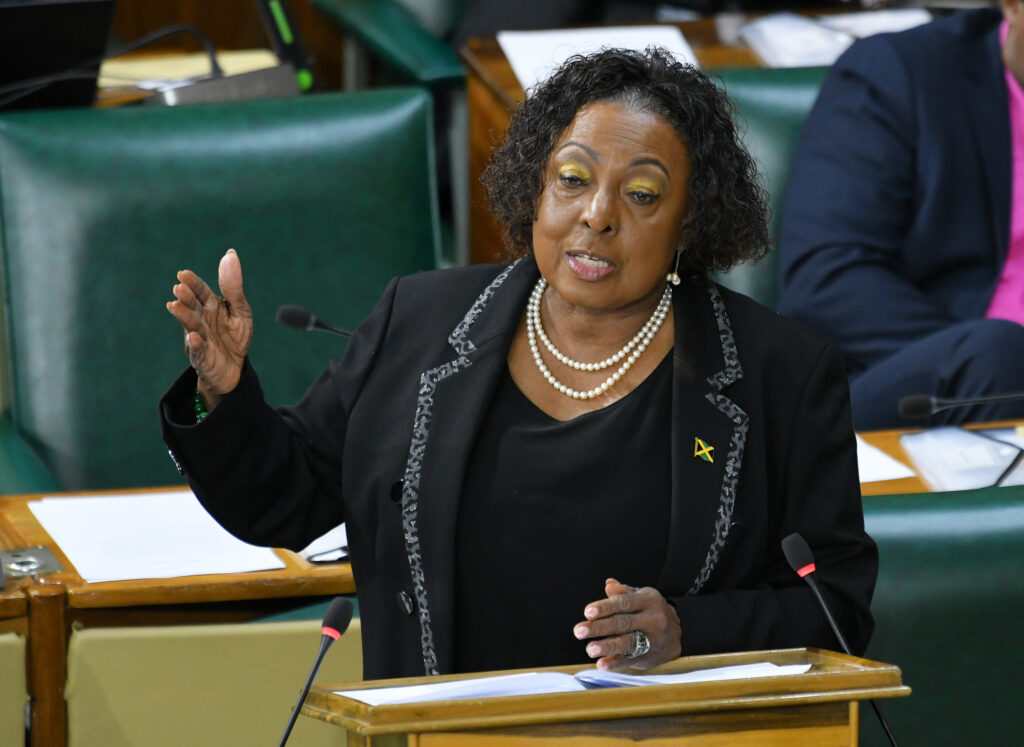
Durrant Pate/Contributor
The creation of Jamaica’s National Policy for Culture, Entertainment and the Creative Economy 2025 to 2035 is one step closer to reality with the tabling of a Green Paper towards its development in parliament yesterday.
Minister of Culture, Gender, Entertainment and Sport, Olivia Grange, who tabled the 88-page discussion paper highlighted that it will be the subject of discussion and consultation, as stakeholders “work together to secure for Jamaica, a transformative framework, which both preserves and promotes our rich culture and heritage, as a priority and unlocks the full potential of Jamaica’s vibrant creative sectors driving Jamaica’s cultural and creative sectors into a new era of accelerated human and economic development.”
She acknowledged the “Green Paper’s forward-looking approach, places a premium on a just and cohesive society, equity and inclusivity, empowered communities, preservation of our rich heritage, respect for cultural diversity and cultural expressions. The instrument embraces and promotes innovation, as well as the leveraging of frontier technologies that power our creative economy within an ethical framework, and likewise focuses on sustainability and resilience for culture, entertainment and the creative economy.”
The Green Paper reflects a bold and visionary design, shaped by ongoing consultative processes with cultural experts and Entertainment, Culture and Creative Industry (ECCI) practitioners, who are positioned at the heart of Jamaica’s human and economic development, recognising their power as engines of human and socio-economic development and transformation. It encapsulates a number of benefits and protections which will enshrine safeguards around the Jamaica Entertainers and Creatives Insurance Plan, which provides both health and life insurance for our entertainers, creatives and cultural practitioners; undergirds incentives around tools of trade, facilitates preferential and free movement of entertainers, creatives and cultural practitioners, strengthening the sector through the recognition, integration and sustainability of associations within the sector.
According to Minister Grange: “This Green Paper is more than a policy document; it is a foundation for other dedicated culture and entertainment-related sub-policies as well as guidelines, and a blueprint for a thriving, innovative Jamaica where Culture, Entertainment, and the Creative Economy are measured, valued and cherished as vital forces for Jamaica’s wellbeing and sustainable prosperity. This Green Paper phase provides an important opportunity to engage further, listen carefully, and refine our collective vision to ensure it reflects the hopes and aspirations of all Jamaicans and we look forward to this final part of the process, and acknowledge it as fundamental to securing the necessary broad-based support and an effective implementation pathway…., the Green Paper we lay before this House today charts a future where our people and culture are at the heart of economic transformation, social cohesion, and national pride.”
Significant contributor to national development
Jamaica’s creative economy is already a significant contributor to national development, generating over 5% of Gross Domestic Product (GDP) and supporting nearly 3% of employment. This performance places Entertainment, Culture and the Creative Industries (ECCIs) alongside tourism, construction, and agriculture as vital pillars of our economy. The impetus of this policy design is to accelerate sustainable socioeconomic development and growth through the provision of an enabling environment for the ECCIs with a strategic plan to address capacity building, investment needs, and infrastructure requirements.
This is in addition to providing for effective governance frameworks, strengthening regimes for data collection and intellectual property rights protection, as well as increased public access to them; target the elimination of barriers to trade; and increase support to the Sector in favour of safeguarding the status and mobility of the artist and anchoring sustained, vibrant, and thriving industries. The government is confident that this policy construct, complementary legislative action and diligent implementation will be a critical success factor in transforming people’s lives, communities, society and economy.
This represents a key part of the administration’s overall strategy for achieving Jamaica’s Vision 2030 and global Sustainable Development Goals. Central to this plan is the establishment of the Institute for Cultural Practitioners, Innovators, Entertainers and Creatives (ICPIEC) and a Jamaica Entertainment and Cultural Development Foundation that will provide a dedicated and sustainable funding mechanism. The draft policy document prescribes that the ICPIEC will serve as a centre of innovation and excellence, with culture and heritage-focused offerings, along with cutting-edge, flexible education and professional development opportunities in a wide array of creative disciplines, including arts, digital technology, archaeology, gastronomy, and creative entrepreneurship.
Role of the two new organisations
The ICPIEC will provide the full range, by leveraging local and international partnerships, envisaged to include our Universities and Colleges to champion human development, reinforcing the holistic nature of Jamaica’s creative ecosystem. The government will be providing an institutional architecture that values and strengthens our cultural identity, prioritises cultural resource management, nurtures talent and prepares our creatives for global competition. The micro credentialling model being developed will allow cultural practitioners and creatives to continue to earn while upskilling to the highest levels of certification.
To complement this, the establishment of a Jamaica Entertainment and Cultural Development Foundation will provide a dedicated and sustainable funding mechanism. With its status as a charity, this Foundation will mobilise and direct investments from government, Diaspora, and private donors, supporting infrastructure development, event and programme-centred funding and fundraising, and institutional support—all crucial to the sector’s expansion and sustainability.
The policy, when developed, will treat with the sustainability and advancement mechanisms of the Festival economy, which will impact our community, national, regional and international festivals.
Entertainment, Culture and Creative Economy Act being developed
In addition to these initiatives, the government is also advancing the promulgation of an Entertainment, Culture and Creative Economy Act. This crucial legislation will streamline government engagement with the sector, safeguard the rights and interests of creatives, encourage private sector collaboration and incentivise the Sector. It will enable us to formalise the industry, measure, monitor and value its contribution, and ensure policies remain adaptive to technological, economic, and social trends.
The Green Paper emphasises cultural preservation alongside economic growth, promoting inclusivity, innovation, and sustainability, as the government commits to strengthening its programmes designed to ensure local and international recognition of our rich tangible and living heritage, building on inscriptions Jamaica has received including in the last year the revival Pilgrimage to Watt town and the Archaeological Landscape of 17th Century Port Royal, and protections and other benefits to be derived from ratification of international conventions.
Another important feature of the forward thrust is the intention to fully institute a robust disaster risk management strategy that ensures the sectors are responsive to the increasing effects of climate change. It provides for leveraging frontier technologies such as artificial intelligence and digital tools to empower creatives and protect our unique cultural identity that defines and fuels Brand Jamaica.






Comments