
UWI Cave Hill warns shrinking workforce is capping Barbados’s growth ceiling

/ Our Today
administrator
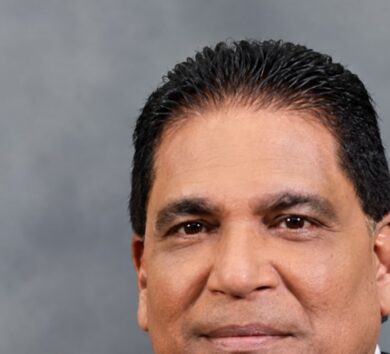
Barbados’s economy may be running up against a structural speed limit, not from weak demand, but from a labour force that is shrinking faster than productivity is rising, a senior University of the West Indies economist warned this week.
UWI Cave Hill Deputy Principal Professor Winston Moore told an audience at the Jacqueline Wade Conference Room that Barbados’s labour force contracted by roughly 2,700 people in the first half of 2026, driven largely by retirements outpacing new hires. The remarks came as UWI and the Human Resource Management Association of Barbados signed a memorandum of understanding aimed at aligning university programmes with employer skill needs.
Moore said labour productivity has grown by an average of just 0.8 per cent a year since 2018, even as the economy has posted more than twenty consecutive quarters of growth and unemployment has fallen to around 6 per cent. With the labour pool now contracting, he argued that modest productivity figures could effectively become the ceiling on future output.

“Growth in output comes from two sources: more workers, or more output per worker,” Moore said. “We are running out of the first. If productivity continues to grow at 0.8 per cent while the labour force contracts, then 0.8 per cent is close to our long-run speed limit, whatever we write in a development plan.”
The stakes are high for an economy this concentrated. Services employ 86 per cent of working Barbadians, according to Moore, which he said makes workforce management and human resources practice a direct driver of national competitiveness rather than a secondary concern. He argued that much of what economists label the unexplained productivity residual is, on closer inspection, a management question: how work is organised, how quickly new hires become effective, and whether good employees have reason to stay.
Moore positioned UWI Cave Hill as central to any response, noting the university produced 1,274 graduates last October across seven faculties, teaching a student body of roughly 6,600. He described the school’s curriculum choices as decisions that “show up so directly in the productivity statistics” years later, once graduates enter the workforce.

Under the new agreement, HRMAB gains a formal role in shaping the programmes that train HR professionals and broader workplace-readiness curricula, while its members offer UWI students placements and mentorship. Moore proposed the partnership’s first joint initiative be an annual skills-demand review, intended to tell the university what employers need and tell the country whether its graduate pipeline is meeting that need.
HRMAB president Tisha Peters cited the World Economic Forum’s Future of Jobs Report 2025 in framing the scale of change ahead, noting employers expect close to 40 per cent of workers’ existing skills to be transformed or become outdated by 2030. She said the shift was not simply about jobs disappearing but about existing professions, including HR, finance and healthcare, being practised differently as digital tools spread.
The warning adds a labour-supply dimension to a set of workforce pressures already surfacing elsewhere in the region, from succession and retention concerns at Trinidad’s First Citizens Bank to contraction in Jamaica’s outsourcing sector. Unlike those cases, Barbados’s challenge is framed less around displacement than around an ageing, shrinking pool of workers in an economy still expanding on the demand side.





Comments