
Ricardo Smith | Jamaican school education: Getting it right from the start

/ Our Today
administrator
The beginning of a new academic year presents schools with more than an opportunity to welcome students back to the classroom.
It is an opportunity to establish the tone, expectations and systems that will shape the months ahead. As Jamaica begins the 2026-27 academic year, schools must therefore resist the temptation to simply continue with the routines of the previous year. If we want different and better outcomes, we must be intentional about how we plan, communicate and execute our responsibilities from the outset.
Planning is perhaps the most important starting point. Every school is expected to develop an operational plan to guide its activities and priorities. However, such a plan should be more than an administrative requirement. It should provide a practical roadmap for teaching and learning, student development, discipline, staff development, parental engagement and the overall management of the institution.
For this to happen effectively, planning cannot be confined to the principal and a small group of administrators. Teachers, middle managers, boards and other relevant stakeholders should understand the priorities of the school and their respective responsibilities. When people are included in the planning process, they are more likely to understand, support and take ownership of the decisions that are made.

This becomes particularly important when we consider some of the recurring conflicts that emerge at the beginning of the school year. Disagreements over uniforms, grooming, discipline, attendance and parental expectations can quickly consume valuable time and create tension between schools and families. Many of these situations can be minimised when expectations are clearly established and communicated before problems arise.
The recent national discussion about student grooming provides a useful example. Senator Dr. the Honourable Dana Morris Dixon, Minister of Education, Skills, Youth & Information, has emphasised that students are expected to follow the rules established by their schools. At the same time, she has stressed the importance of schools having written grooming policies, communicating those policies to parents and clearly outlining the consequences for breaches.
This approach is sensible. Rules should not be a surprise to students or parents. Schools should ensure that their grooming policies are properly developed, approved through the appropriate governance structures and communicated clearly before disciplinary issues arise. Parents should know what is expected, students should understand the standards and teachers should be able to enforce the rules consistently.
Importantly, however, maintaining standards does not mean that schools should lose sight of the child. The Ministry’s direction towards keeping students in school while dealing with grooming and uniform breaches requires institutions to consider constructive alternatives to exclusion. A disciplinary response should correct behaviour without unnecessarily disrupting a child’s access to education.

This requires consistency, fairness and good judgement. Rules should be applied equitably and should take into consideration the purpose for which they were established. School policies must also remain culturally relevant and respectful of students’ dignity. Discipline is most effective when students understand not only the consequence of breaking a rule but also why the rule exists.
Having established the importance of order and discipline, schools must then turn their attention to what should ultimately remain their central responsibility — teaching and learning.
The start of the academic year is the ideal time for curriculum implementation teams and subject departments to examine student performance from the previous year and identify areas requiring improvement. Educational decisions should not be based solely on assumptions or tradition when schools have access to performance data that can help identify specific weaknesses.
If students are struggling with reading comprehension, mathematical reasoning, writing, scientific concepts or other foundational skills, those challenges should be identified and addressed at the departmental level. Professional development, intervention programmes, instructional strategies and additional support should be aligned with the needs identified through the data.
In other words, data should not simply be collected to complete reports. It should inform what happens inside the classroom.
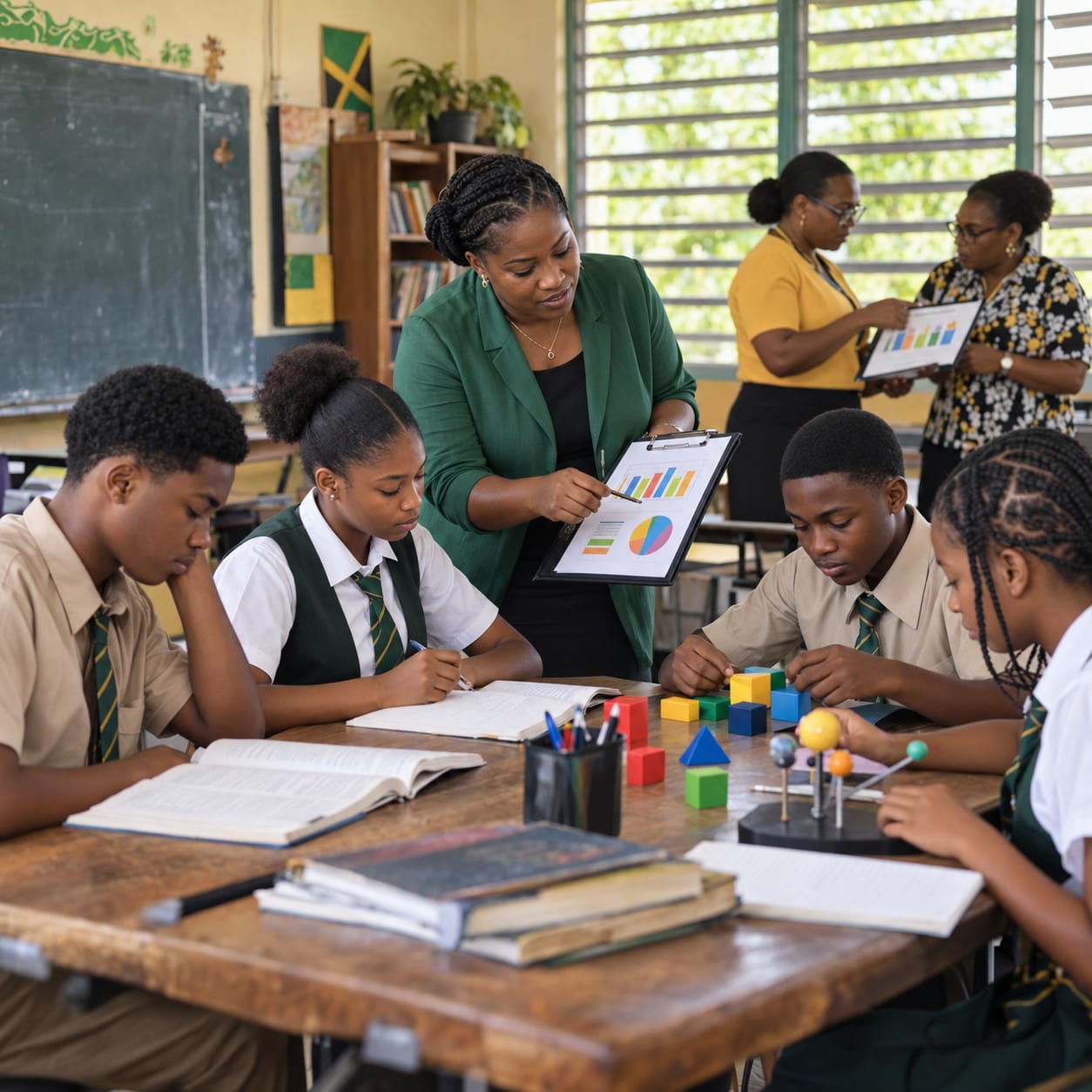
The same principle applies to student behaviour. Schools should examine their disciplinary patterns and determine where recurring problems exist. If particular behaviours are concentrated among certain grades, groups or circumstances, administrators should seek to understand the underlying factors and develop appropriate interventions. Discipline should not merely respond to problems; it should also seek to prevent them.
Yet schools cannot do this work successfully without parents.
Education is a partnership, and meaningful parental involvement can significantly strengthen student outcomes. However, parental involvement must be structured in a way that supports, rather than disrupts, the operation of schools. This is why every institution should seek to establish or strengthen a functional Parent-Teacher Association.
A properly functioning PTA provides an organised avenue through which parents can raise concerns, receive information and participate in school life. Schools, meanwhile, should establish clear protocols for parental communication and visits. Parents should know how to make a complaint, whom to approach and how concerns can be escalated when necessary.
At the same time, these protocols must not become barriers to parental engagement. Schools should not interpret structure as exclusion. The objective should be to create an environment in which parents can communicate their concerns respectfully while teachers and administrators can perform their responsibilities without unnecessary disruption.
Ultimately, getting the academic year right requires more than good intentions. It requires systems, consistency and shared responsibility.
Students must understand what is expected of them. Teachers must understand the academic priorities. Administrators must communicate clearly and lead consistently. Parents must respect established procedures while remaining active partners. Boards must provide effective oversight, and the Ministry must provide clear policy direction and support.
Most importantly, the values that schools promote must be reflected in how they operate. Respect, responsibility, discipline, integrity, accountability and excellence cannot simply be words printed in a handbook or displayed on a wall. They must become part of the everyday culture of the institution.
As we embark on another academic year, we should therefore avoid waiting for predictable problems to become crises before responding. The time to establish expectations is before conflict emerges. The time to identify academic weaknesses is before examination results expose them. The time to strengthen the relationship between parents and schools is before disagreements escalate.
The 2026-27 academic year is still in its early stages. We have an opportunity to establish a culture of planning, accountability, respect and excellence from the beginning.
If we communicate clearly, use evidence to guide our decisions, enforce rules fairly, engage parents constructively and keep teaching and learning at the centre of everything we do, we can create schools that are not merely open, but organised, purposeful and ready to serve every child.
Let us not simply start another academic year. Let us start it right.
Ricardo E. Smith, JP is a Senior Educator & Social Scientist at Manchester High School. He is also Board Chairman at Porus Infant, Principal Director, R.Smith Scholars Institute, an author, and researcher






Comments