Garfield “SirG” Goulbourne | Unplanned fuel costs burning the pockets of vehicle buyers

/ Our Today
administrator
In recent times, several brands of new vehicles, fresh to our environment, now populate our local space. Various social media platforms show the surprise and concern that many buyers of these vehicles express regarding how much they have to spend on fuel.
What often happens, especially for many first-time buyers, is that when these people purchase a vehicle, the focus is mainly on the sale price and not much else. As a matter of fact, many people just see it as a win to get the best sale price and do not have much consideration for their post-purchase vehicle-related expenses, which are consistently in rotation.
Especially for those using credit, many are not even sufficiently schooled in finance to shop around to get the best credit terms in the market for the combination of monthly payment and the percentage of processing fee. This is a key step to observe, given that, for most persons, new vehicles are long-term purchases.
But prior to even securing credit, it would be prudent for automobile purchasers to do thorough research on these potential assets that are expected to be held long-term. If not carefully considered before the vehicle purchase and properly planned out, fuel costs may become problematic.
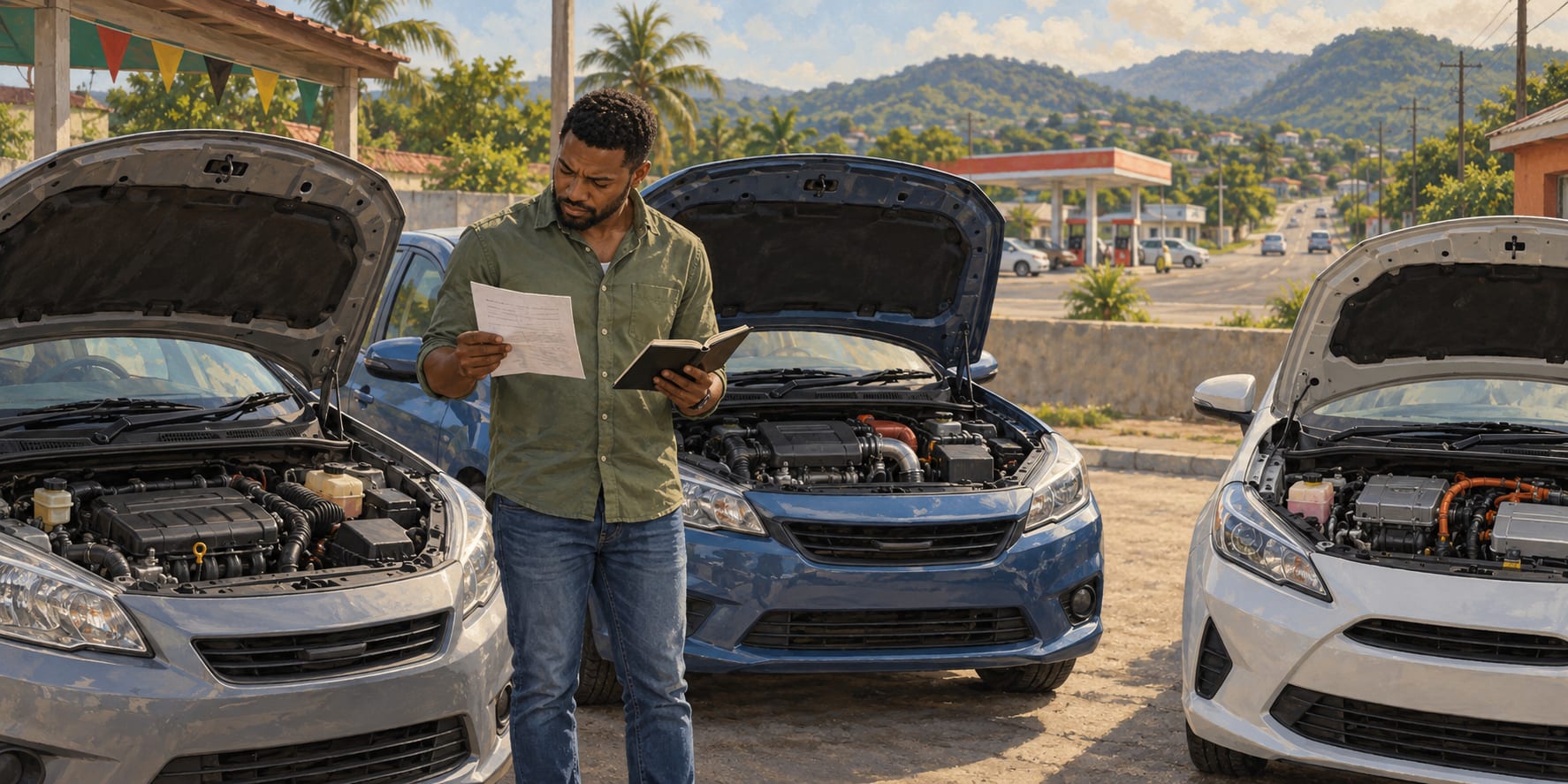
Factors that will affect the fuel expenses are the type and size of the engine and the general fuel efficiency of the vehicle.
Naturally aspirated engines are expected to be more fuel efficient than those which are of forced induction, such as turbocharged engines. Therefore, a 1.5L naturally aspirated engine will burn far less petrol than even a 1.4L turbo-charged engine. This is important to note. Several of the new brands on the market may be aesthetically pleasing, inside and out, but are turbocharged engines, which impacts fuel usage. Further, the larger the size of the engine, the greater the expected gas need. So, a 2L engine will have a bigger gas pull than a 1.5L.
Another option to consider is the hybrid vehicle. These complement the naturally aspirated and forced induction engines with an electric motor and electric battery and are expected to be the most fuel efficient of all. On the local market, there are not many hybrid options available for new units but although such vehicles have a higher sale price, which may translate to higher monthly loan instalments, one of the advantages is that the buyer will start saving on gas immediately.
Now, fuel efficiency questions the best distance (km) your vehicle can give per litre of petrol. A buyer who is well-researched will know beforehand the size of his vehicle’s fuel tank and the expected amount he will pay to fill up. This knowledge will guide the spend. So, therefore, a 50L tank with 90-octane at $250 per litre means one would pay $12,500 (50L x $250) to fill that tank. The larger the tank, the more will be spent on filling up.
How far do you travel for work and for other usual activities such as church and the supermarket? What about the out-of-town travels? Where do you go, how far and how often? All these will impact your recurring monthly fuel expense. This is where the fuel efficiency part is most crucial. What is the consistent optimum distance (km) you can get for each litre of fuel and, therefore, a full tank? All these positions can and should be calculated, which will be able to guide a decision on the vehicle you purchase.
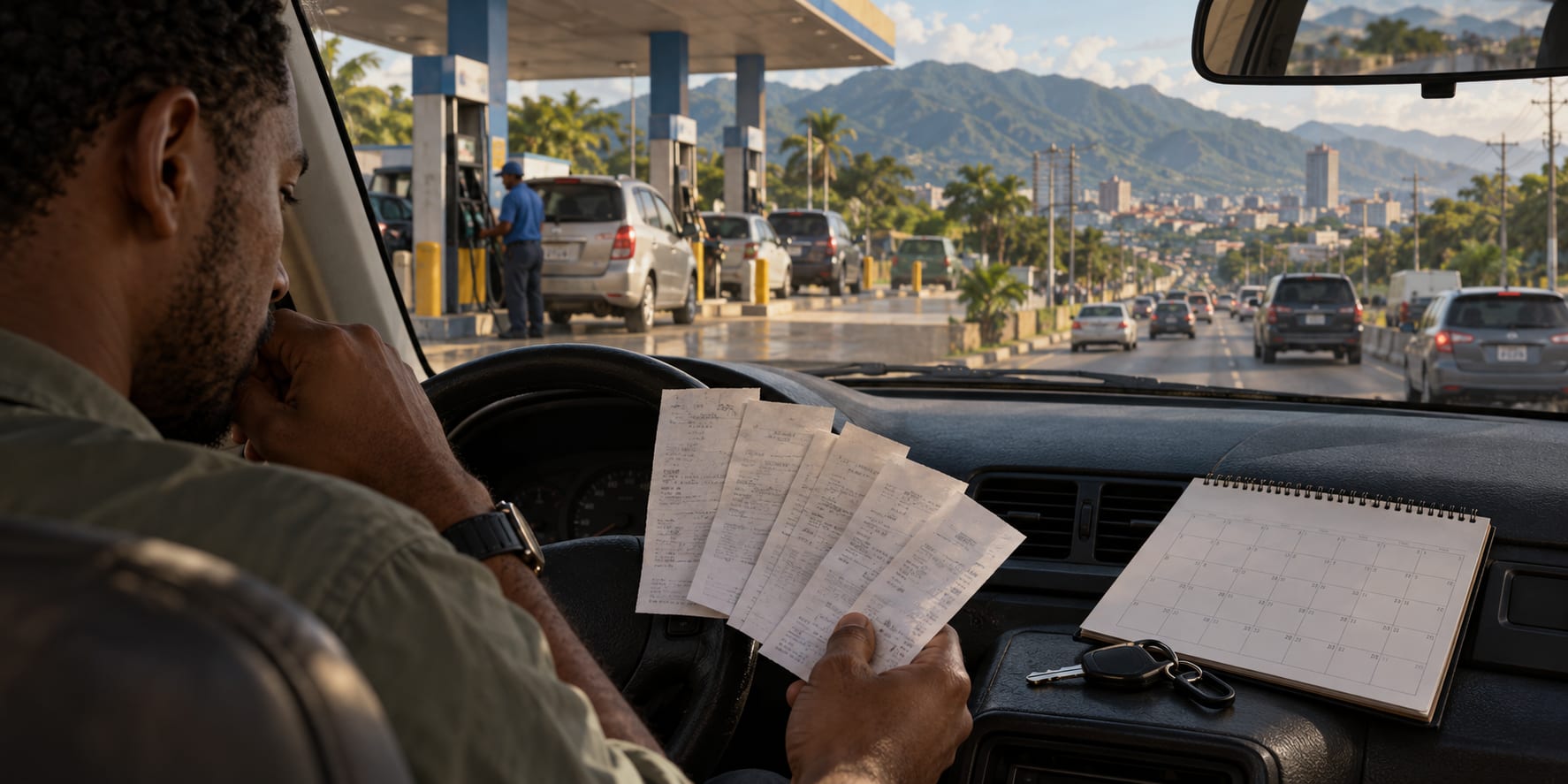
Let’s do some computations with some presumptions:
Gas is $250 per litre
Your Tank is 50L and hence, it requires $12,500 (50 x $250) to full.
The manufacturer’s standards on fuel efficiency for the vehicle may say that for city driving (round-town, factoring traffic), you should average 11km/L and Highway – 13Km/L, making that an average of 12Km/L fuel efficiency (11+13 = 24/2 = 12)
Your 50L can only give you 600km (50 L x 12 km avg)
The work month is 22days
Say, you live in Old Harbour and work in Papine; that approximates to be 50km one way and therefore 100km to and fro. That means, with only travelling to work and back, no deviation, according to the manufacturer’s standards, you would only be able to do 6 full days (to and fro) before refilling again.
For the month, you would travel 2200km (22days x 100km per day). How many times would you have to fill your tank for just going to work? You will have to fill your tank 4 times (2200km you’d have travelled /600km each full tank = 3.67, rounded up to 4times). Therefore, for gas, going only to work and back, that would be $12,500 per full tank multiplied by 4 = $50,000 monthly…which may even be more than your car loan. Remember also, this $50,000 would only be for work.
What about travelling outside work and home? Weekend travel? Out of town? If you live in Old Harbour and go to church in Kingston, plus considering “in and around town” miscellaneous travel, you could safely add an extra 200km (including 100km to and fro for church on the weekend) per week, which times 4 would be 800km for the month. Add the 800 extra km to the 2200 for work, and you get 3000km which suggests you would be filling up 5 times (3000km/600km for a full tank = 5) for the month. That will work out to $62,500 ($12,500 x 5) as the projected monthly gas spend or $750,000 per annum.

The aforementioned would just be for work as well as in and around town. If you factor an average of 2 trips to Ocho Rios for the month, that will be an added 450km, given each leg will approximate 112.5km and times 4 legs = 450km. 3450km per month would translate to 5.75 tanks of gas; $72,000 ($12,500 x 5.75 = $71,875 rounded up to $72,000) monthly or $864,000 per annum. How many people would have factored this amount in gas costs for their vehicle before making the purchase, when, for many, the gas costs far outweigh the monthly loan payments? Should you then buy a vehicle that may be more expensive upfront but greater fuel efficient which means you would pay a higher monthly payment, but you will do greater savings on the back end for gas?
Prudent vehicle buyers assess fuel performance before purchase. Check not only the manufacturer’s standards but also industry standards as well, and do comparisons with other brands regarding fuel efficiency. Compare like with like. A vehicle with a similar engine giving an average of 15 km per litre against 12km per litre means that, for your 50L tank, you would be getting 750km against 600km; a 150km difference per tank full and therefore an extra tank full every five (5) times. Do the math and make informed purchases. These are long-term assets; choose wisely.
Now, albeit the requisite research is being done, there are many consumers who may feel quite duped by what manufacturers, through the local dealers, pontificate. So, for example, while the average fuel consumption may be appropriate at 12L per km, according to the manufacturer, there are customers whose actual fuel efficiency ranges 8-9Km per litre, consistently driving at 100 km/h and below as well as manoeuvring nothing outside the ordinary city traffic. Getting these actual fuel efficiency numbers means that projected fuel costs from what was assessed, based on the manufacturer’s position, mean fuel expenses would jump. So, if based on the presumptions earlier related on, to reference the same for actual fuel costs, a customer would now get 450km (50L x 9km per L) instead of 600 km per full tank; 150Km less each time.

This would be the comparative fuel efficiency table:
Presumptions – 50L tank, $250 per litre ($12,500 to full) plus 3450Km travelled monthly
| Km/L | Driving distance on full tank(km) |
| How many full tanks for 3450km | Cost of fuel for 3450Km Full tank price ($12,500) x number of full tanks required | Difference |
Manufacturer | 12 | 600 |
| 5.75 | $71,875per month $862,500 per annum |
|
Actual Driving Experience | 9 | 450 |
| 7.67 | $95,875 per month $1,150,000 per annum | Manufacturer (Spending more than what manufacturer said): $24,000 per month/$288,000per annum
Competition (Spending far more than the comparison): $38,375per month/$460,500 per annum
|
Competition (another brand) | 15 | 750 |
| 4.6 . | $57,500 per month
$690,000 per a nnum |
|
Some pertinent questions towards making an informed decision on a vehicle purchase:
- What is the price of the vehicle
- Is the vehicle naturally aspirated, of fuel induction or hybrid?
- What is the size of the engine?
- What is the capacity of the fuel tank?
- What is expected to be my average monthly travel in distance? (If you are renting and live a distance from work, it may be wise to get a residence closer which would lessen the fuel cost.)
- What is the manufacturer’s stated fuel efficiency (KM/L) of the vehicle?
- What are comparative fuel efficiency positions for other brands of similar type vehicles?

All the aforementioned affect the pocket, and if not properly prepared for, these costs will be a great drain on the individual’s financial resources. So, instead of enjoying their beautiful cars with reasonable monthly instalments, many of these buyers live in misery from the unplanned but necessary continuous expenses, especially fuel costs, which come with the vehicle. Some purchasers would have developed a false sense of security by focusing only on an affordable monthly payment. Whether through ignorance or a deliberate move, lenders and even the dealers are not likely to relate the full picture on the impact of unplanned fuel costs. You have to do your own research. Get the 360 on the vehicle before you buy and “maths up” the figures towards making the right choice.
You have now been empowered with best practices for prudent vehicle purchase and even bettering your circumstances if you have already bought. Best wishes.
Garfield “SirG” Goulbourne is car enthusiast and an experienced financial literacy consultant. Email: [email protected]






Comments