Dennis Minott | Anchor the wealth where the work is done; The real test of the Sandals-Royal Caribbean 50-50 deal

/ Our Today
administrator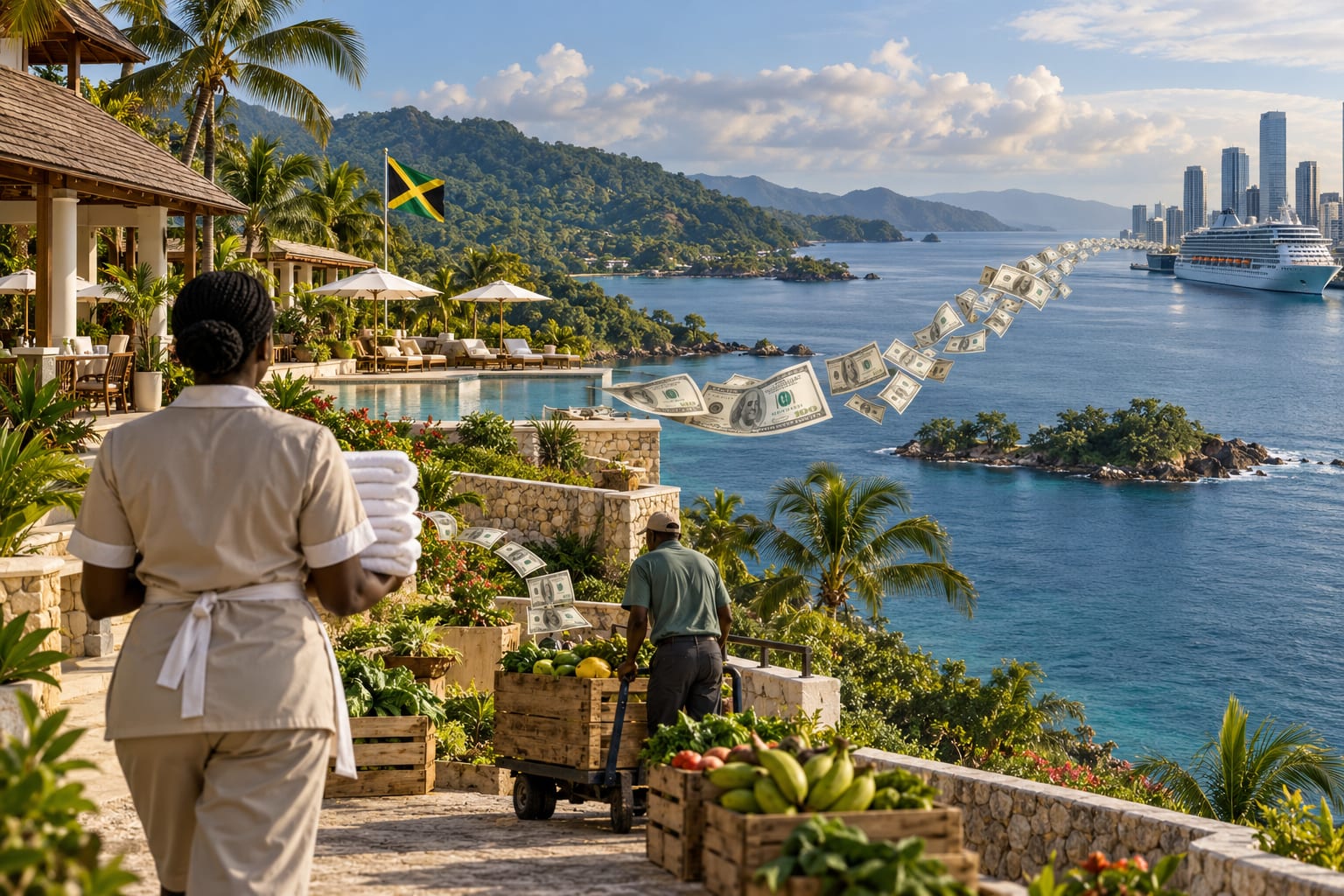
Few people know that, together with my late wife, Sandra, I once owned and operated 100 per cent of the hotel business that stood on the Bonnie View property in Port Antonio.
We failed.
I use that short, uncomfortable sentence deliberately.
Failure can be an expensive tutor, but sometimes an excellent one. Ours drove me to spend considerable time examining why our venture did not succeed and, thereafter, to study tourism—not as a triumphant hotelier dispensing wisdom from some Olympian height, but as a chastened and intensely interested outside observer trying to understand how this enormous global industry actually works.
Who owns what? Who controls what? Where does the tourist dollar enter? Through whose booking platform does it travel? Who supplies the food, furniture, technology and financing? Who owns the brand and the customer data? What remains where the hotel actually stands—and what silently departs?
Above all: where does the wealth finally accumulate?
What follows may therefore carry a touch of the hindsight peculiar to a once-failed hotelier. Some may even detect the faint aroma of sour grapes.
If so, blame Cargill Kelly.
For in his Gleaner letter this week, Kelly supplied six words that sent this old hotel failure back to his economic notebooks:
“Anchor the wealth where the work is done.”
Those six words deserve to survive long after the excitement surrounding Royal Caribbean Group’s proposed US$3-billion investment in Sandals has subsided.
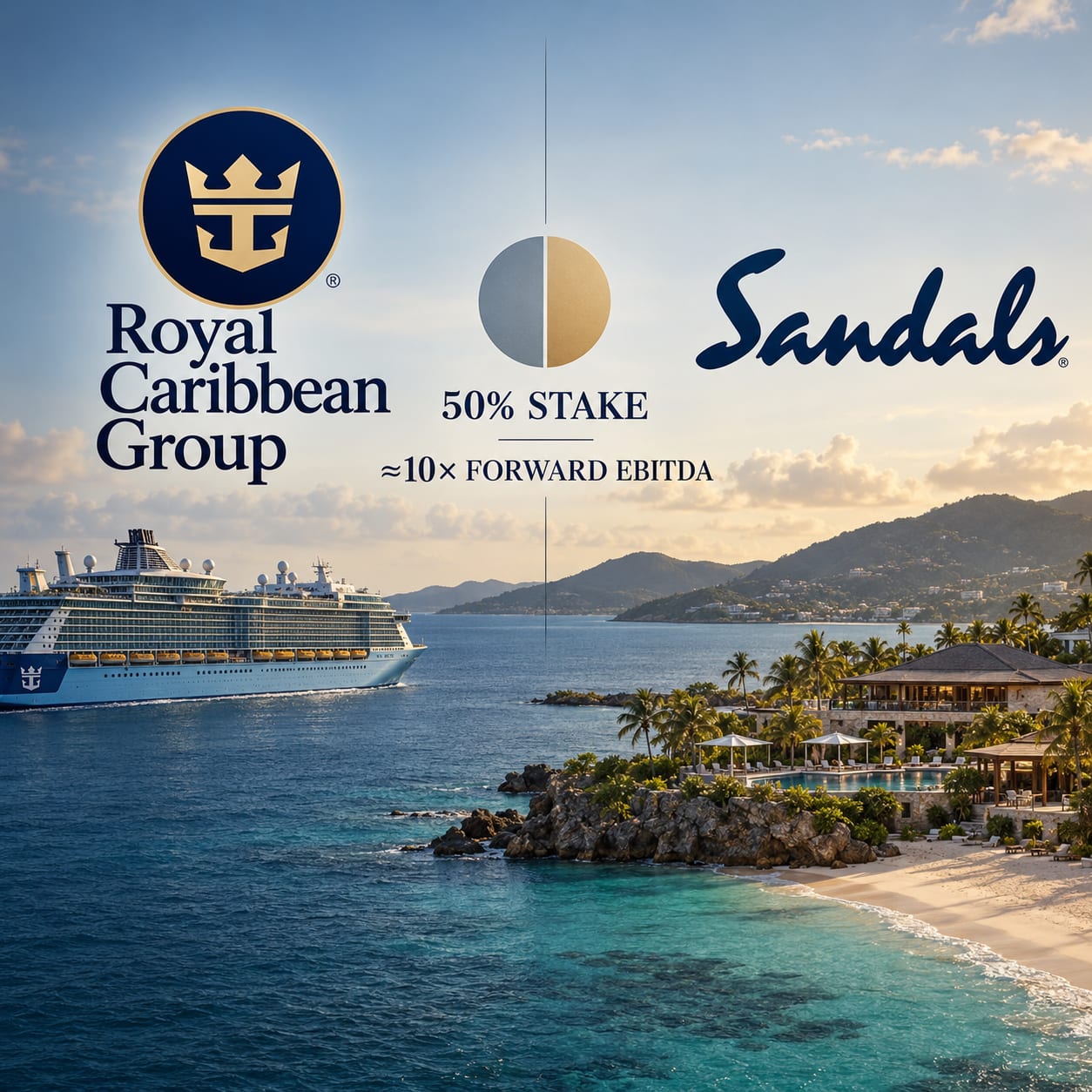
The announced transaction is unquestionably significant. Royal Caribbean Group has entered definitive agreements to acquire a 50 per cent equity interest in the business comprising Sandals and Beaches Resorts for approximately US$3 billion in cash. The transaction is expected to close in early 2027, subject to approvals and other customary conditions. Royal Caribbean says it has secured committed debt financing from Morgan Stanley for the purchase. Sandals’ existing owners retain the other 50 per cent.
Adam Stewart is to continue as executive chairman, and the joint venture is to be governed by a board under the shared leadership of Stewart and Royal Caribbean chairman Jason Liberty. Royal Caribbean describes the purpose as combining Sandals’ all-inclusive resort expertise with its much larger vacation platform encompassing Royal Caribbean, Celebrity Cruises and Silversea.
There is much here for Jamaicans to celebrate.
A hospitality enterprise born in Jamaica has become valuable enough for one of the world’s largest vacation companies to place roughly US$3 billion on the table for half of it.
That is no small national achievement.
But there is a distinction we should insist upon from the beginning:
valuation is not the same thing as domestic wealth retention.
Nor does 50 per cent ownership necessarily mean 50 per cent economic control, 50 per cent domestic value capture, or 50 per cent retention of the wealth ultimately generated.
That is where comparable international experience becomes extremely instructive.
The 50-50 that ws not quite 50-50
Consider Bahia Principe.
In 2024 Hyatt entered a 50–50 joint venture with Spain’s Grupo Piñero involving the Bahia Principe hotel business. Hyatt acquired 50 per cent of the shares of Management Hotelero Piñero, the entity owning the Bahia Principe brand and managing the hotels. Its base consideration was €419 million.
There it is again: 50–50.
But read Hyatt’s subsequent filings carefully.
Despite owning only half the shares, Hyatt reported that it was the joint venture’s “primary beneficiary” for accounting purposes because, through its variable interest, it possessed the power to direct the activities that most significantly affected the economic performance of the enterprise. Hyatt therefore consolidated the venture’s financial results into its own accounts.
Nothing about that is necessarily improper.
But it teaches us something exceedingly important.
Equity percentage and economic influence are not identical things.
A sophisticated multinational hospitality enterprise does not derive its power merely from owning hotel walls and beds.
Power can lie in the reservation engine.
It can lie in the loyalty programme.
It can lie in global marketing.
It can lie in customer data.
It can lie in management agreements.
It can lie in technology platforms, intellectual property, financing structures and distribution channels.
The physical hotel may therefore stand in the Caribbean while important portions of the economic machinery surrounding it are controlled elsewhere.
That is why Jamaica should resist the temptation to stop thinking when it hears the reassuring phrase “50–50 partnership”.
Fifty-fifty of what?
Ownership?
Voting rights?
Board representation?
Cash distributions?
Control of customer information?
Control of booking systems?
Intellectual property?
Brand-development decisions?
Procurement architecture?
Management appointments?
Future expansion?
The answers need not be alarming.
But they are worth knowing.
Look also at Playa
Another Hyatt transaction provides an even clearer illustration of how modern hospitality economics has evolved.
In June 2025, Hyatt completed its acquisition of Playa Hotels & Resorts—an owner and operator of all-inclusive resorts in Mexico, the Dominican Republic and Jamaica—for an enterprise value of approximately US$2.6 billion, including roughly US$900 million of debt.
One might have assumed that Hyatt’s objective was simply to become the owner of a large portfolio of Caribbean and Mexican resort real estate.
It was not.
By December 2025, Hyatt had sold the acquired real estate portfolio for approximately US$2 billion to Tortuga Resorts. Yet Hyatt simultaneously secured 50-year management agreements for 13 of the 14 properties involved in the final portfolio transaction. Hyatt explicitly characterised the outcome as part of its asset-light strategy.
That is an extraordinarily useful case study.
The bricks may belong to one investor.
The land may lie in Jamaica, Mexico or the Dominican Republic.
The workers may live beside the property.
But another organisation may control the brand, manage the hotel, market the rooms, maintain the customer relationship and collect long-lived management fees.
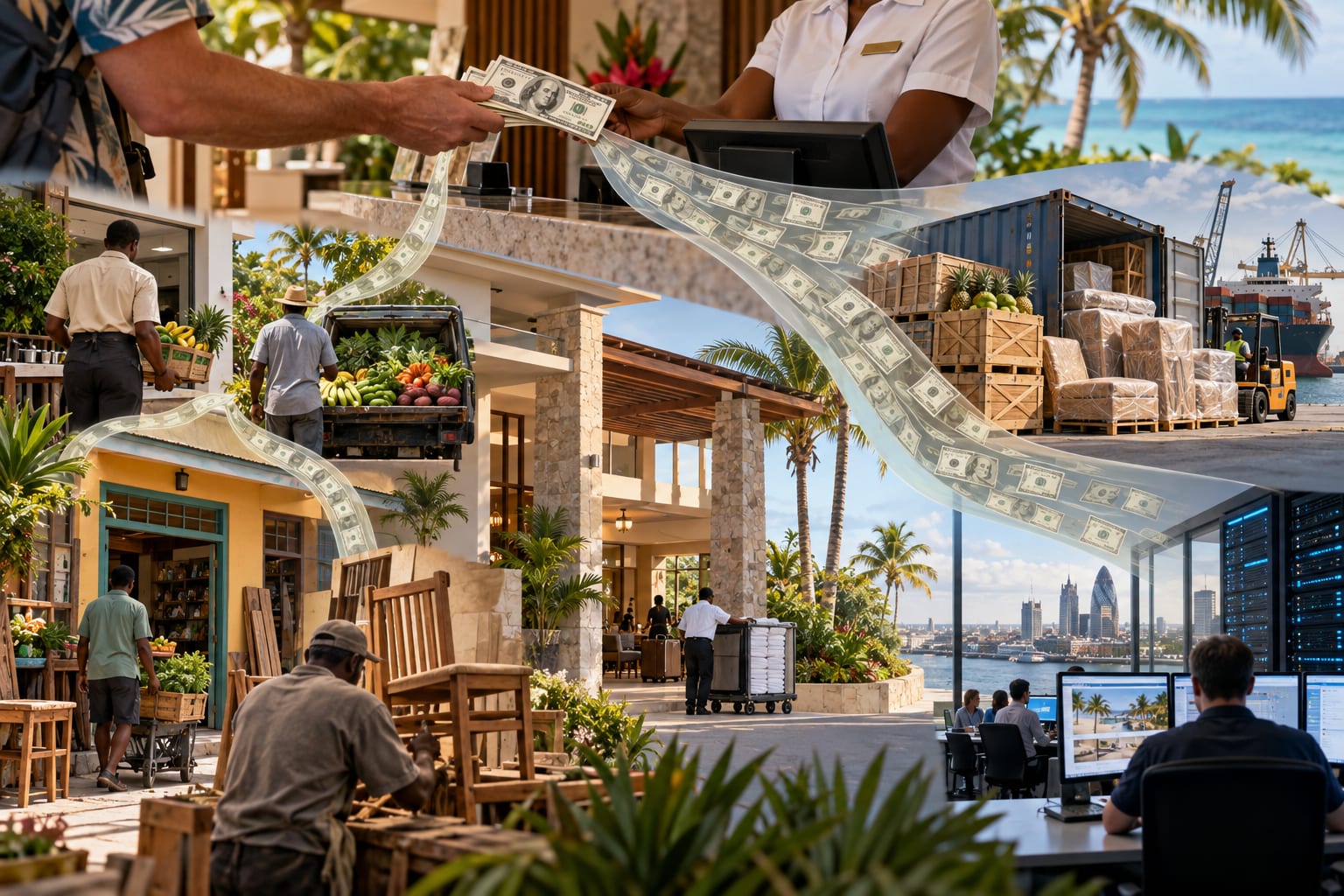
Modern tourism wealth does not necessarily reside where the swimming pool resides.
And that is precisely why Kelly’s phrase—anchor the wealth where the work is done—must be turned from poetry into arithmetic.
The Caribbean has seen leakage before
Barbados recognised this problem years ago.
Its Tourism Master Plan warned that the high incidence of foreign ownership of tourism properties could create substantial economic leakage and reduce the proportion of tourism benefits retained within Barbados. It also cautioned that incentives granted to large resort developments could shift further benefits away from domestic stakeholders towards non-residents.
That does not establish that foreign ownership is undesirable.
It establishes something subtler and much more useful: gross tourism revenue is not the same thing as net domestic economic benefit.
Suppose a visitor spends US$1,000.
If US$250 pays for imported food, furnishings and equipment; another portion services offshore debt; another pays overseas marketing, booking or brand charges; another becomes foreign dividends; and another finances technology or professional services sourced abroad, then only a fraction of that original US$1,000 may continue circulating through domestic households and businesses.
The visitor arrived in Jamaica.
The spending occurred nominally in Jamaica.
But the wealth did not necessarily remain Jamaican.
Mauritius has confronted the same question from another direction. OECD’s 2024 review records that foreign investment in parts of its tourism industry remains subject to conditions intended to establish local benefit. Certain foreign tourism businesses must demonstrate how their projects benefit the local community, while foreign-backed hotel projects are expected to add value and meet quality criteria.
Again, the lesson is not xenophobia.
It is economic design.
Countries that understand tourism deeply ask not only:
How much investment came in?
They also ask:
What productive capacity remained after it came?
Jamaica already knows about leakage
We need not travel abroad to find the problem.
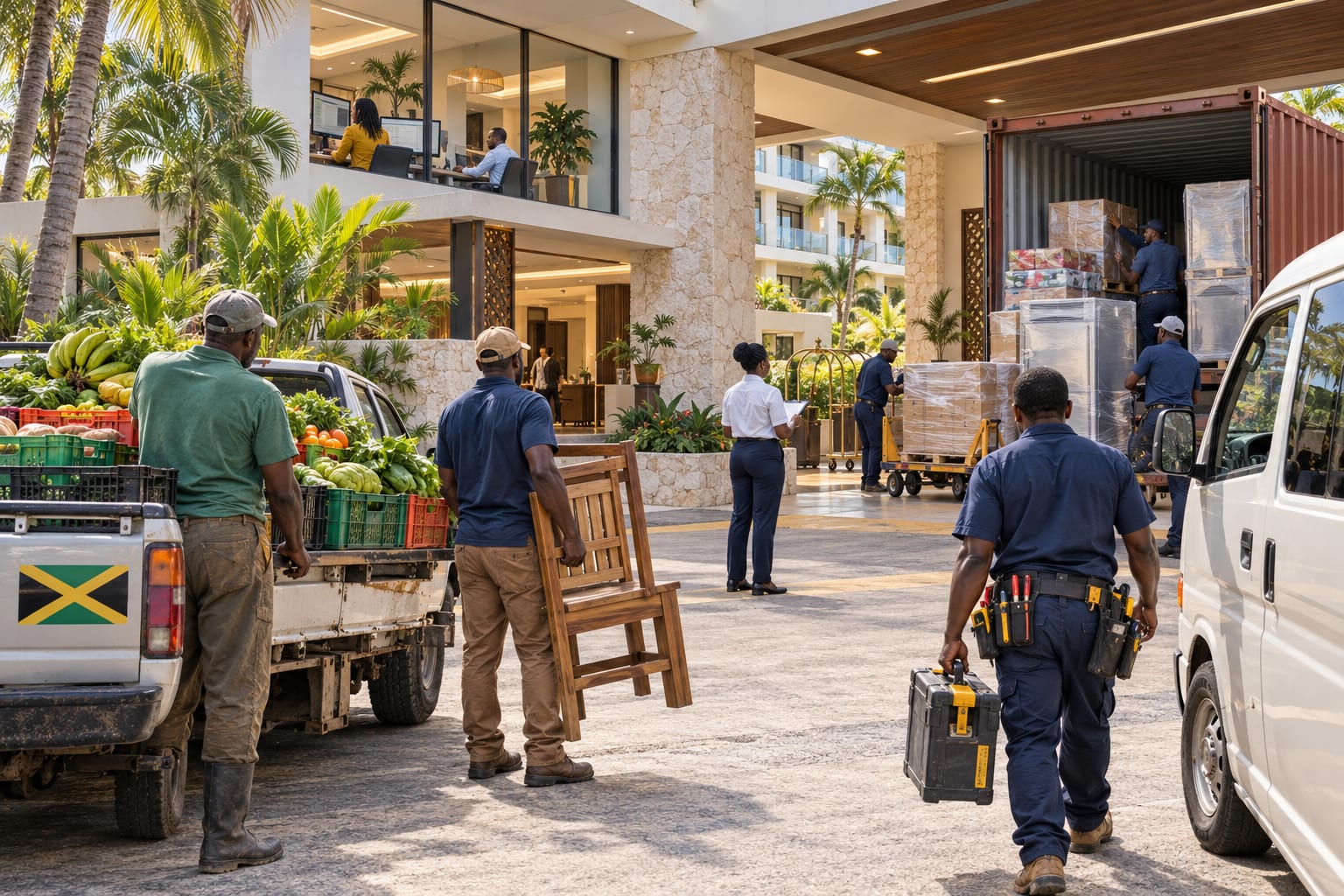
World Bank work on Jamaica has pointed to substantial leakages through hotel imports. One study cited in recent Bank analysis estimated that hotels purchased from abroad approximately 26 per cent of their agricultural goods and 33 per cent of their manufactured goods. The same analysis recommends stronger local-content incentives, better agricultural aggregation, improved storage infrastructure and better information connecting producers to hotel demand.
Another World Bank examination identified familiar obstacles confronting Jamaican farmers seeking hotel business: inadequate scale, difficulty meeting consistent quality and quantity requirements, long payment terms and weak market information. It also observed that foreign hotel operators may lack the local networks necessary to develop effective domestic supply relationships.
These are not abstract academic inconveniences.
They determine whether tourism creates a domestic economic ecosystem or merely a collection of beautifully landscaped consumption enclaves.
A hotel room occupied in Montego Bay should ideally stimulate a Jamaican farmer, a Jamaican furniture manufacturer, a Jamaican electrical contractor, a Jamaican software firm, a Jamaican accountant, a Jamaican entertainer, a Jamaican transport operator and a Jamaican pension saver.
That is multiplication.
Anything less should at least be measured.
The real question about Sandals-Royal Caribbean
Royal Caribbean’s announcement emphasises the attractions of combining two formidable businesses.
Sandals possesses extraordinary knowledge of the all-inclusive Caribbean resort.
Royal Caribbean possesses extraordinary scale in vacation marketing, distribution, customer acquisition and global travel.
Their combination may prove commercially brilliant.
And I hope it does.
A larger, more profitable Sandals could mean more rooms, more investment, more employment, more visitors and stronger Caribbean branding.
But Jamaica’s developmental question must go beyond whether the enterprise becomes larger.
We must ask:
As it becomes larger, what becomes larger in Jamaica?
That question is different.
If hotel revenues rise 30 per cent but imported procurement rises equally rapidly, the multiplier may disappoint.
If customer acquisition increasingly occurs through overseas platforms, where does the associated value accrue?
If technology, data, marketing and management functions become more internationally integrated, which jurisdiction captures those high-value activities?
If Sandals expands internationally, how much of the resulting wealth flows back into Jamaican productive investment?
If Royal Caribbean introduces millions of customers to Sandals, magnificent.
But after that customer spends US$1,000, where does each dollar go next?
Six numbers would tell us much
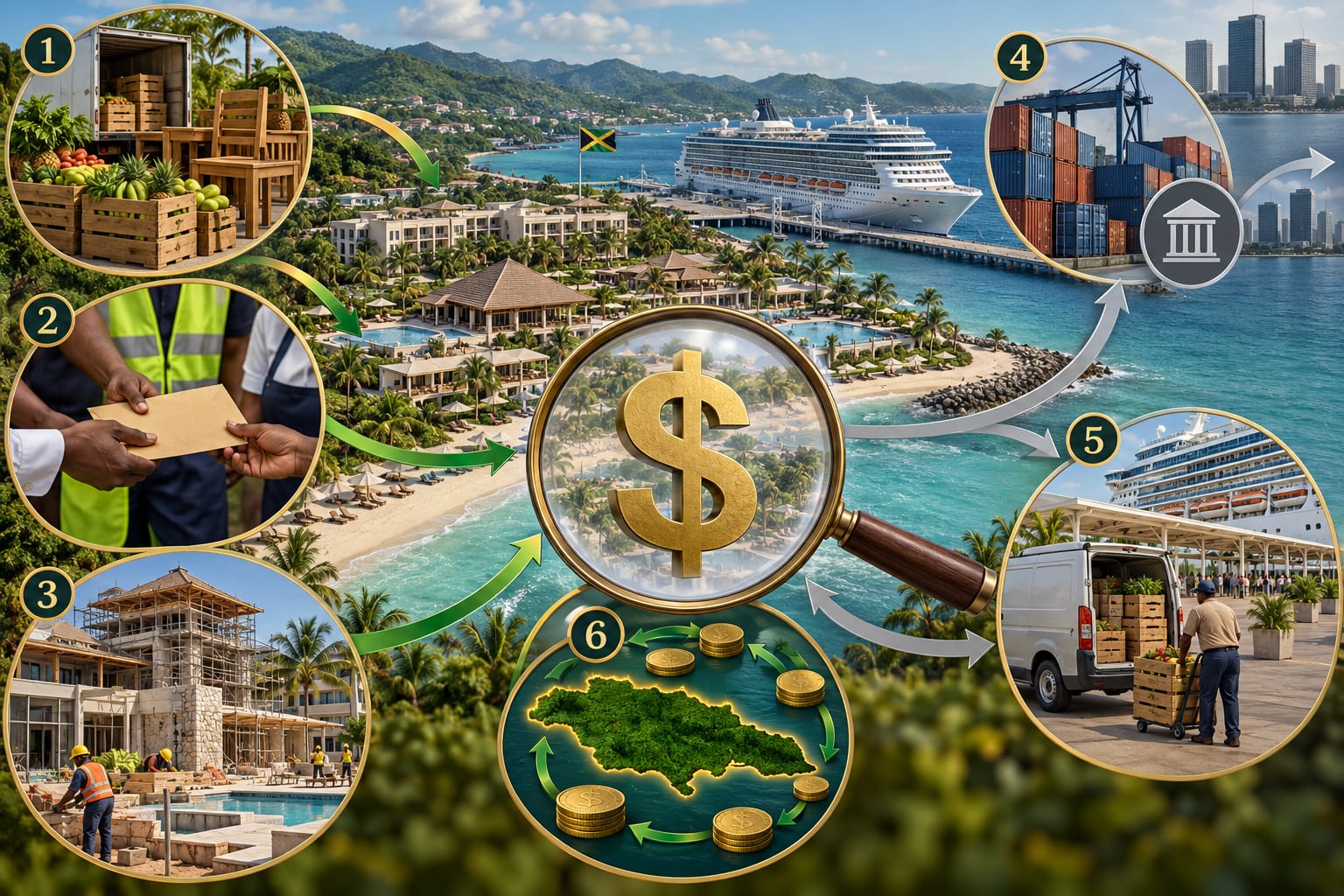
Instead of arguing emotionally about whether the transaction is “good” or “bad”, Jamaica should eventually seek a much more useful set of numbers.
First: what percentage of goods and services purchased by Sandals’ Jamaican properties is produced by genuinely Jamaican firms?
Second: what percentage of total payroll—and particularly professional, technical, managerial and executive payroll—accrues to Jamaicans?
Third: what proportion of Jamaican-generated profits is reinvested in Jamaica?
Fourth: what proportion of Jamaican resort revenues ultimately leaves the country through imports, debt service, management fees, technology charges, intellectual-property charges, overseas marketing costs and distributed profits?
Fifth: what additional Jamaican businesses will gain access to Royal Caribbean’s enlarged tourism ecosystem?
And sixth: after all leakages have been deducted, how many cents of each additional tourism dollar remain circulating through Jamaica?
Let us give that number a name:
The tourism wealth-inward retention ratio (The TWIRR)
Imagine how useful that would be.
We already count arrivals.
We count rooms.
We count cruise passengers.
We count gross expenditure.
Why should we not also count retained Jamaican value?
A million additional tourists could then be assessed not merely by the number of bodies passing Immigration, but by the amount of durable Jamaican wealth they help create.
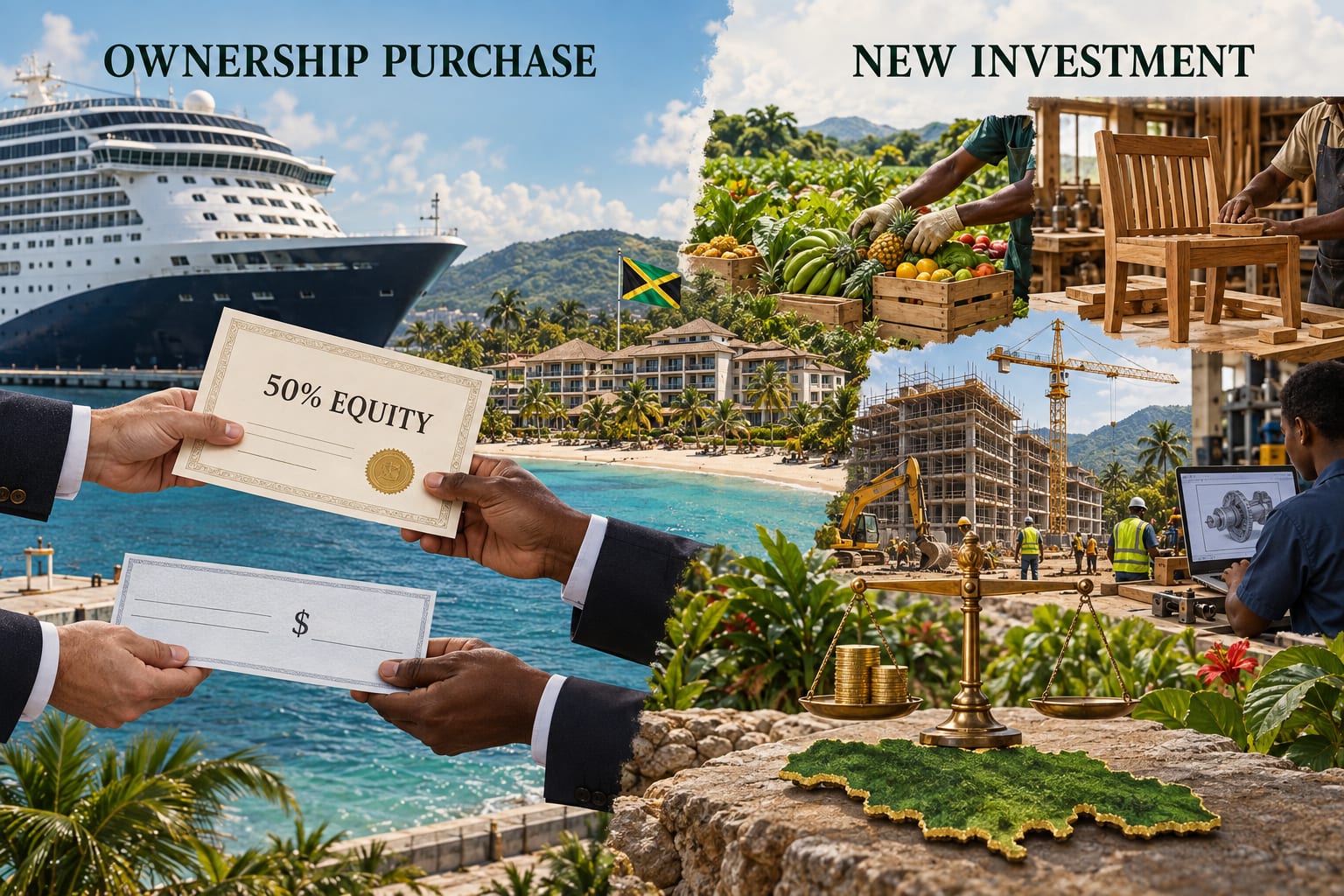
Do not confuse the cheque with the investment
There is another important distinction.
Royal Caribbean’s approximately US$3-billion payment is the purchase price for a 50 per cent equity interest.
It should not automatically be described as though US$3 billion were about to be poured directly into Jamaican hotels, farms, roads, factories or worker training.
Some future investment may indeed occur—and probably will.
But an equity purchase and new productive investment are economically different events.
That distinction is a tegereg; it matters greatly.
If I buy half your existing factory for $10 million, I have invested $10 million in acquiring ownership. It does not follow that your factory itself has received $10 million in new machinery.
The same analytical discipline should accompany our discussion of Sandals.
Celebrate the valuation.
But ask separately about the new capital expenditure, domestic reinvestment and productive Jamaican capacity that follow.
A great opportunity – if we measure if properly
None of this requires hostility towards Royal Caribbean.
Quite the opposite.
A commercially powerful partner can enlarge the pie.
Royal Caribbean operates 71 ships serving more than 1,000 destinations and commands immense marketing and customer-distribution capability.
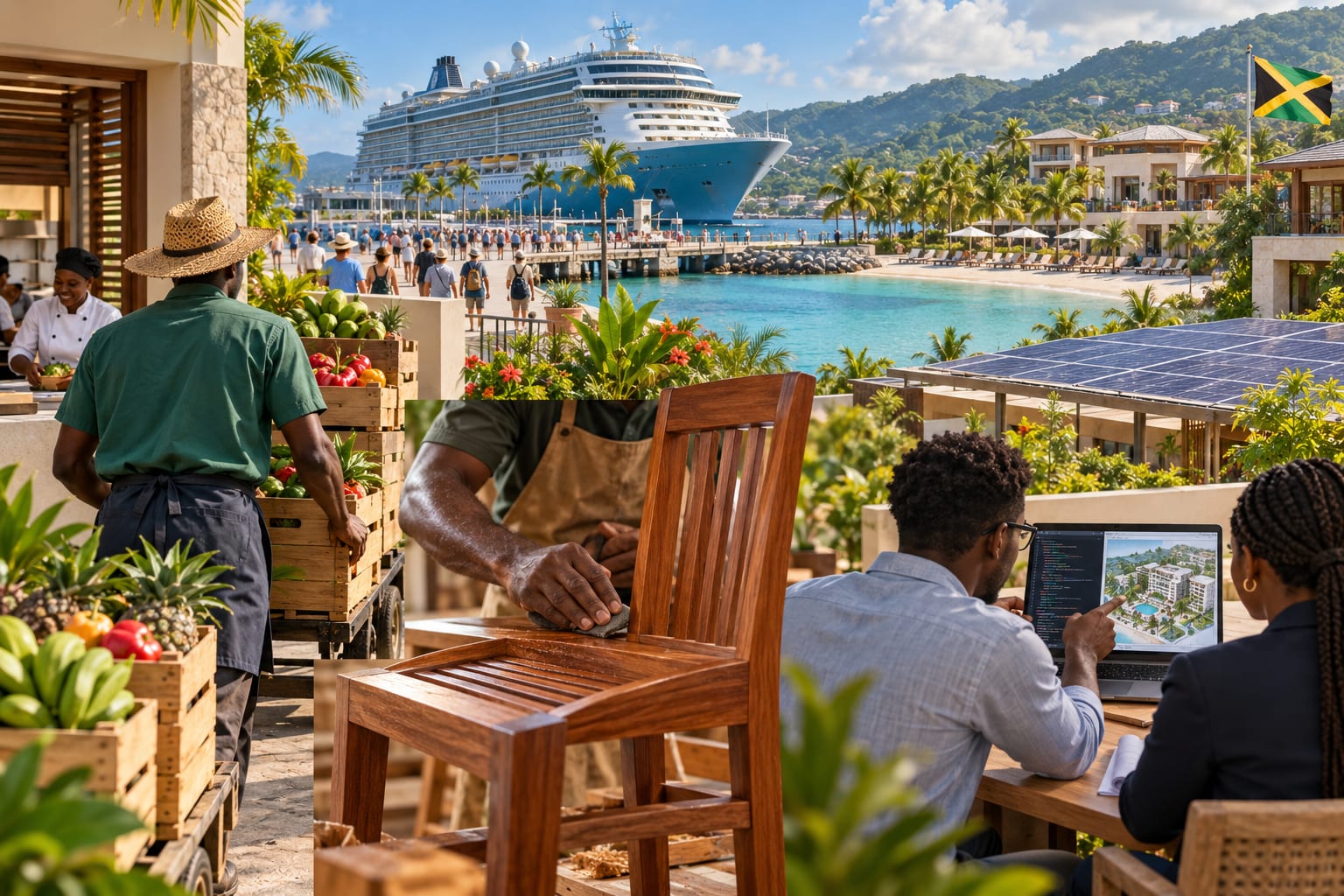
Imagine that machinery sending substantially more high-spending customers into Sandals properties.
Imagine Jamaican farmers supplying more of their food.
Imagine Jamaican manufacturers furnishing more rooms.
Imagine Jamaican software engineers building parts of the digital infrastructure.
Imagine Jamaican professionals providing accounting, engineering, architectural, environmental, renewable energy and financial services.
Imagine young Jamaicans moving not merely into service jobs, but into the upper reaches of hospitality technology, revenue management, all-green sustainability, finance and global resort leadership.
Then the Royal Caribbean relationship could create something much bigger than hotel growth.
It could deepen Jamaican productive capability.
And that is ultimately what economic development means.
The best outcome would therefore not be a choice between Jamaican capital and foreign capital.
It would be Jamaican capital partnering with global capital while continuously enlarging the Jamaican share of knowledge, income, enterprise and ownership generated by the partnership.
That is a far more ambitious objective.
Measure the Anchor
My late and ever-beloved Sandra and I once had 100 per cent ownership of a hotel business.
And still we failed.
That experience permanently cured me of believing that ownership percentage alone tells the whole story.
One can own 100 per cent of something economically weak.
One can own 50 per cent of something vastly more valuable.
One can also own half the equity while another participant controls crucial gateways through which value is created.
So I do not look at Sandals–Royal Caribbean and ask merely:
Who owns the other 50 per cent?
I ask:
Who controls the customer?
Who controls the reservation?
Who owns the data?
Who owns the brand architecture?
Who receives the management income?
Who supplies the dinner?
Who finances the expansion?
Who develops the managers?
Who owns the technology?
Where are profits taxed?
Where are they reinvested?
And twenty years from now:
Who owns the accumulating wealth?
If Jamaica and Jamaicans continue supplying the cooking, the sun-shining, the waters, building, farming, engineering, entertaining, cleaning, landscaping and welcoming while an increasing proportion of the higher-value streams migrate elsewhere, we will have succeeded in anchoring the work without sufficiently anchoring the wealth.
That would be the wrong lesson from tourism.
But if Royal Caribbean’s global reach helps Sandals grow enormously while Jamaican agriculture, manufacturing, professional services, technology, management, savings and ownership grow alongside it, then this transaction could become something far more important than a spectacular US$3-billion business deal.
It could become a demonstration of how Caribbean enterprise can partner successfully with global capital without disappearing inside it.
So, Cargill Kelly, I accept your challenge:
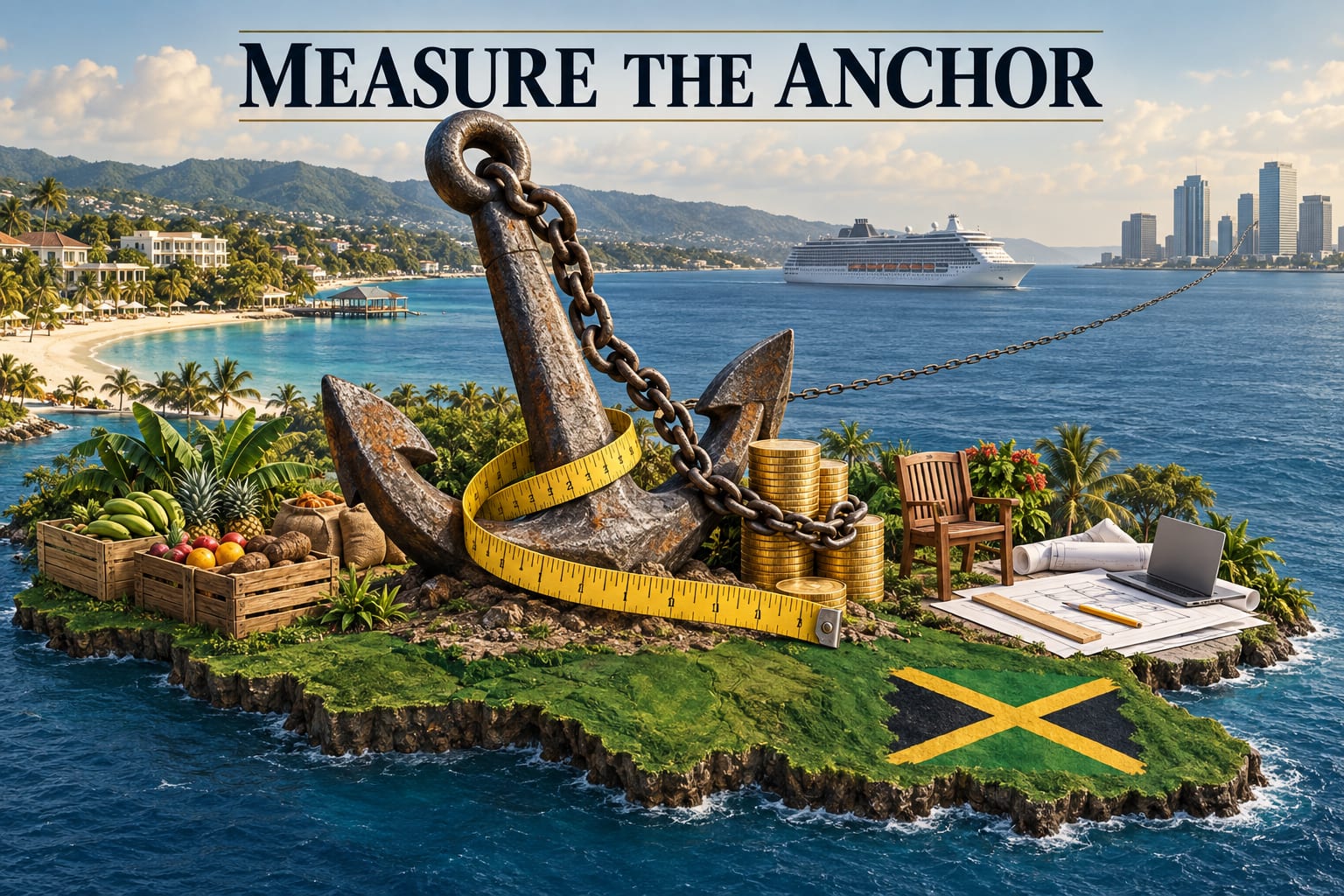
Anchor the wealth where the work is done.
But Jamaica must do one thing more.
Measure the anchor.






Comments