
Central banks poised for rate cuts in 2024, global economists declare

/ Our Today
administrator
Leading central banks are expected to begin cutting interest rates over the coming year as falling inflation fuels predictions among investors and economists that prices are under control declares some of the globe’s leading economists.
This was the consensus among some of the globe’s leading economists. After entering 2023 in the midst of aggressive interest rate increases, the Federal Reserve, European Central Bank (ECB) and Bank of England (BoE) put their tightening programmes on hold in the second half of the year.
Now, with headline inflation rates retreating in large parts of the G7 group of industrialised nations and economies slowing, the pressure for policymakers to cut borrowing costs is set to gather strength. “We expect inflation to fall further than central banks expect,” explains Neil Shearing, Group Chief Economist at UK-based Capital Economics.
He notes that growth was weakening just as distortions caused by the Covid-19 pandemic and global energy crisis were unwinding. According to him, “policy is now quite restrictive, meaning central banks can loosen without [it] necessarily becoming supportive [of growth]. Think of it as pressing less hard on the brake rather than pushing on the accelerator.”
March projection for Feds to cut rates
Investors are betting that the Federal Reserve will cut interest rates for the first time in March with five quarter-point cuts to follow during the year. The ECB and the BoE are also expected to lower rates six times in 2024 with the former starting in March or April and the latter in May.
Financial markets ended 2023 sharply higher, as investors became increasingly confident that the Fed was ready to start easing policy in the wake of its December 14 decision to hold rates. The rally put the MSCI World index, a gauge of global equities, on track for its best annual performance since 2019.
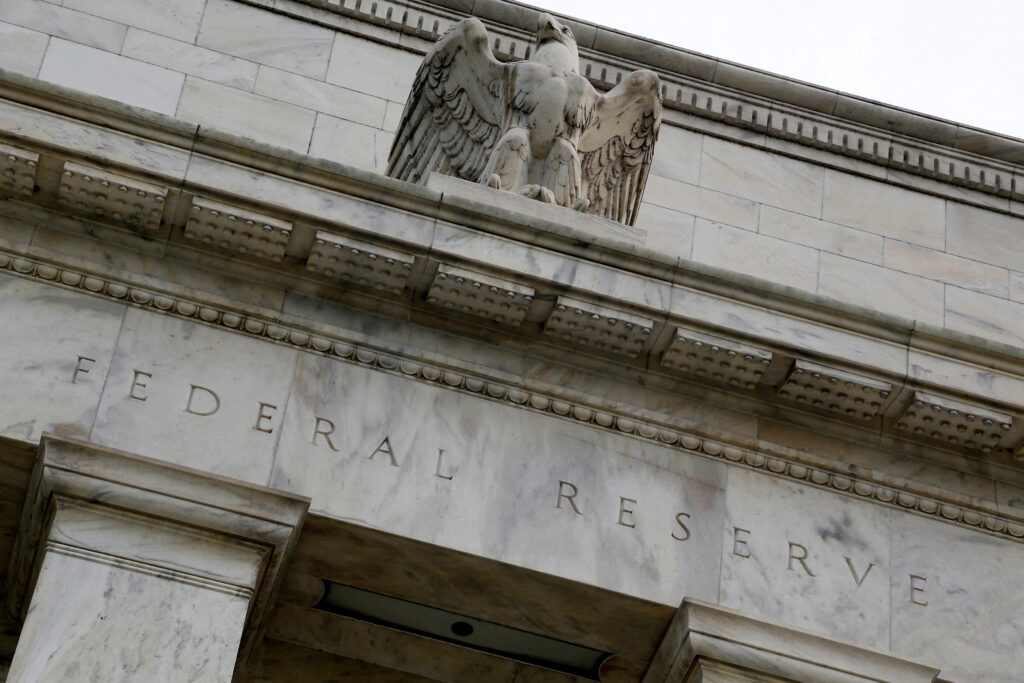
The key moment came at the Fed’s December meeting, as it released projections showing officials expected its benchmark federal funds rate — currently at a 22-year high of between 5.25 per cent and 5.5 per cent — to be cut by 75 basis points over the coming 12 months. Fed chair, Jay Powell failed to rebut market expectations of steep rate cuts in 2024, saying the central bank was “aware of the risk that we would hang on too long” by keeping policy too tight.
Continuing he said, “we know that’s a risk and we’re very focused on not making that mistake.” Both the ECB and BoE have struck a more hawkish tone than Powell, with both indicating in December that it was too soon to relax the fight against inflation.
Eurozone inflation slowed to 2.4 per cent in November, far below its peak of more than 10 per cent a year earlier and close to the ECB’s two per cent target. However, economists remain wary of the risk of renewed price growth.
Financial Times survey
A Financial Times survey showed the majority of economists polled expected the ECB to start cutting rates by the second quarter of 2024 but only two predicted a move as soon as the first three months of the year. The BoE is also facing calls to acknowledge progress in the battle against inflation after a steep fall in the rate of consumer price growth to 3.9 per cent in November, down from a high of more than 11 per cent in October 2022.

A third-quarter contraction in the economy has added to the pressure. Andrew Goodwin, chief UK economist at Oxford Economics consultancy said the November inflation reading should be a “game changer” for UK monetary policy, adding that while the BoE would be nervous about upcoming pay negotiations with expectation that the bank to start lowering rates in May.






Comments