Clinton Rattray | The Permanent Opposition: Why the PNP risks remaining on the wrong side of history

/ Our Today
administrator
We live in a democracy, one where opposition is essential, obstruction is not.
The distinction matters because the future of Jamaica depends not merely on who governs, but on whether those who aspire to govern are willing to place national advancement above partisan advantage. For more than a decade, with three consecutive terms of an unbroken Jamaica Labour Party (JLP) Administration, the Opposition People’s National Party (PNP) has struggled to convince Jamaicans that it is more than a party of resistance.
It has failed to emerge as a bold alternative to the government with a compelling vision for economic growth, crime reduction, institutional reform, or unlocking national potential. It has appeared trapped in a cycle of reflexive opposition to nearly every major initiative, policy prescription, and legislative proposal by the Dr Andrew Holness-led Administration. This creates a perception of an opposition always willing to bet against Jamaica. When opposition becomes the default response to modernisation, infrastructure development, national security and administrative transformation, voters inevitably begin to ask a simple question: What exactly are you for? That question increasingly haunts the PNP.

At the party’s 88th National Conference held in Westmoreland on Sunday, September 20th,2026, PNP President Mark Golding asserted, “We cannot ask the country to change its government unless we show that we are prepared to change ourselves”.
It is the starkest admission from a party that has suffered a combined five election defeats (three parliamentary and two local government) since February 25th, 2016. And despite their best attempt, employing a spin doctor to prop up their electoral image, the results continue to demonstrate an electorate that has consistently rejected their candidates at the polls, bringing it as close as possible, but never enough to take the reins of government.
I recall veteran journalist and political analyst Emily Shields on Television Jamaica on the night of the elections of September 3rd, 2020, lambasting the PNP’s machinery as “an absolute sham,” insisting that “for them to have lost this way is the greatest carnage in the political history of Jamaica. In recent times, the building of the machinery, the listening to the people on the ground, they weren’t doing it”.
The result: JLP 49 to the PNP 14 Seats.
Yet five years later, on the anniversary of that decisive victory, with a new PNP President, the result was no less uncomforting.
For in a first-past-the-post system, the winner takes all. The JLP secured 35 of the 63 seats, to retain state power. This time Mrs Shields noted that the electorate has matured and the realignment of the political map (JLP 35- PNP 28 seats) reflected just that. Some political analysts suggest that a broader issue was at play. The electorates were convinced by the sober leadership and statecraft of the Dr Holness Administration and were prepared to continue with them. Electorates seemingly weigh the options using a scorecard that thematically reveals Holness’ pragmatism, aided by his supporting generals who have kept the proverbial ship afloat in an unenviable international arena, surrounded by wars, pandemics, geopolitical turbulence, and national storms, some natural, some self-inflicted, others opposition-induced. They decided they were safer with the proven team.
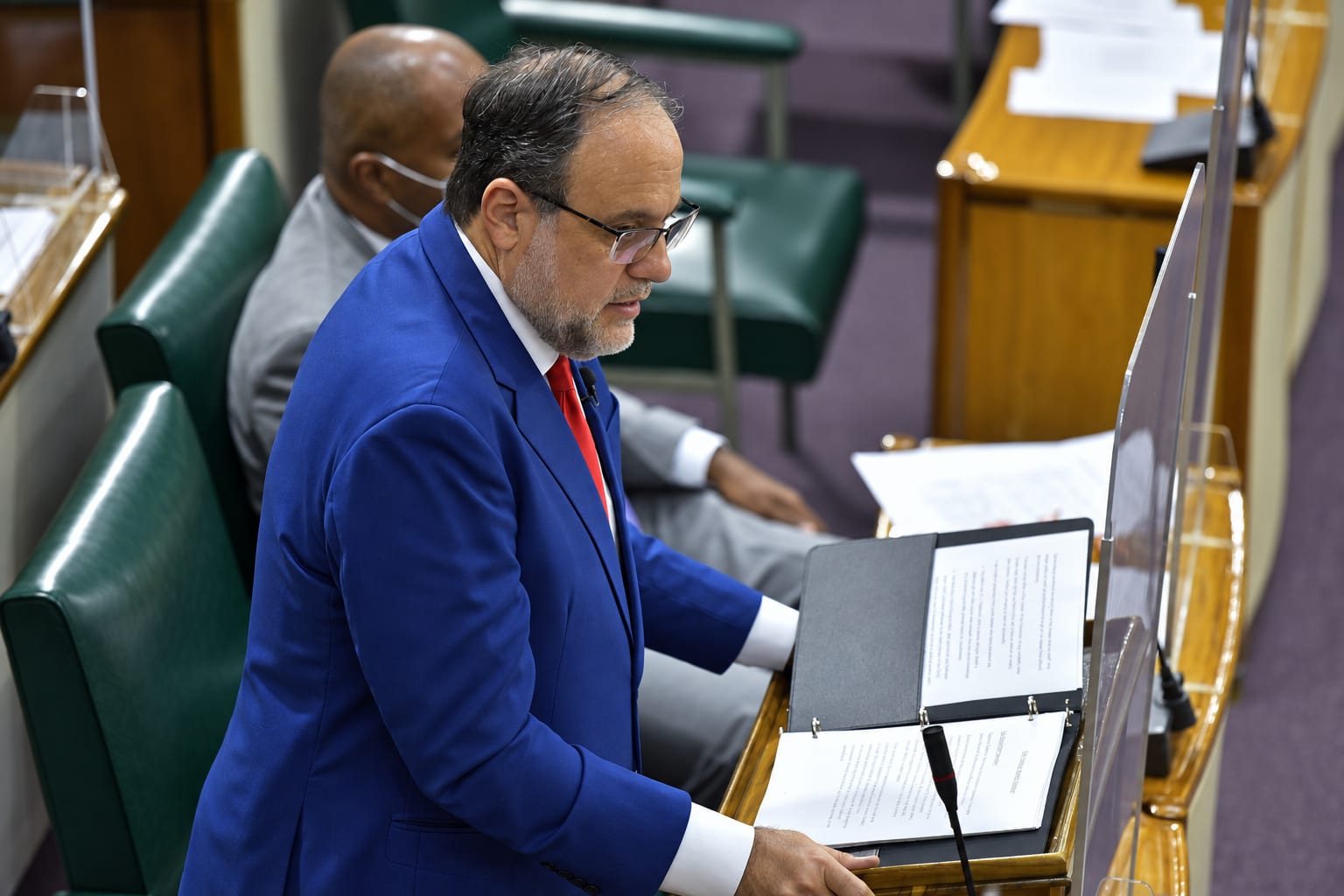
A new opposition leader
The government has not been flawless. It has scored a few own goals, like the amendment to the Road Traffic Act. Yet faith in Andrew Holness’ administration remains strong enough to get them over the constitutionally required threshold to form government (at least 32 seats). In a leaked PNP Don Anderson poll commissioned in mid-August 2026, it was revealed that the PNP holds a statistical edge over the governing JLP.
That celebration must have been short-lived as Golding continues to struggle to reach the mark set by Holness’ favorability. For a nation that is leader-centric, this can be a deciding factor for an electorate regardless of who sits atop the ballot at the constituency level. Recall that in 2016, the JLP regained 11 of the parliamentary seats won by the PNP in the December 2011 General Election, even with its most popular leader of recent vintage, Portia Simpson-Miller. Golding’s ascendancy to the Presidency of the 88-year-old party some 1,300 days ago, in November 2020, has garnered no greater luck, for he too has lost every ‘competitive’ election since, bringing to focus his own leadership and political style. Whether he or Damion Crawford faces Holness in 2030 is left to be seen. What is sure, it is no longer a matter of if, but when the trumpet sounds.
What separates Golding’s strategy from that of every other political leader of recent memory may be described as an almost unbridled weddedness to uncompromised obstruction.
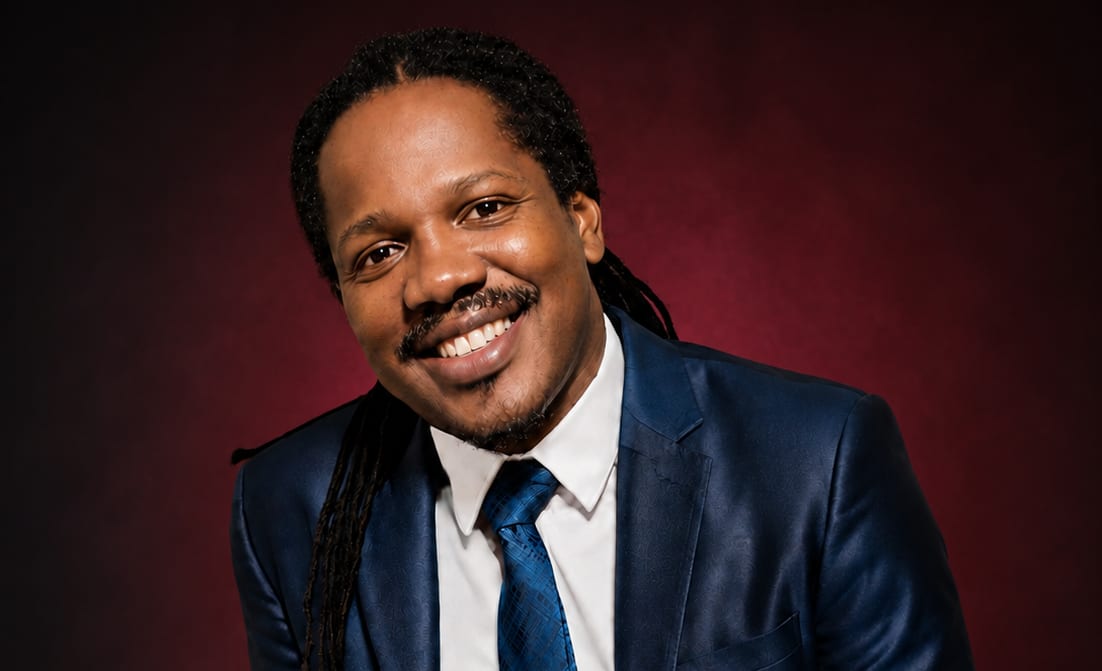
It’s an offshoot of Machiavellianism. He harbours no difficulty in emasculating members of his own shadow cabinet, even at the expense of his own credibility, saying one thing today and another when such is politically expedient. It’s the strategy adopted by the Republican Party in the USA back in 2008, when then President Barack Obama won the White House, the Senate and the House of Representatives.
A peculiar strategy was adopted by the Opposition grounded in Gingrichism, a highly confrontational, hyper-partisan political doctrine that seeks to govern from the opposition benches. For Golding, that strategy has achieved nothing except a most polarised nation, rivalled only by the 1980s. The PNP has opposed almost every policy initiative and legislation brought to the floor of parliament by the government. Recall a Jamaica Gleaner (2022) headline: “Phillip Paulwell says Opposition voting against SOE was bad politics”. It further stated that “PNP Will Pay for SOE Vote… [noting that] while he agrees that his party’s decision was one of principle…people want an end to crime and don’t care about principles when they are hurting from losing a loved one”. Confrontation, obstruction and veto power were the order of the day under Golding’s leadership, a complete revolt to the statesmanlike posture of his predecessors, Mrs. Simpson-Miller and Dr. Peter Phillips.
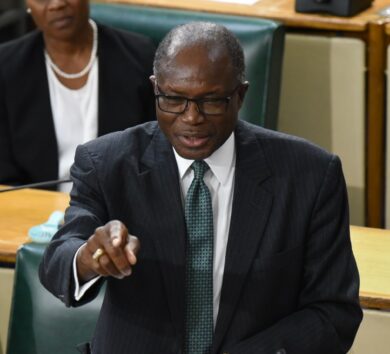
Golding’s Legacy
How will the current PNP be remembered? Former PNP Member of Parliament, Lloyd B. Smith, in a 2026 Nationwide News Network interview stressed that “the country has a very weak Opposition. The PNP is not cutting it.”
The Opposition has taken on a moniker as it remains hell-bent on travelling a cul-de-sac through a deserted path, opposing, boycotting, or voting against several high-profile legislative items, policies, appointments and constitutional amendments designed to better the lives of ordinary Jamaicans. Its opposition to the National Identification System (NIDS), blocking the extension of the lifesaving State of Public Emergency, initially opposing the 2017 Law Reforms (Zones of Special Operations) (ZOSO) Act, cash transfers to the people of Jamaica during covid, divide and voting against the National Reconstruction and Resilience Authority (NaRRA) Act (2026), The NHT Amendment Act (2026) the Jury (Amendment) Bill (2026), Portmore Municipalities Parish Bill, the Extension of the DPP and Auditor General Retirement Age (2023), amendment to the Electoral Commission to include the Political Ombudsman, The Road Traffic Act Regulations, The Firearms (Prohibition, Restriction and Regulation) Act, boycott of the Constitutional Reform Committee (CRC) which was created to steer Jamaica’s transition to a Republic, and abstention from voting on the Constitution (Amendment) (Section 61) Bill (2024) which sought to remove references to the “King’s Most Excellent Majesty” from the enacting clauses of local laws represents the People’s National Party’s greatest accomplishments.
Though not an exhaustive list, these underscore the need for a reset in how the opposition governs itself. As Golding admits at his party’s conference on Sunday, “We do not ask for blind loyalty. We ask you to judge our conduct…” People may begin to ascribe a perception that offering critique of the JLP matters more to the PNP than presenting a superior blueprint for national development, built on substance. It’s what political theorists describe as permanent opposition, influential enough to stop governments, but insufficiently persuasive to become one. This is not to suggest that government has been infallible, nor that the Opposition should surrender their constitutional duty to scrutinise power. Instead, it is a call for a rethink in how the Opposition acts, for it too is a creature of our governance architecture.

A new opposition
In politics, action almost always carries greater electoral appeal than criticism. Political leadership is judged not only by what one opposes but by what is proposed.
The PNP has yet to convince citizens that it possessed a superior strategy capable of defeating organised crime and protecting vulnerable communities, of confronting regional and geopolitical instabilities, of bettering its own record of poverty, ‘transfer of wealth’, standard of living, economic growth and infrastructure development, all of which were worse off under their watch compared to now.
Even as the Opposition relies on an intellectual merit that awards deserving credit to the Simpson-Miller era, a decade has passed; such a launching pad is swiftly decaying. There is a new generation of thinkers, doers, and eligible electorates who have only experienced the leadership of the Holness Administration: no new taxes, no guarantors, improved benefits under the NHT, advanced skills training, improved judiciary, fatal arrest of crime and violence, skilful management of the global pandemic and expansion of hospital infrastructure and personnel, improved employment, stable inflation, and a net international reserve saved for a stormy day.
Whether on governance issues, constitutional reform, security measures, or unlocking national potential, a pattern emerges that is difficult to ignore.
The PNP’s political identity increasingly appears rooted in resistance, or a zero-sum game: a permanent protest movement. While it argues that its stance is principled, many citizens see another example of political actors allowing the perfect to become the enemy of the good.
Successful opposition evolves into governments-in-waiting. They criticise but persuade, expose weaknesses, and present superior alternatives. They hold governments accountable, as well as their own, while rejecting any attempt at “delay tactics”. This demonstrates to voters a vision, competence, and leadership when it matters most. If the current slate of PNP legislators continues to define themselves primarily by what they can stop, rather than what can be built, they risk reinforcing the very perception that has kept their party out of power for the past decade. A party that opposes nearly every major initiative eventually ceases to be viewed as a watchdog and begins to be seen as an active “roadblock”. The Jamaican Parliament returns from summer recess today (September 22nd, 2026). The PNP can show it is ready to champion progress with the same energy it once used to resist it. Failing which, Jamaicans may continue to see it not as the next government, but as the permanent opposition.
Clinton Rattray can be contacted at: [email protected]




Comments