
Dennis Minott | SWEAT 4.0: From Stolen Ingenuity to Atoning Courage

/ Our Today
administrator
Peter Espeut’s argument about restorative justice and reparations opens a door.
But before that door is opened wide enough for the parcel to enter, we should ask a question considerably more consequential than the size of the eventual goodies: who gets to stand at the door?
My fear is that the reparations enterprise could itself become the next great feeding opportunity for Jamaica’s accomplished billioneerers — those remarkably agile custodians of other people’s resources who can discover authentic African ancestry with astonishing speed whenever an economic opportunity presents itself. One can almost imagine the ritual: a little genealogical rummaging, a timely embrace of an African great-great-grandmother previously unmentioned at dinner parties, a generous application of Sweat 4.0, and presto — standing acquired. The danger is not fanciful. Whenever enormous resources become available, intermediaries, financiers and institutional gatekeepers acquire interests of their own. Reparations must therefore be not merely received but transparently governed — and negotiated by those whose standing rests on ancestry and injury rather than on access, appetite, and occult Pastor Pinnock’s “oil of magical capture”.
That is the first thunderclap. The second is larger, and it concerns the nature of the theft itself. What was stolen from enslaved Africans was not merely muscle and motion. It was human capital: intelligence, ingenuity, agricultural knowledge, scientific observation, metallurgy, craftsmanship, organisational capacity and entrepreneurial energy — the ability to transform sunlight, soil, water, biomass, hydro, and human labour into productive wealth. It included the renewable-energy wisdom embedded in generations whose labour was appropriated without wages and whose descendants inherited neither the accumulated capital nor the institutional advantages produced from it.
That is why I call the next stage Sweat 4.0. The first sweat bottled was the coerced physical labour. The second was the wealth extracted and bottled from that labour. The third was the institutional and financial capital accumulated and compounded from it. Sweat 4.0 is the faux nouveau perspiration-distiller’s recognition–circa 2023–that the stolen human ingenuity itself had value — and that its appropriation helped build institutions whose descendants still benefit from the resulting accumulation.
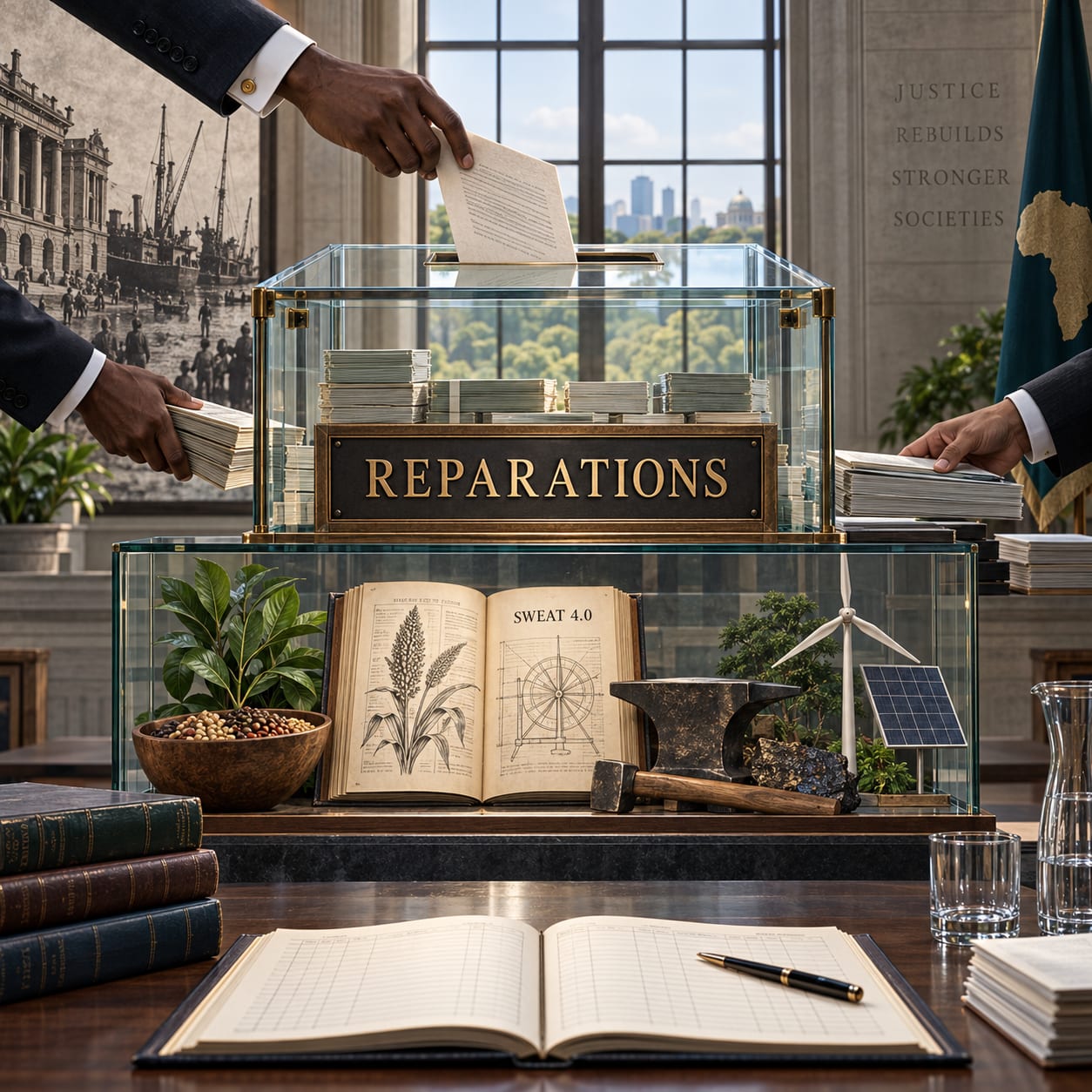
This is not an argument for indiscriminate punishment of contemporary Britons. Quite the contrary. It is an invitation to British institutions to investigate themselves honestly, and the documentary ground for doing so is unusually solid. The Bank of England’s own research records that the British Government borrowed £15 million through City financiers to help fund the £20 million compensation package paid to slave-owners after abolition — while the enslaved received nothing. The Bank has also acknowledged its own historical connections with the system, including its possession of two Grenadian sugar plantations after loans secured on them defaulted. University College London’s Centre for the Study of the Legacies of British Slavery has documented the scale of slave ownership and its financial aftermath with comparable rigour. This is precisely the kind of evidence-based historical accounting that should precede political grandstanding.
Let the British institutions themselves help establish what was taken, who benefited, which institutions accumulated from it, what survives today and what, if anything, remains morally or materially reparable. Then let them explain what they believe they owe — and, of equal import, what they believe they do not owe. That would be infinitely more intellectually respectable than allowing politicians, oligarchs, banks and self-appointed interpreters of the national interest to arrive with calculators already humming. Legitimate standing to negotiate reparations should belong to the injured and their descendants, not to intermediaries who have discovered a profitable enthusiasm for ancestry, rural Jamaican-accented vocabulary and darker complexions.
Imagine, then, British corporations doing something far more consequential than sponsoring ceremonial conferences, commissioning glossy brochures and applauding declarations of partnership. Imagine British capital, engineering, science and technological know-how being deliberately deployed to build Jamaican intellectual, industrial and technological capacity.
Imagine a British act of atonement so audacious that, within nine years, every CARICOM territory had been transformed into a fossil-fuel-free, energy-resilient and technologically self-sufficient society—not by importing another generation of dependency, but by transferring the knowledge, technologies, manufacturing capabilities and intellectual property needed to make such independence durable.
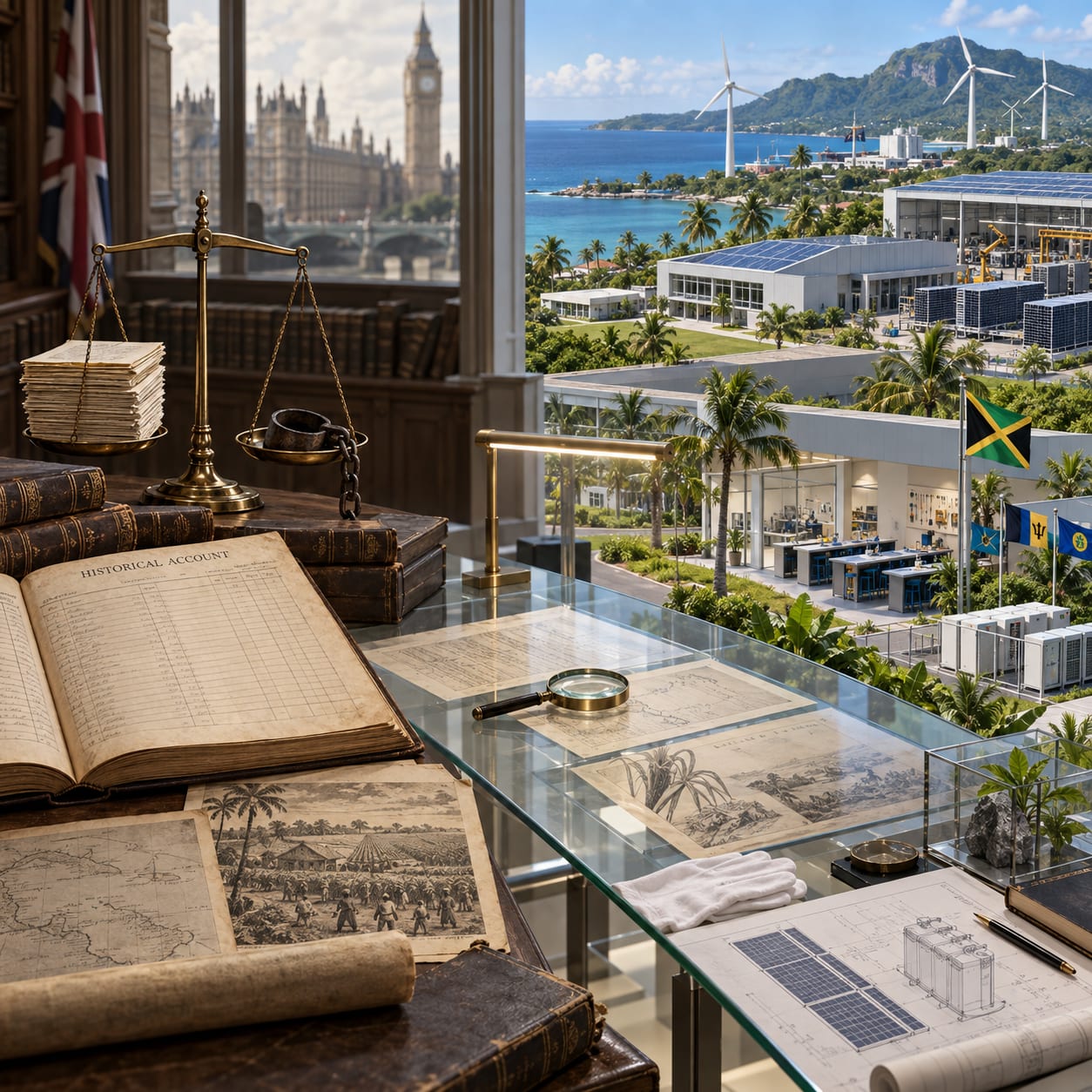
Imagine British technology and Jamaican-CARICOM ingenuity combining to provide every Caribbean community with sovereign, secure, affordable and locally produced and controlled energy for electric power, transportation, agriculture, water production and desalination, manufacturing, construction, refrigeration, communications, hospitals, schools and digital infrastructure—and for the thousands of productive enterprises that could emerge once energy insecurity ceased to be an economic sentence.
Imagine regional aviation based on Caribbean green renewable hydrogen from leucaena or sargassum.
Imagine solar, wind, ocean energy, sustainable biomass, energy storage, green hydrogen and other appropriate technologies being developed with Caribbean scientists, engineers, technicians, entrepreneurs and universities—not merely for Caribbean consumers.
And imagine the real measure of British atonement being not how many pounds were donated, how many conferences were held, or how many photographs were taken beneath banners proclaiming partnership, but how much productive capacity was left behind: laboratories, factories, patents, skilled people, indigenous enterprises, research institutions, manufacturing capability and a generation of Caribbean scientists and entrepreneurs capable of innovating without waiting for permission from London, Washington or even Beijing.
That would be an altogether different kind of reparative relationship.
It would not be charity.
It would be atonement made productive—Britain helping to convert the historical extraction of Caribbean labour, resources and ingenuity into a new inheritance of Caribbean knowledge, technological sovereignty and prosperity.
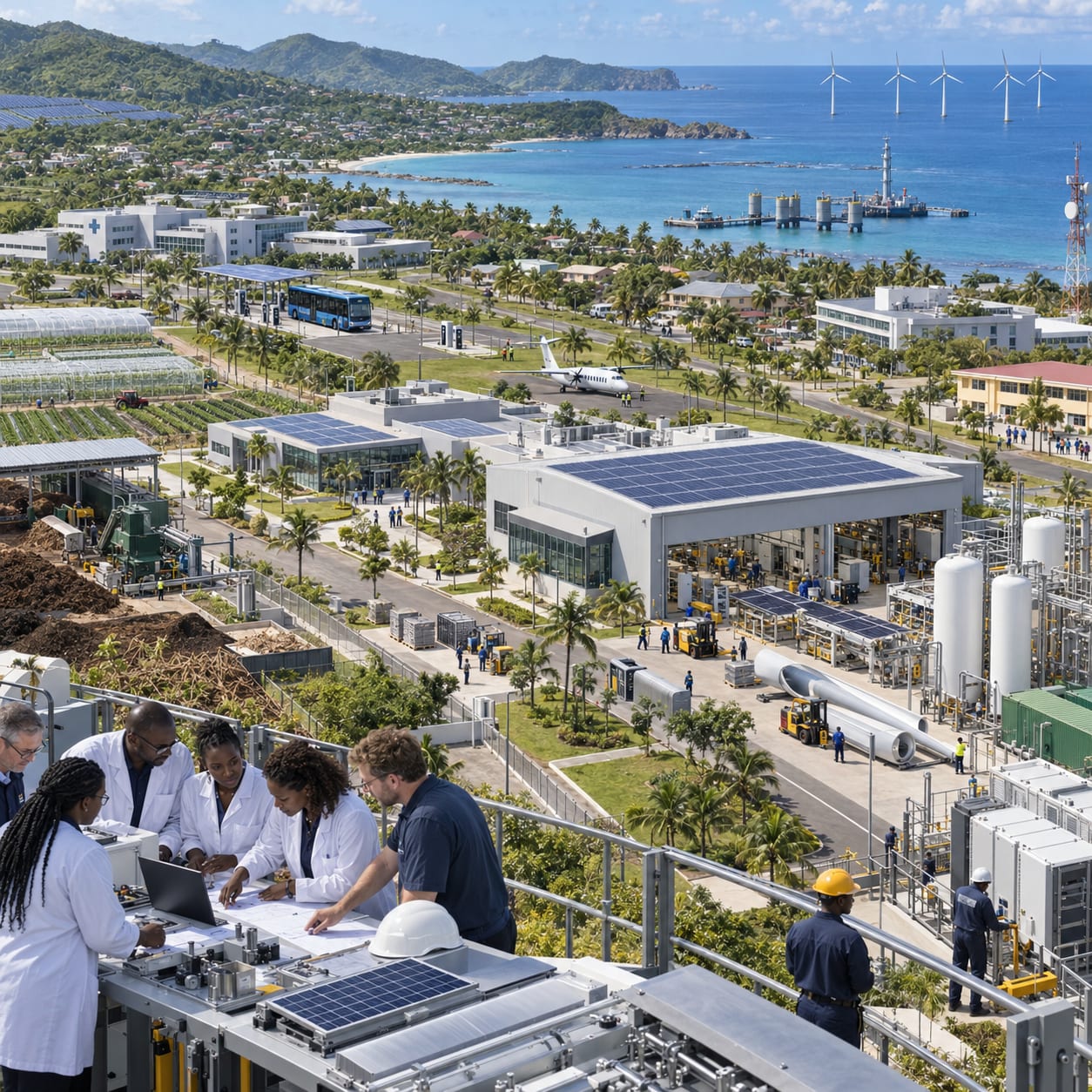
Such measures would not erase history, nor should they pretend to. But they could transform the relationship with that history. They could generate something more valuable than an evaporating cheque: standing, earned through the honesty of the accounting rather than purchased through the size of the settlement. And there would be a delicious irony in it. The descendants of a system that once converted African sweat into British capital could help pioneer a new model in which British institutional capital is converted into African knowledge, capability, energy and opportunity. That would be an at-one-ment worthy of the name “atonement” — not a grudging transfer extracted under duress, but a demonstration that a nation and its institutions can confront a regrettable history without surrendering their dignity, and can convert historical accountability into scientific, educational, technological and economic renewal.
The prize is not merely justice for the Caribbean. It is a renewal of British self-respect–Albion’s national pride in all its magnificence. A country that could look at its own ledgers without flinching, and then act with invention rather than evasion, would have done something noble that no empire ever managed. It would have converted the lingering smell of guilt into the fragrance of institutional courage. That is a form of national spirit worth cultivating — the pride of a nation that chose honesty over amnesia, and creation over denial.
That, to me, would be Sweat 4.0++. And it is the one genuine reparative odour that no billioneerer can bottle, no gatekeeper can capture, and no anonymous arbiter of true insight—not the sockpuppeteer’s Insight4Sight—can counterfeit in Portland or Kingston, Castries, Bridgetown, Georgetown, or Paramaribo.






Comments