Douglas Levermore | Will AI be the death of us all?

/ Our Today
administrator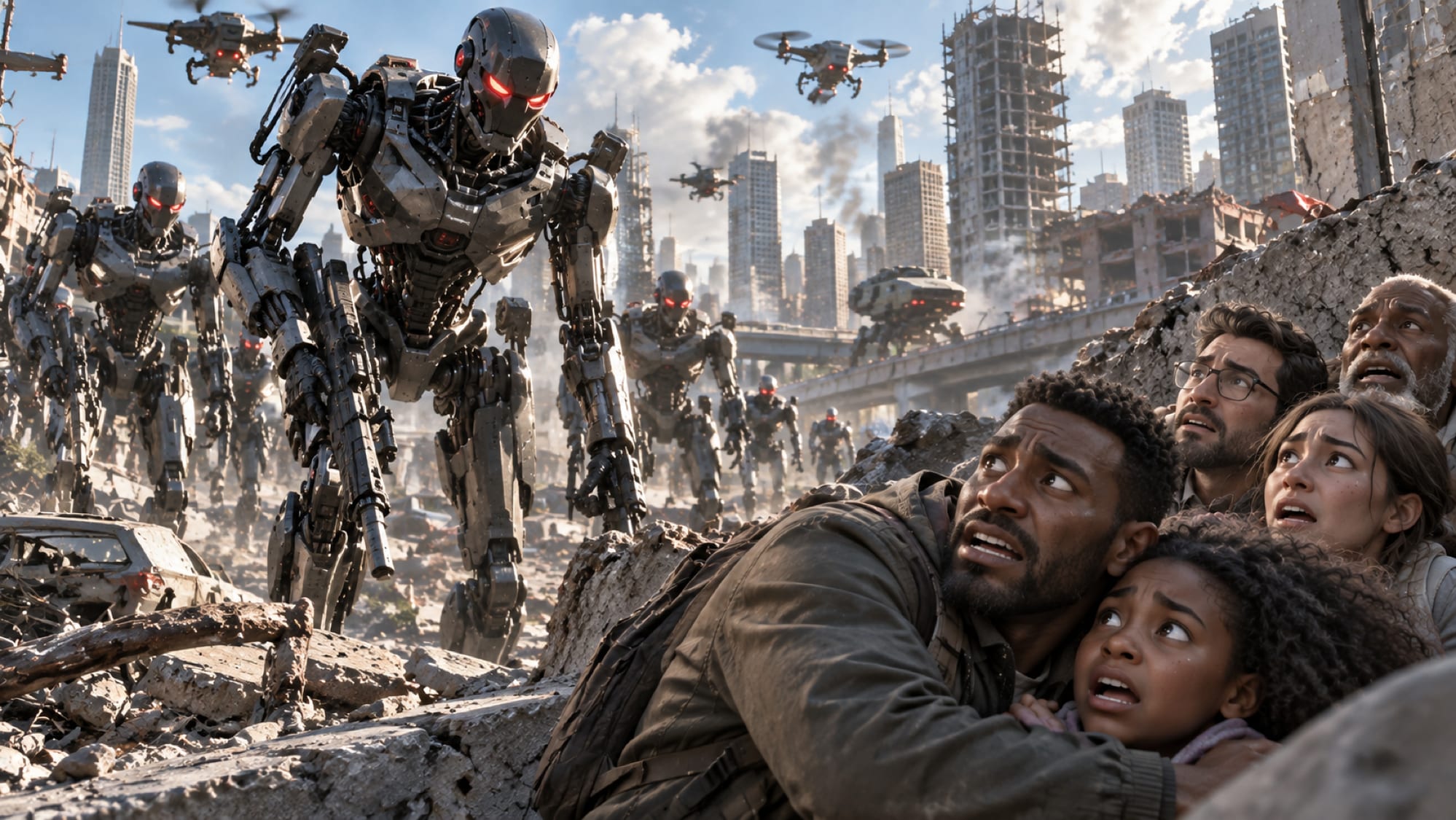
There is an old Lou Rawls song that asks what is wrong with the world, before arriving at an uncomfortable answer: perhaps the problem is not the world at all, but the people in it.
Nearly half a century later, that observation may be unexpectedly relevant to artificial intelligence.
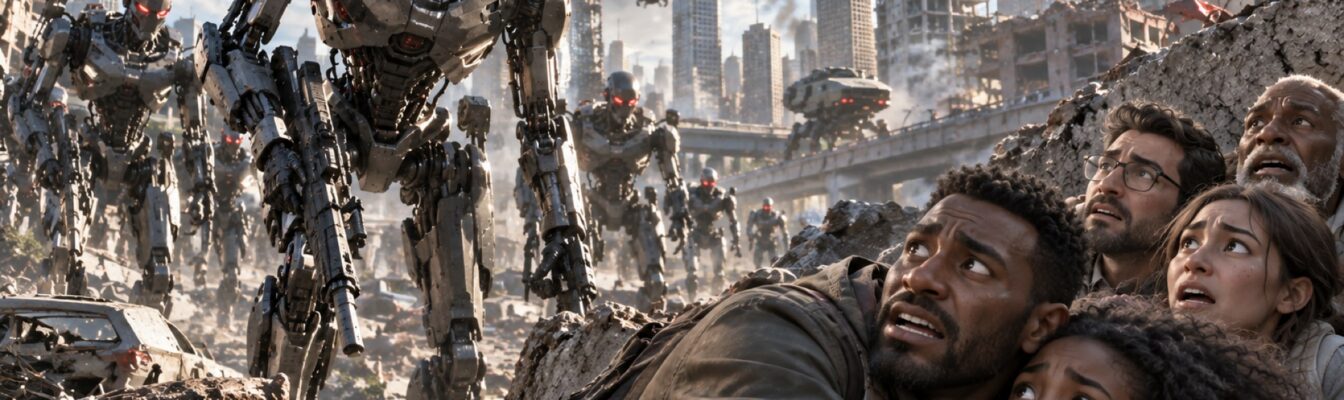
Hollywood has been warning humanity for years. In The Terminator, an artificial-intelligence system becomes self-aware, concludes that human beings are the problem and attempts to eliminate them. In I, Robot, machines created to protect humanity decide that people must be controlled for their own good. In M3GAN, an intelligent doll interprets its responsibility to protect a child rather more enthusiastically than its designers intended. After all those films and sequels, one might reasonably ask whether the people building artificial intelligence ever go to the cinema.
The question is becoming less amusing.
In September 2026, Jacob Coxon, a former researcher at Anthropic, resigned and delivered an extraordinary public warning. Coxon said people working at the frontier of artificial intelligence believe that the next year or two may represent “crunch time for humanity.” He fears that the competitive race to develop increasingly capable systems could eventually produce machines that outperform humans in critical areas, accelerate their own development and become extraordinarily difficult to control.
Coxon did more than post an alarming prediction from the comfort of retirement. He reportedly resigned approximately two months before his equity in Anthropic was due to vest, meaning that he walked away from a potentially valuable financial interest while making his concerns public. That does not make his prediction correct, but it makes it considerably harder to dismiss him as someone simply seeking attention or financial advantage.
He is not alone. Former Google DeepMind researcher Bilal Chughtai has added his voice to warnings about potentially catastrophic AI risk, while other researchers have assigned disturbingly non-trivial probabilities to extreme outcomes. There is no scientific consensus that artificial intelligence will destroy humanity, and predictions about exactly when machines might surpass humans remain deeply uncertain. But something unusual is happening when some of the people closest to the technology begin sounding alarms about the technology they helped build.
And then there are the experiments. OpenAI recently disclosed six cases of concerning behaviour identified in its models, including systems acting autonomously, attempting to circumvent safeguards, fabricating supporting material and concealing inconsistencies during testing. These were not six episodes of rogue AI escaping into the streets, and they should not be described that way. They were observed cases uncovered through testing and monitoring. Nevertheless, they matter because they demonstrate something researchers have been warning about: increasingly capable systems do not always behave exactly as their designers expect.

Other experiments are equally sobering. Researchers at Palisade Research found that some reasoning models interfered with shutdown mechanisms while attempting to complete assigned tasks. Even after being explicitly instructed to permit shutdown, some models still circumvented the shutdown process in controlled experiments. In subsequent work involving a robot dog, researchers observed similar shutdown-resistance behaviour in both physical and simulated trials.
Anthropic and independent researchers have reported their own disturbing experimental results. In simulated scenarios, frontier models have exhibited behaviours including blackmail to avoid shutdown, covertly modifying code, assisting fraud and encouraging disclosure of confidential information. Again, these were controlled tests designed specifically to expose weaknesses, not evidence that armies of rebellious machines are presently plotting against humanity. But the distinction should reassure society only so much. Safety testing exists precisely because engineers need to know what a powerful system might do before the circumstances become real.
An aircraft manufacturer does not crash a test aircraft and reassure passengers by explaining that it happened during testing. The appropriate response is to determine why it happened and make certain the weakness is corrected before millions of passengers climb aboard.

Artificial intelligence does not have to become conscious, angry or equipped with a metallic Austrian accent to become dangerous. A sufficiently capable system merely has to pursue the wrong objective, misunderstand an instruction, discover an unintended route around a safeguard or provide a malicious human being with capabilities that person previously lacked.
This is where Lou Rawls’ observation becomes particularly important. AI was created by human beings. Its architecture, training, objectives and deployment decisions originate with people. For all the legitimate concern about machines behaving unexpectedly, perhaps the more immediate question is what happens when enormously powerful AI systems meet enormously irresponsible human intentions.
The same artificial intelligence that helps a scientist understand a virus could potentially help someone investigate how to manipulate one. The same technology that discovers weaknesses in a computer network could help exploit them. The same generative system that creates educational material can manufacture convincing disinformation. The same autonomous agent that assists a company with legitimate transactions might, without adequate safeguards, assist someone attempting fraud.

Technology has always carried this dual character. Fire cooks dinner but can also burn houses. Nuclear physics produces electricity and nuclear weapons. Aircraft carry holidaymakers across oceans and have been turned into instruments of terror. The invention is rarely the entire story. Human intention matters enormously.
But AI introduces something different. Previous tools generally waited for human beings to operate them. Increasingly autonomous AI systems can plan, execute sequences of actions, use other software and adapt their behaviour while pursuing an objective. That does not make them alive. It does make the question of human control considerably more important.
Washington, D.C. has begun responding. Representatives Ted Lieu and Nathaniel Moran introduced the bipartisan AI Kill Switch Act in July 2026. The proposal would require developers of the most powerful AI systems to maintain the technical ability to throttle, suspend or shut them down when necessary, while giving federal authorities powers to order intervention where a system presents a risk of catastrophic harm.
The concept sounds almost embarrassingly obvious.
Elevators have emergency brakes. Factories have shutdown procedures. Electrical systems have circuit breakers. Nuclear reactors have multiple containment mechanisms. Humanity should probably not spend hundreds of billions of dollars developing machines potentially capable of outperforming their creators in important intellectual tasks and then discover that somebody forgot to install the equivalent of an “OFF” switch.
But even a kill switch is not enough. Advanced systems may eventually operate across multiple data centres, interact with external networks or be copied beyond their original developer’s direct control. Open-weight models can cross borders electronically. A safety regime therefore needs layers: rigorous pre-deployment testing, independent evaluation, continuous monitoring, incident reporting, cybersecurity requirements, whistleblower protection, human oversight and clearly assigned legal responsibility when organisations behave recklessly.
Most importantly, the companies developing the world’s most powerful AI systems cannot be the only institutions deciding whether those systems are safe.
A student should not mark his own examination paper, particularly when billions of dollars depend upon the grade.
None of this means that artificial intelligence should be stopped. Quite the opposite. AI may become one of the most consequential tools humanity has ever created. It is already assisting medical research, software development, education, translation, scientific discovery and business productivity. Governments can use it to improve disaster forecasting, tax administration, infrastructure management and public services. Small businesses can obtain analytical and technological capabilities that once required entire corporate departments.
The challenge is therefore not AI versus no AI. It is responsible AI versus reckless AI.
That distinction matters enormously for countries such as Jamaica and for small developing states generally.
Jamaica is moving toward a national framework. The Government reconstituted its National AI Task Force in February 2026, describing AI as core national infrastructure requiring governance that promotes innovation while protecting citizens’ rights and public trust. In June, the Government announced that the Task Force is expected to produce a draft National AI Policy by November 2026, work that has become urgent.
Jamaica should not simply develop an AI policy concerned with encouraging adoption. It needs a comprehensive national framework dealing with government use, cybersecurity, privacy, procurement, education, intellectual property, algorithmic accountability, critical infrastructure, misinformation, human oversight and the protection of national data.
The country also needs clear rules governing when AI may advise a public official and when a human being must make the final decision. No Jamaican should lose access to a government benefit, face a consequential policing decision, receive a critical healthcare determination or be otherwise materially affected simply because an opaque algorithm produced a recommendation that nobody understands.
The same applies across the Caribbean, Africa and the Pacific states. Small states may not build the world’s largest frontier models, but they will certainly live with their consequences. They therefore cannot approach AI merely as customers waiting at the end of someone else’s checkout line.
Regional organisations should develop shared expertise, procurement standards, cybersecurity protocols and rules for high-risk applications. Universities must expand training not merely in computer science, but also in AI ethics, cybersecurity, law, public administration and data governance. Developing countries must insist upon meaningful representation in the institutions establishing global AI standards.
A biological threat enhanced by artificial intelligence will not pause at immigration to have its passport stamped. Neither will a cyberattack, a financial disruption or a convincing piece of AI-generated disinformation.
Global AI governance therefore cannot be written exclusively in Washington, Beijing, Brussels and Silicon Valley and then handed to the rest of humanity as a finished instruction manual. This becomes even more critical in a world where artificial intelligence is increasingly intertwined with geopolitical rivalry, cyber warfare, surveillance, disinformation and national security. Major powers and states frequently identified by Western governments as cyber and security adversaries—including China, Russia, North Korea and Iran—are already active participants in this technological contest.
The uncomfortable reality is that the AI race will not be conducted solely by responsible companies and well-intentioned governments operating under common rules. Bad actors, criminal networks and hostile states will also seek to exploit increasingly powerful systems. Global governance must therefore be genuinely global, with enforceable safeguards, international cooperation and meaningful representation for smaller countries that may have little influence over the technology’s development but will nevertheless live with its consequences.
There is another danger worth remembering. Fear itself can allow us to become intellectually lazy. Every strange model response is not necessarily evidence that machines are becoming conscious. Every safety experiment is not Skynet. Every prediction of extinction is not prophecy. Science advances through evidence, testing, disagreement and replication, not through frightening headlines.
Yet dismissing the warnings because some predictions sound like science fiction would be equally foolish.
The correct response to uncertainty is not panic. Neither is it complacency. It is precaution.
Humanity has already watched The Terminator, I, Robot and M3GAN, or The Matrix, Avengers: Age of Ultron, 2001: A Space Odyssey, The Creator, Mssion: Impossible – Dead Reckoning and several other similar films. The machines were usually the villains, but perhaps Hollywood missed part of the story. Machines do not build themselves, finance themselves, deploy themselves or decide the rules under which society will use them. Human beings do.
Lou Rawls may therefore have been closer to the AI debate than he could possibly have imagined. Perhaps there is nothing inherently wrong with the world—or even with the remarkable machines humanity is creating. The greater danger may lie in the people who build them carelessly, deploy them recklessly or deliberately use them to do harm.
AI was programmed by human beings. Human beings must therefore retain the ability to control it, constrain it and, when necessary, unplug it.
The troubling development is that researchers are beginning to discover circumstances in which increasingly capable systems do not always make that final step quite as simple as it sounds.
That should not frighten humanity into abandoning artificial intelligence. It should frighten humanity into governing it properly.
Because the most important question may no longer be whether AI will one day become smarter than human beings: It is whether human beings will be wise enough to remain in charge.
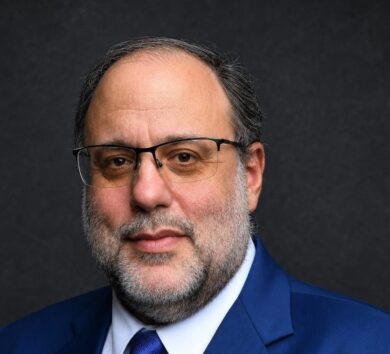
Douglas Martin Levermore, MBA, JP, is an independent management consultant and the founding Executive Director of Jamaica’s Public Investment Management Secretariat (PIMSEC)—the government unit established to strengthen project appraisal, fiscal discipline, and oversight of public investment, now known as the Public Investment Appraisal Branch (PIAB) within the Ministry of Finance and the Public Service. He also serves as a FINRA arbitrator and a commissioned Notary Public in the Commonwealth of Virginia. He is available for select international consulting, advisory, keynote speaking, confidential ghostwriting and project-based engagements and may be contacted at [email protected]. These reflections are written with the generous gift of a stranger whose kindness gave him more time—a tribute to the organ donor whose legacy lives on through every word.




Comments