
Address by PNP Leader Mark Golding to the 85th PNP Conference

/ Our Today
administrator
Party Chairman, officers of the Party, Members of Parliament and Senators, Regional Chairs, Mayors and Councillors, delegates, comrades and friends: good afternoon.
And to the people of Westmoreland and all of Western Jamaica: thank you for welcoming us. Thank you for your courage. Thank you for standing strong through one of the hardest periods this region has ever faced.
Today the People’s National Party has not gathered in the traditional way at the National Arena in Kingston. We have come to Savanna-la-Mar. We have come west because this is where the pain has been greatest, where the recovery has been slowest, and where the need for determined leadership is most urgent.
This morning we worshipped together in Negril. We worked at the Race Course Early Childhood Institution here in Central Westmoreland, where the Party put back a roof. In Mount Airy, Eastern Westmoreland, we provided a home for Miss Williams and her family. I thank everyone in those communities who pitched in to make those projects a success.
I also acknowledge the workers and supporters who have travelled here from near and far. You are the backbone of the PNP, and I honour you with respect and love for all that you do to keep our banner flying high.
Standing with the West
Savanna-la-Mar has a personal meaning for me. My mother spent part of her childhood here. My grandfather served as the medical officer in charge of the Savanna-la-Mar Hospital until his untimely death as a relatively young doctor. So when I stand here, I feel both the history of my family and the responsibility of this moment.
After Hurricane Melissa struck, I said to myself that at a time like this, leadership is not a fancy title. Leadership is standing where the pain is, listening to the people, and being changed by what you hear.
So I scrambled to find a helicopter and I came to the West to see for myself what had taken place. It was a scene beyond my imagination. Homes and other buildings flattened. Miles of light posts and electricity wiring on the ground. Schools damaged. Farms ruined. Debris everywhere. It was an apocalyptic scene of utter devastation. My heart broke.
Yet in the midst of all that destruction, the people welcomed me with love. I saw neighbours helping neighbours. I saw people who had lost nearly everything still sharing the little they had. I was touched by the dignity of those who had lost so much and were facing the painful hardship of rebuilding their lives.
Their determination struck me deeply. And in planning this annual conference, I said to myself: you have been there for us, and we must always be there for you.
An abject failure of the people
Eleven months later, our decision to come to the West today was also strengthened by the fact that the Government’s response to the hurricane disaster has been an abject failure of the people. There has been no coherent recovery plan, and the people have largely been abandoned.
In what amounts to a shameful breach of trust, the Auditor General’s report showed that monies donated through the Government’s portal by well-wishers at home and abroad to help those in need have not been given to them or spent to their benefit. Of the $1.44 billion donated, only $26.2 million was spent. That is 1.8 per cent. Less than two cents out of every dollar given by people who wanted to help.
The many thousands who lost their roofs and suffered other damage have faced delayed and inadequate assistance to repair their homes, and those whose houses and businesses were destroyed have been left to fend for themselves.
There has been no programme to cushion rising food prices for hurricane victims. No extra help for them to send their children back to school.
Well into the new school year, the vast majority of damaged schools remain in a damaged state, while the Prime Minister romanticises about children learning under trees and tents.
There has been no programme to support small business operators and help them get back on their feet. For those who had bought insurance, the insurance industry has let them down by delaying the settlement of their claims, and the Government has done nothing about it.
All in all, it is no wonder that the economy has sustained three successive quarters of negative growth and Jamaica is in a recession.
As usual, all we hear from the Government and its media allies is self-praise about the wonderful job they say they are doing. But self-praise is no praise at all. Self-praise cannot repair a roof. It cannot put a child back in a proper classroom. It cannot reopen a small business, fix a broken farm road, or put affordable food on a family’s table.
Who feels it, knows it.
We did not come here merely to describe your suffering. We came to say what must now be done.

A recovery road map for Western Jamaica
First, Jamaica needs a public reconstruction dashboard showing every damaged school, health facility, road and public building, the money allocated, the contractor responsible, and the deadline for completion. The people must be able to see where the money is going and whether the work is being done. In November of 2025, the Prime Minister told us that a dashboard was being finalised. We are still waiting, ten months later.
Second, we need a properly funded recovery facility for farmers, fisherfolk and small businesses. Assistance must reach people quickly and on reasonable terms, so they can replace equipment, restore production, rehire workers and earn again.
Third, we need accelerated settlement of legitimate insurance claims. People who paid their premiums should not be left waiting indefinitely. Where delay becomes unreasonable, the regulators, the Government and, if necessary, Parliament must act.
Fourth, reconstruction must make the West stronger than it was before: more resilient roofs and public buildings, better drainage, stronger electricity and water systems, and construction standards fit for a country exposed to more powerful storms.
Fifth, we need a special land titling and adjudication programme in disaster-affected communities. Families cannot rebuild securely without the peace of mind of owning the land where their home is built.
And throughout this recovery, the people must be respected and given a seat at the table. It is the people who are affected by the decisions that impact their lives. Reconstruction cannot be designed in Kingston and announced to the West. Community organisations, churches, farmers, business operators and local representatives must be involved in setting priorities and monitoring delivery. It must be shaped with the people who live here.
That is our recovery road map for Western Jamaica: rebuild with transparency, reject political victimisation, restore livelihoods to revive the economy, strengthen infrastructure, secure land ownership, and leave no community behind.
Why I stand here
I stand here today committed to the task of making Jamaica a much better place for all Jamaicans. As a leader, it is not the status and trappings of office that keep me going. Those things are a distraction, and if you indulge in them, you will inevitably succumb to arrogance and a deluded belief in the quality of your own performance.
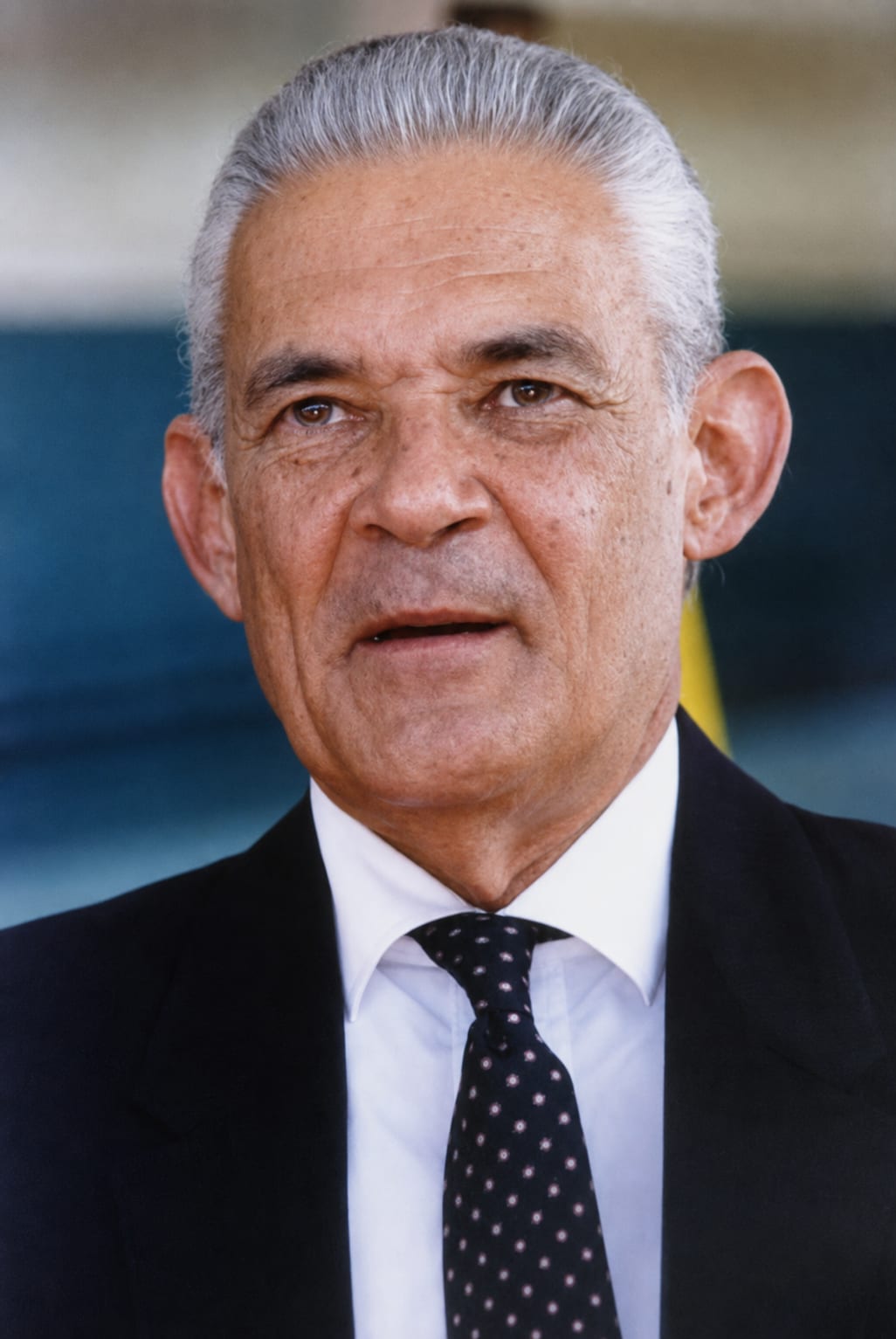
I am here because I know Jamaica can be better, and I have the skills, the experience and, most importantly, the caring heart to lead this country forward. As Michael Manley said, a leader must walk humbly with the people, listen, learn, and understand the reality of what needs to be done. He knew where we were going, and so do I.
What has happened in the West reflects a wider national problem. Too many Jamaicans are left to struggle alone against the raging tide of high prices, unreliable public services, insecure housing, inadequate healthcare, and an economy in which work does not deliver a better life for the people.
Jamaica does not lack talent. We do not lack hardworking people. We do not lack ideas. What we lack is governance and policies that put the people first.
Who we are
My vision for Jamaica is anchored in the core principles of the People’s National Party. Our policies must always seek to benefit the majority of the people. That is what putting people first means. We pursue social justice because we know that the way things are is not how they are meant to be, and better must come, because positive change is not beyond us.
It is why we created the National Housing Trust and the National Health Fund, to provide affordable housing and accessible medicines for the ordinary people of this country. It is why we passed laws to eliminate bastardy, so that everyone is lawful and equal, and to guarantee maternity leave and equal pay for women. It is why we created the PATH programme to provide a safety net for people who need it. And it is why we decriminalised ganja to end a century of oppression, and created a new lawful industry in medical and therapeutic cannabis that should be open to all, whether you are big or small.
That is the mission of the People’s National Party. We put people first. And today I give Jamaica five clear promises.
Our 1st promise: Ownership for more Jamaica
Our first promise is to make ownership possible for more Jamaicans.
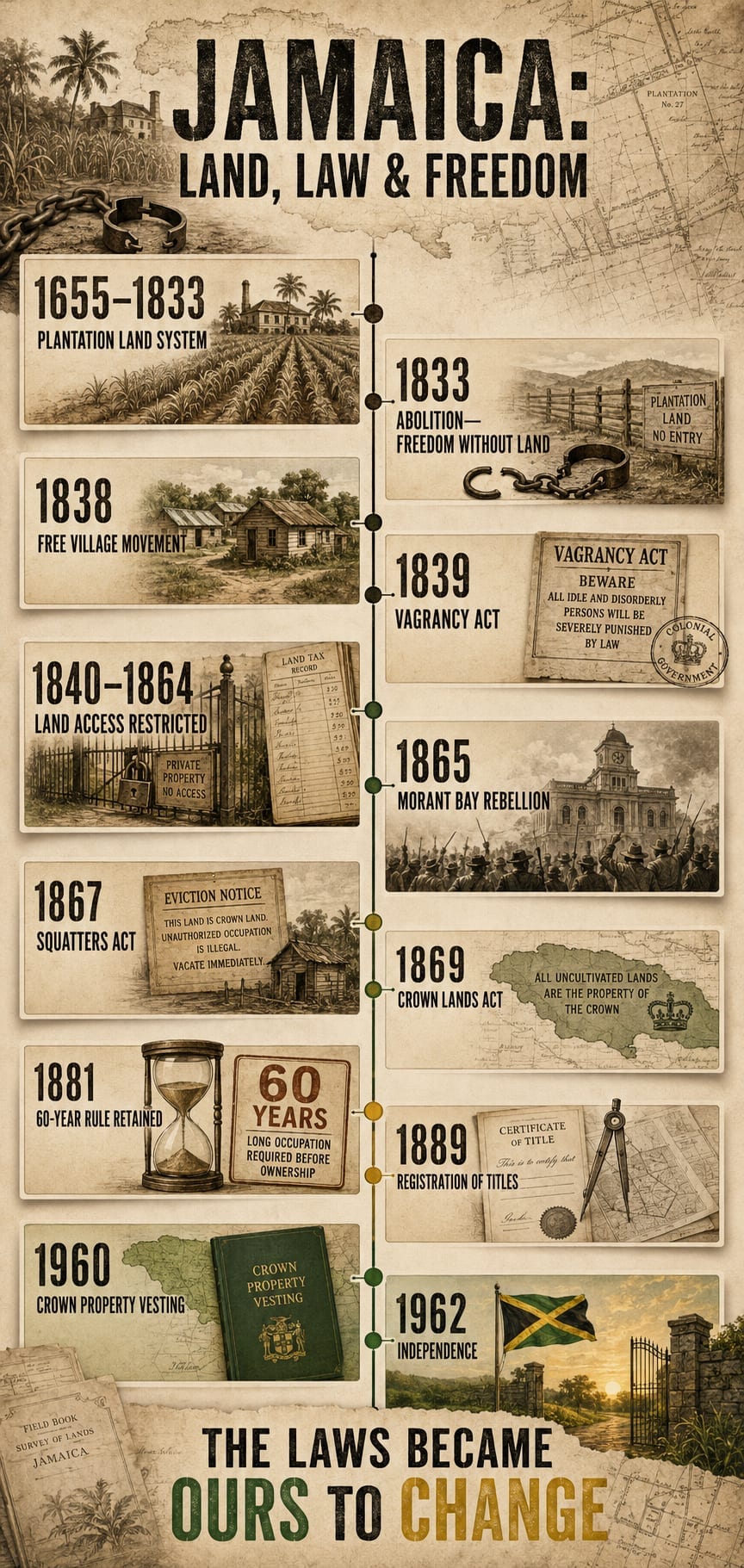
Hundreds of thousands of our people live on land they do not legally own. Many of them are living right here in the West, including communities around Petersfield like Food Farm, Puller Lane and Morass. Some families have occupied and cared for the same property for generations, yet remain one notice or one demolition away from losing everything. That is not security. That is not dignity. And nearly two centuries after Emancipation, it is not justice.
The qualifying period for acquiring ownership of government land by extended occupation is currently 60 years. It was legislated in the 1830s, around the time of Emancipation, when life expectancy in Jamaica was far less than 60 years. The formerly enslaved were not given land at Emancipation, and that 60-year rule was plainly intended to ensure that the people did not acquire ownership of land by possession when they left the plantations.
That is why I have prepared legislation entitled the Crown Lands Reform Act 2026, which asks Parliament to reduce 60 years to 25 years, subject to a fair legal process. The Bill also enables an area impacted by a disaster like Melissa to be declared a disaster adjudication area, so that legitimate claims can be settled quickly and titles issued to those who can establish their entitlement.
I attempted to take leave to table that Bill twice in July, before the summer recess, and I was blocked by the Speaker on both occasions. When Parliament resumes, I will table this Private Member’s Bill, and I will seek the support of the whole House to pass it into law.
We will implement the P.O.R.T.I.A. programme to regularise informal settlements, complete the Operation PRIDE schemes that have been left unfinished for so long, upgrade older housing schemes in need of repair, replace zinc fences with concrete walls, and provide the basic infrastructure required for decent living.
From Clifton in Bernard Lodge, to Pleasant Hill in Luidas Vale, to Cooper’s Pen in Trelawny, we have stood with the people in their time of need. We do not want to see any more families treated the way the families at Cooper’s Pen were treated. When we form the Government, we will tackle the historical injustice of landlessness in Jamaica head-on.
Through the NHT we will introduce a rent-to-own programme, so that self-employed and informally employed Jamaicans who cannot produce a pay slip can move from tenants to titled owners, with the rent they pay treated as proof of income and converted into a mortgage.
We will exclude the value of the land from the price of new NHT homes built on suitable public lands, so that the ground beneath the house is no longer a barrier to ownership.
And we will establish a $1 billion revolving Young Owners Deposit Fund, providing a $500,000 non-refundable grant to first-time buyers who have contributed for at least two years.
A land title is more than a piece of paper. It is security, it is collateral, it is inheritance. The vision of the PNP is not a Jamaica of permanent tenants and insecure occupants. It is a Jamaica of owners.
Our 2nd promise: A better life for working people
Our second promise is to make life easier for those who work for a living.
Jamaicans are working hard, but food, electricity, transport, rent and school expenses keep moving further beyond their reach. The cost of living is rising faster than wages, reducing the quality of people’s lives and deepening hopelessness and despair. A job must provide more than survival. It must provide a pathway to independence and a better life.
We will introduce a livable wage that takes the working poor out of poverty and is adjusted annually for inflation.
We will remove tax from overtime earnings and from tips, gratuities and commissions.
We are committed to removing income tax and education tax from incomes up to $3.5 million, to give working families and the middle class a break from the ravages of inflation.
And we will roll out our Clean Slate programme, forgiving penalties and interest on property tax, GCT arrears, traffic tickets, student loans and water bills, so that Jamaicans who have fallen behind can start again.
Our 3rd promise: A strong economy that builds your wealth
Our third promise is to build a strong economy that grows wealth and reduces inequality for our people.
Achieving the great promises of social justice requires a strong economy that delivers the resources to finance solutions, but after a decade in office this Government has failed to deliver sustainable and inclusive growth.
We will deepen the links between tourism, farming, manufacturing and community enterprise, so that more of every tourism dollar remains in Jamaica.
We will modernise agriculture and expand agro-processing so that farmers earn more from what they produce.
We will eliminate inefficient bureaucracy and make Jamaica friendly to business, driving reforms by proactive legislation.
We will make finance and government procurement accessible to small businesses.
We will bring competent leadership to the energy sector, channelling investment into solar, wind and other renewables to bring down the cost of electricity for households and businesses. Energy security is a must if we are to protect our economy and our people from geopolitical crises around the world.
We will create the ecosystem to make Jamaica one of the world’s great logistics hubs, integrating our economy into global supply chains to add value on our shores with decent, well-paid jobs for our people.
Western Jamaica can be a powerful engine of that growth. The benefits of tourism must be deliberately integrated into the local economy and local communities. The West should supply more of the food served in the hotels. It must have more Jamaican-owned attractions and offer more community tourism experiences. And the expansion of tourism must also bring better roads, water, training, housing and business opportunities to the communities that support the sector.
We will prepare our workforce for a world that is being rapidly reshaped by artificial intelligence. We will give Jamaicans the skills to benefit from it, rather than being cast aside by it. Through regional Youth Employment Hubs, a National Youth Innovation Fund, and a stronger partnership between HEART, employers and our schools, training will be targeted to feed into real jobs and real business opportunities.
Our young people’s only plan should not have to be a plane ticket to foreign.
And let me be clear. The PNP will protect Jamaica’s hard-earned macroeconomic stability, which we did the heavy lifting to make happen. We will maintain responsible fiscal policy and debt management. Our programmes will be costed, prioritised and appropriately phased. We will redirect resources away from waste and corruption, and grow the productive economy to finance national progress.
Compassion without competence is unsustainable, and competence without compassion leaves people behind. Jamaica needs both compassion and competence to progress to the next level.

Our 4th promise: Public services that work
Our fourth promise is to build public services that work for ordinary people.
Fifty-five per cent of Jamaicans are suffering from food insecurity, as measured by the United Nations. That means most Jamaicans cannot afford to eat the right foods to stay healthy and strong. That is not a statistic. That is a threat to the health of the nation.
Western Jamaica deserves a fully functioning regional hospital, but its only major hospital, Cornwall Regional, has been substantially out of service for nearly a decade and the refurbishment project is still unfinished. The project cost has moved from $2 billion to over $24 billion and counting. A 10,000-square-foot medical dome was promised months ago and is still not installed on site. Cornwall Regional has become a monument to delays, escalating costs and incompetent execution.
And across this country, you wait for hours at a public health facility and still cannot be seen. You are told you must be admitted, but there is no bed and you sleep in a wheelchair or on cardboard on the floor. If you need surgery, the operating theatre cannot be used because the air conditioning has failed or mould has taken over. These are serious threats to the lives of our people.
A PNP Government will tackle food insecurity through the E.A.S.E. school meals programme. We will transparently track and complete stalled health projects. We will establish a National Health Insurance Scheme in phases, beginning with children, seniors and persons with disabilities. We will strengthen primary care so that fewer illnesses become emergencies.
In education, we will focus relentlessly on literacy, numeracy, critical thinking, technological competence and preparation for work. A major cause of underachievement in our primary schools is the false assumption that English is the home language of our children. We will recognise the Jamaican language and use it as a bridge to mastery of English and stronger learning. Our language is loved abroad, so why don’t we respect it a yaad?
The mental health crisis facing our young people is a present-day emergency. We will increase access to guidance counsellors, school psychologists and mental health professionals.
As things stand today, many people feel unseen, abandoned and taken for granted. Our philosophy requires the people to be included in the decisions that affect them. We call that participatory democracy.
Local government is closest to the people, and is therefore the instrument of choice for deepening participatory democracy. We believe in empowering local government to deliver quality services to local communities and to respond to the people where they live. We must give local authorities the resources they need to deliver the services needed in local communities.
At the same time, their budgeting and other decision-making processes should involve consultation with the people they represent. Their committees should include non-political stakeholders from their communities. This will empower the people to hold their elected representatives accountable for the use of resources that are to benefit their communities.
The community roads, the drains, the markets, the water supply, garbage collection, the community centres: those are the services people rely on every single day at the local level. The next Local Government Election will shape the future of local services and the quality of life in your local communities.

Our 5th promise: Honest government and equal justice
Our fifth promise is honest government and equal justice under the law.
How do we get the wider society to join us on the march to progress? The people must believe that we are working for them and in their interests. That is why integrity must be at the centre of governance.
Integrity in governance is my continuing commitment to the Jamaican people. It is why every member of the PNP Shadow Cabinet has signed the Integrity Commission’s Leadership Code, committing to the seven principles of ethical governance, while the other side has refused to do so.
How can the people have trust and confidence in a government led by a Prime Minister whose murky personal finances cannot be certified by the country’s anti-corruption institution going on five years, and have been referred for further investigation by the agency that is responsible for tackling financial crimes?
A Prime Minister who stubbornly refuses to remove from his Cabinet a person recommended for prosecution for corruption offences? The maths not Mathsing!
And another Minister of State, following his lead, has also taken the Integrity Commission to court after it ruled that he was to be charged in 2025. Again, this nah add up!
These are serious aberrations that violate the basic norms of our system of governance. They are an ugly smear on Jamaica’s good name.
We will respect the independence of the institutions that investigate corruption, not take them to court. We will strengthen transparency in procurement and in major public projects, not keep contracts a secret. And we will ensure that ministers and public officials are held to the same law as everyone else, not protect and reward their unlawful conduct.
There is also a threat to our democracy itself, embodied in a government willing to exceed the boundaries of the Constitution. They were dropping States of Emergency like confetti, suspending the basic rights of Jamaicans and locking up people without charge. We used our power in Parliament to stop it, and then we successfully took it to court to defend the fundamental constitutional rights of all Jamaicans. They tried to introduce NIDS with a compulsory requirement to hand over biometric data. We took that to court as well, and successfully put an end to that violation of the right to privacy.
We support the rule of law, and we respect the police for the great work the JCF has done in bringing down the murder rate. We salute our law enforcement officers and urge them to continue to bring it down further. But Jamaica faces an unacceptably high rate of police fatal shootings, and this Government has done nothing to require body-worn cameras that establish whether the use of deadly force was justified. We do not accept that there needs to be a trade-off between securing safety and securing fundamental rights. A confident, strong democracy does not fear accountability.
We will also protect Jamaica’s environment. The climate crisis is not a distant risk. It is already devastating lives and livelihoods in the form of dangerous hurricanes, extended droughts and rising sea levels. The people of the West know that better than anyone. Major developments must pass through credible environmental impact assessments. NEPA must be strengthened and allowed to act independently. And we will ratify the Escazú Agreement to guarantee transparent and inclusive decision-making where environmental risks are involved.
Jamaicans must no longer be treated as strangers on our own beaches. I have stood with the people on this, from Bob Marley Beach in Bull Bay to the fishing beach near Mammee Bay in St Ann. We support a progressive Beach Access Policy, bringing the hotel sector to the table to find solutions that will respect the right of public access to our coastline, backed by appropriate legislation. Other Caribbean countries provide beach access to their citizens, and Jamaicans deserve nothing less.
We heard the people last year
Comrades, last year the people made the PNP a much stronger Opposition, but they did not yet give us the Government. We must reflect and learn from both parts of that verdict.
We are proud that Jamaicans returned a 28-seat PNP team to Parliament, double the 14 seats we had before. But we must be humble and ask why some Jamaicans who wanted change were not yet ready to place the full responsibility of government in our hands.
We have listened. We are learning. And we are changing.
We must be more present in communities throughout the years between elections. We cannot ask the country to change its government unless we show that we are prepared to change ourselves.
Our conduct in Opposition must show the people how we will govern. And we must demand discipline, integrity and performance from every elected representative who carries the PNP banner. We must show the Jamaican people why we are the right choice to govern this country – young people, women, workers, farmers, small and large business owners, and everyone who has never supported a political party.
Unity does not mean that we must always agree on everything. It means that our shared mission is greater than any personal ambition. No individual is bigger than this movement.
To those who voted for another party, and to the many Jamaicans who did not vote at all, I say this: we are listening to you too. We do not ask for blind loyalty. We ask you to judge our conduct and examine our proposed programme for this nation.
I give you this assurance. When the people entrust us with government, we will govern for every Jamaican, not only for those who wear orange, because those who wear green and those who wear no particular colour are our Jamaican brothers and sisters and deserve equal rights and justice, too.
The work before us
Loyal workers and supporters of the People’s National Party, this conference is not merely a celebration. It must be a mobilisation.
When you leave here, return to your communities with work to do. Help a family still struggling after Melissa. Listen to the young people who feel shut out and cast aside. Organise and advocate for the road, the water supply, the school or the clinic that needs attention. Earn the respect and trust of the people, one household at a time.
Do not answer political cynicism with rancour. Answer it with work, with humility, with honesty and integrity, and with genuine love for the people.
In his speech to this Party in 1991, Michael Manley said that three questions must be our compass. Is the PNP widening political power? Is the PNP widening social opportunity? Is the PNP providing a framework for more people to gain access to power?
He said that at all times the answer to those three questions must be “Yes”. I have outlined what we stand for, and can confidently say that the answer remains “Yes” today.
So, my fellow Jamaicans, sitting back and watching from a distance will not fix our country’s problems. Ignoring problems only allows them to continue. What is needed is a government that actively puts people first. Such a government will only be achieved by the people insisting on it and helping to make it happen.
Closing
Western Jamaica, we see you. We have heard you. And we will stand with you in your struggle to rebuild your lives.
To Jamaica as a whole, the choice before us is clear. We can continue with a government that congratulates itself while so many people suffer, or we can choose a government that measures success by the quality of the lives of the people.
A Jamaica where work pays and young people can build their future at home.
A Jamaica where wealth and owners are created.
A Jamaica where hospitals heal the sick, where schools prepare young minds for the future, and where communities have a voice in decisions that affect them.
A Jamaica where elected office means public trust.
If you believe it is time to rebuild the West, let me hear you!
If you love the message of hope, let me hear you!
If you believe in the PNP as the party that puts people first, let me hear you!
Stand with us. Work with us. Organise with us. Help us build a Jamaica that works for all and is nice for everyone.
People first in the West.
People first in every community across Jamaica.
People first in every decision that affects them.
People first as we rebuild Jamaica.
Thank you, Western Jamaica. Thank you to all who journeyed here from afar. Thank you to all who are watching and listening.
May God bless you, and may God bless our beloved country.
The word is love.


Comments