Coordinated action needed for youth wellbeing – NCDA

/ Our Today
administrator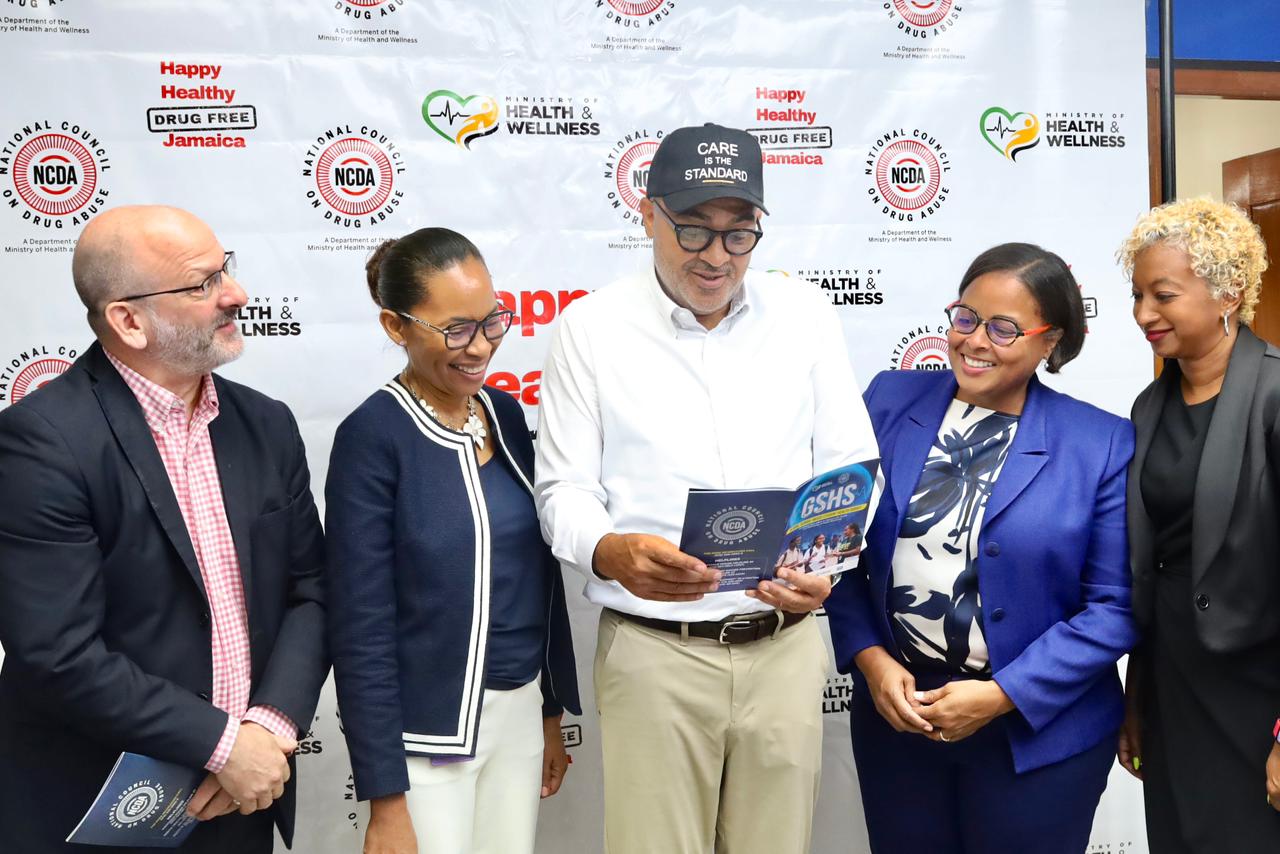
The National Council on Drug Abuse (NCDA), a department of the Ministry of Health and Wellness, has released the findings of the 2026 Global School-based Student Health Survey (GSHS), highlighting progress in reducing some risk behaviours among Jamaican adolescents while identifying growing concerns around mental wellness, nutrition, lifestyle behaviours and substance access.
The findings were presented during a press briefing on Wednesday, with representatives from the Ministry of Health and Wellness (MOHW), NCDA and the Ministry of Education, Skills, Youth and Information (MOESYI) examining the implications of the data and areas requiring continued intervention.
Presenting the findings, Mrs Uki Atkinson, Principal Director, Prevention, Public Education and Treatment (Acting) at the NCDA, noted continued declines in alcohol and cannabis use and involvement in physical fights. However, the survey also pointed to worsening mental health indicators, rising obesity, insufficient sleep and continued access to substances.
Among the findings, 46.2 per cent of Grade 10 girls reported anxiety, while 47.8 per cent of Grade 11 girls reported depression. Additionally, 24.3 per cent of students reported easy access to cannabis.
Minister of Health & Wellness, Dr. the Hon. Christopher Tufton, CD, MP, underscored the wider implications of the findings, particularly the potential effects of poor dietary behaviours, declining mental wellness and excessive screen time on the long-term health of young people.
“Our aim is to always be driven by research and use the evidence to strategically design community interventions that will support the behaviour change that we seek,” shared Dr. Tufton. “We have seen the numbers, and the NCDA, along with the Health Promotion and Education arm of the Ministry and our stakeholders across civil society, will now strategise a response.”
The education sector will also use the findings to help inform its response to issues affecting Jamaican students. Mrs Anna-Kay Magnus-Watson, Senior Education Officer, Health and Family Life Education, MOEYSI, highlighted the value of the GSHS in tracking changes in student behaviours and experiences and supporting evidence-based policy, planning and student support.
“As a ministry, we will continue to strengthen our methods,” Mrs Magnus-Watson said. “We will continue to scale our psycho-support services for students and continue the design and implementation of interventions that will meet the needs of our students. This also includes ensuring that our students have access to clinical services, as we know that mental health is a major concern based on the survey.”
For the NCDA, the findings will now help shape its prevention and intervention programmes. Mrs Paulette Spencer-Smith, Executive Director of the NCDA, said the results provide both encouragement and clear direction.
“We are seeing continued declines in alcohol use, cannabis use, and involvement in physical fights, which is a testament to years of sustained prevention work across our schools and communities. At the same time, the data is telling us plainly where we must sharpen our focus.” She added, “This survey does not sit on a shelf. It becomes our roadmap.”
In the coming weeks, the NCDA will convene a stakeholder consultation, including technical representatives from education, parenting, policymaking, and violence. The NCDA will also recalibrate its school-based prevention programming to address mental wellness and substance misuse together, expand parent and guardian support through initiatives such as Operation Lighthouse Parenting and strengthen referral pathways between schools, NCDA prevention officers, mental health services and substance use treatment services.
“We want to be clear that this survey is not a verdict on our young people. It is a call to action for the adults around them,” Mrs Spencer-Smith said.
The NCDA will continue working with the Ministry of Health and Wellness, Ministry of Education, school administrations, parents and other stakeholders to ensure that Jamaica’s young people have the support, information and protective relationships needed to thrive.





Comments