
Cuban hotel worker lauds Jamaican teaching stint; commits to building her country

/ Our Today
administrator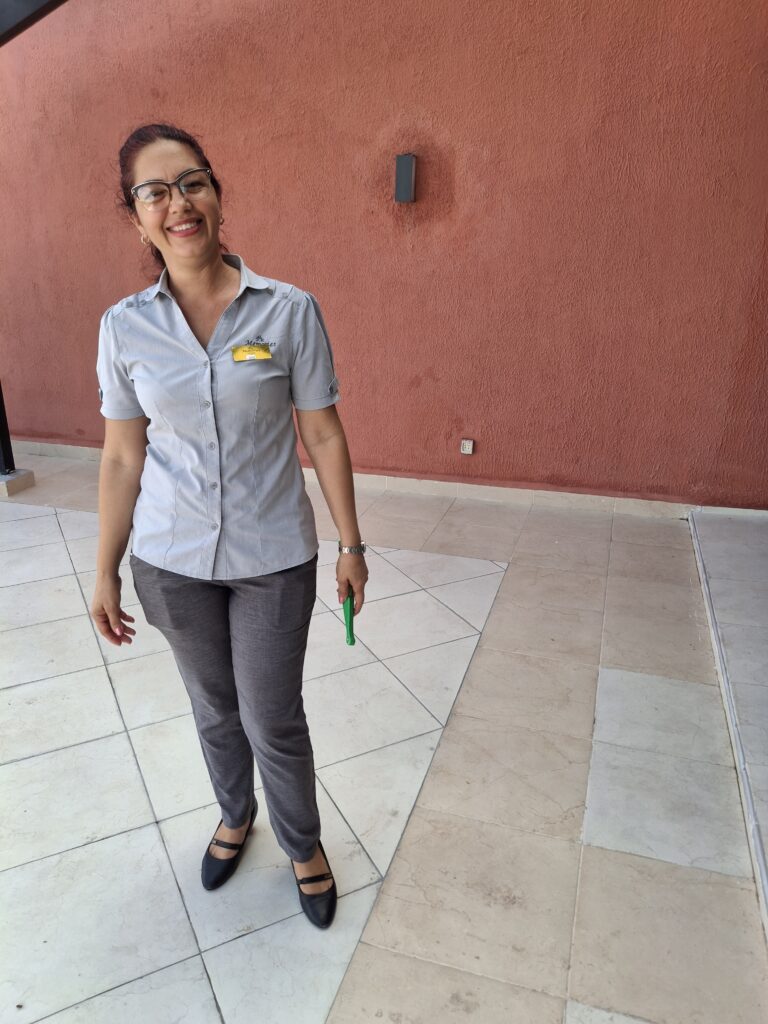
HG Helps/Contributor
A former Cuban teacher of Spanish at Discovery Bay Primary School in St Ann has returned home with energy, bent on playing her role in the further development of her nation’s tourism product.
Yenia Martinez, who lived and worked in Jamaica from 2017 to 2022, functions as a commercial specialist at the 467-room Memories Miramar Havana hotel, majoring in booking of clients, a task that was foreign to her when she got out of the classroom upon her return to the land of her birth three years ago.
She had served Cuba’s Ministry of Education (MINED) prior to her trip to Jamaica, having excelled in taking English as a subject to students at the secondary and collegiate levels.
“I am doing something different from education now and I am thoroughly enjoying it,” Martinez said while leading a group of Jamaican travel agents and journalists on a tour of the property, organised by New Kingston-based Caribbean and Latin Travel Consultant last week. “Cuba’s tourism is developing, and I want to make my contribution like how I served education for several years.”
Although Cuba’s tourism is in what is considered low season, several hotels are experiencing over 90 per cent occupancy, and in some cases, even 100. Officials believe that when the high season sets in, between October and May, it could be a great year for the Spanish-speaking island, despite the over 60-year embargo by the United States, which has imposed restrictions on its own citizens to visit the destination of 11 million inhabitants.

While continuing to paddle in the waters of her relatively newfound experience, Martinez will never forget her time in Jamaica, and would, if the opportunity arises, take the trip again.
“I worked at Discovery Bay Primary in St Ann for five years. It was a very nice experience, very different from Cuba and I enjoyed and learned all I could at the school, teaching children of different ages, from kindergarten to grade six and at one time a grade seven at the high school.
“At the school, it was a very special Jamaican family for me, it was the best, with 35 up to 45 children per class at the primary level, and between 26 and 30 children in the kinder classes. Actually, I continue to have communication with the teachers in Jamaica, the principal and I are in touch, and it was very nice having this experience,” Martinez said.
Dubbed her “best experience”, Martinez said that her first time teaching at the primary level posed a challenge initially, until she managed to make the adjustment.
“They had their traditional way of speaking patois, and they were urging me all along to speak it too, but it was very difficult. It was very funny for me learning with them, but in the end, they learned from me and I learned from them. I used to play games with them, do videos with them and teach them how to sing,” she said.
Adjusting to Jamaica’s way of preparing food, was one of the roadblocks that she had to clear on her own steam.

There is a big difference in the preparation and subsequent cooking of meals between Cuba and Jamaica. One of the defining ingredients is pepper – Cuba often shying away from the spice, while for Jamaica, it is almost blasphemy not to include it in its cuisine. So, it was a given, that Martinez would struggle, until her taste buds got accustomed to the fiery alien, which she managed to slay after a long while.
“At the beginning it was very difficult for me, very hard to handle the spicy food, but in time it got better. I actually got to enjoy the food a lot and I like patties, and you know how spicy patties are, but trust me, I loved it.
“My Jamaica family, when they get the chance to send some things for me, they always put some patties in there. My Cuban family eventually got around to enjoying it too,” Martinez said.
As for her family members, they did not go to Jamaica with her, as it was difficult for them to learn English at the start of her term, and with COVID-19 setting in later, online learning would also prove to be a challenge, she believed.
At no time, she said, did she feel afraid of moving around Jamaica, although she is not the outgoing type. Her personal file would show that she visited all of Jamaica’s main towns, except for Port Antonio, capital of the north eastern parish Portland, which remains a regret. She even got accustomed to Jamaican curse words, although she refrained from using any.
“I loved Kingston, Montego Bay, Savanna-la-Mar and others and I would visit my colleagues from Cuba at these places taking taxis and minibuses,” she said.
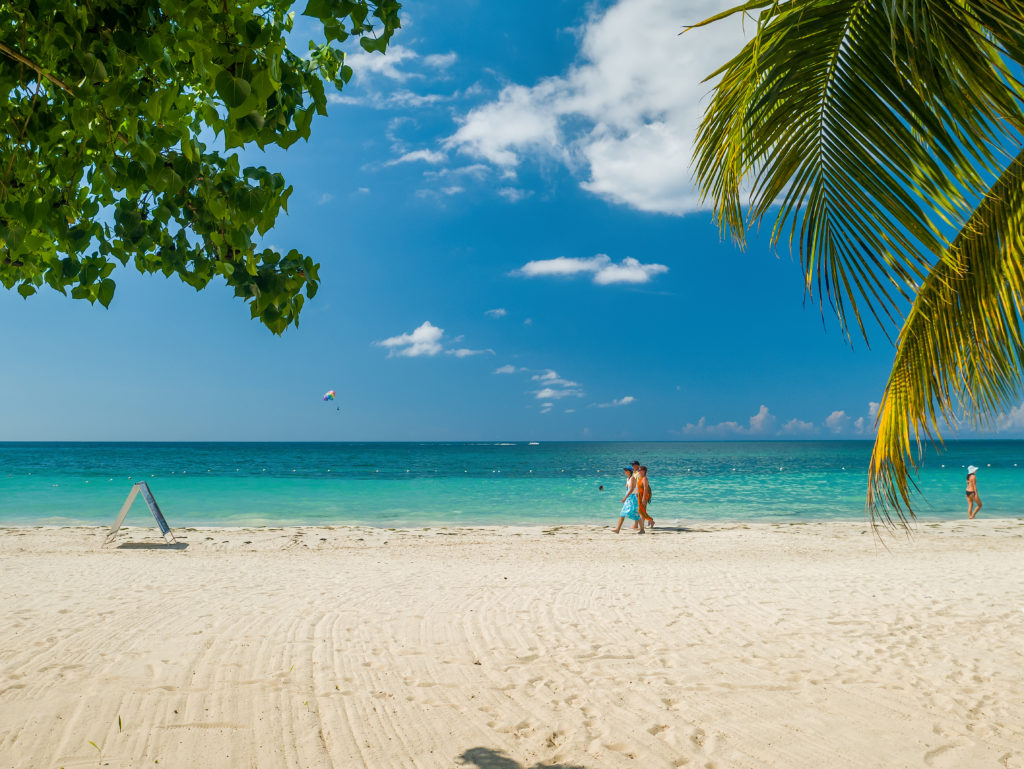
The experience of visiting Negril, the tourist resort that straddles the parishes of Westmoreland and Hanover in the western side of Jamaica, even brought back memories and similarities of one of Cuba’s leading tourist destinations – Varadero. While Negril is a 11-kilometre stretch of mainly white sand beaches and hotel properties, mixed with entertainment spots, Varadero, a three-hour bus drive east of the Cuban capital, Havana, along the north coast, boasts 67 hotel properties over a nearly 30-kilometre journey with a 90 per cent lining of white sand beaches.
She said she found many similarities between Negril and Varadero during visits to the Jamaica location.
And as she gets deeper into her newfound love, that of continuing to contribute to Cuba’s tourism thrust, she is prepared for great things to happen in the field as the weeks, months and years tick off.
“I am enjoying it and I am pleased to serve the customers here,” she stated.






Comments