The Wright Way | Did democratic socialism legitimise squatting in Jamaica?

/ Our Today
administrator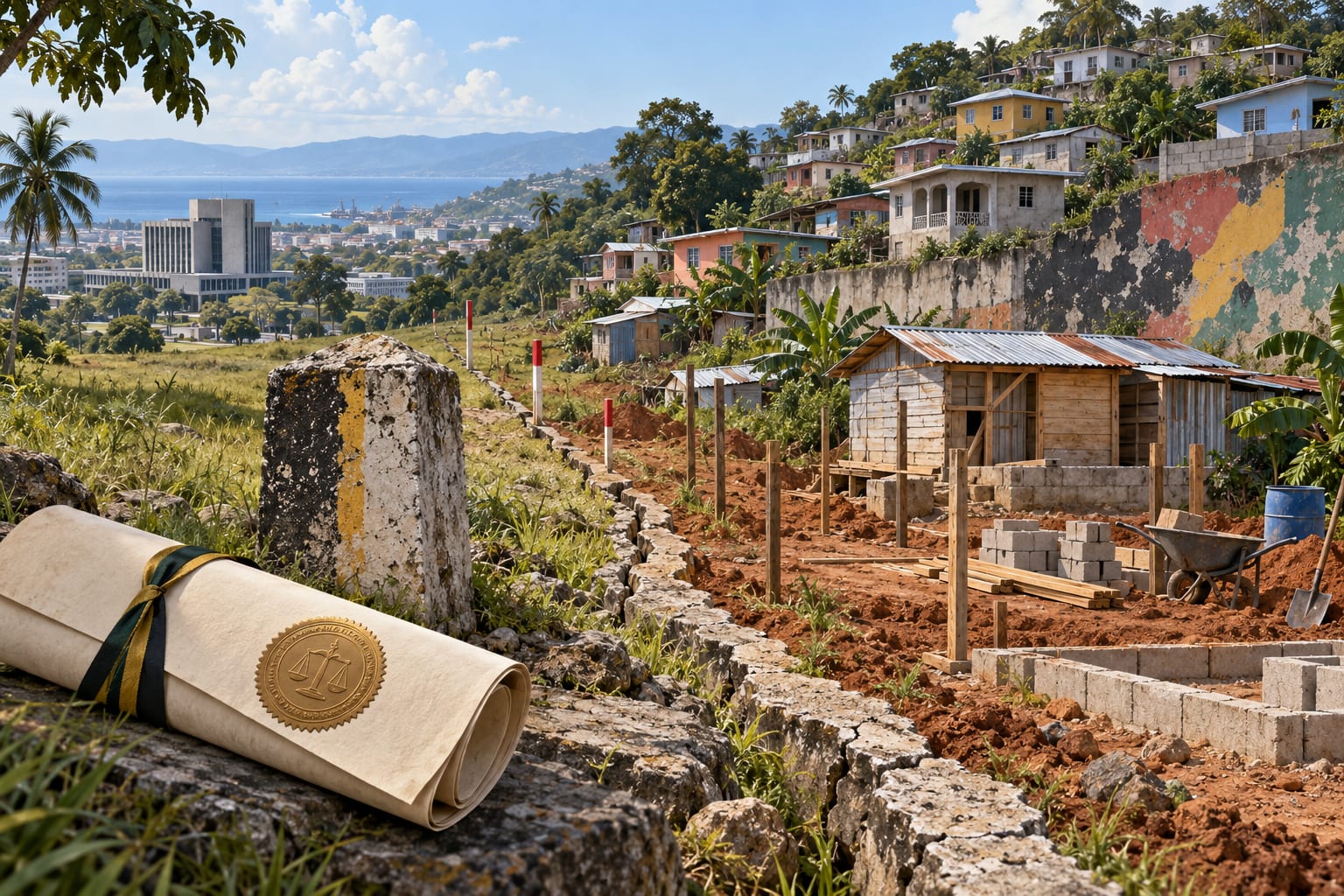
Jamaica’s squatting crisis did not begin in the 1970s, and it will not be solved by arguing about the 1970s alone. But the question still matters: did the democratic socialist moment legitimise squatting—socially and politically—so that the “land grab” became, for many, not only possible but defensible?
If we define “legitimise” as changing the law, the answer is straightforward: squatting was never made generally legal. But if we define it as something Jamaicans understand just as well—changing expectations about what is morally permissible and what the State will eventually accept—then the answer becomes far less comfortable. The 1970s may not have legalised squatting, but the period helped normalise the belief that informal occupation would often be tolerated and later regularised.
The Real Beginning: Freedom Without Land
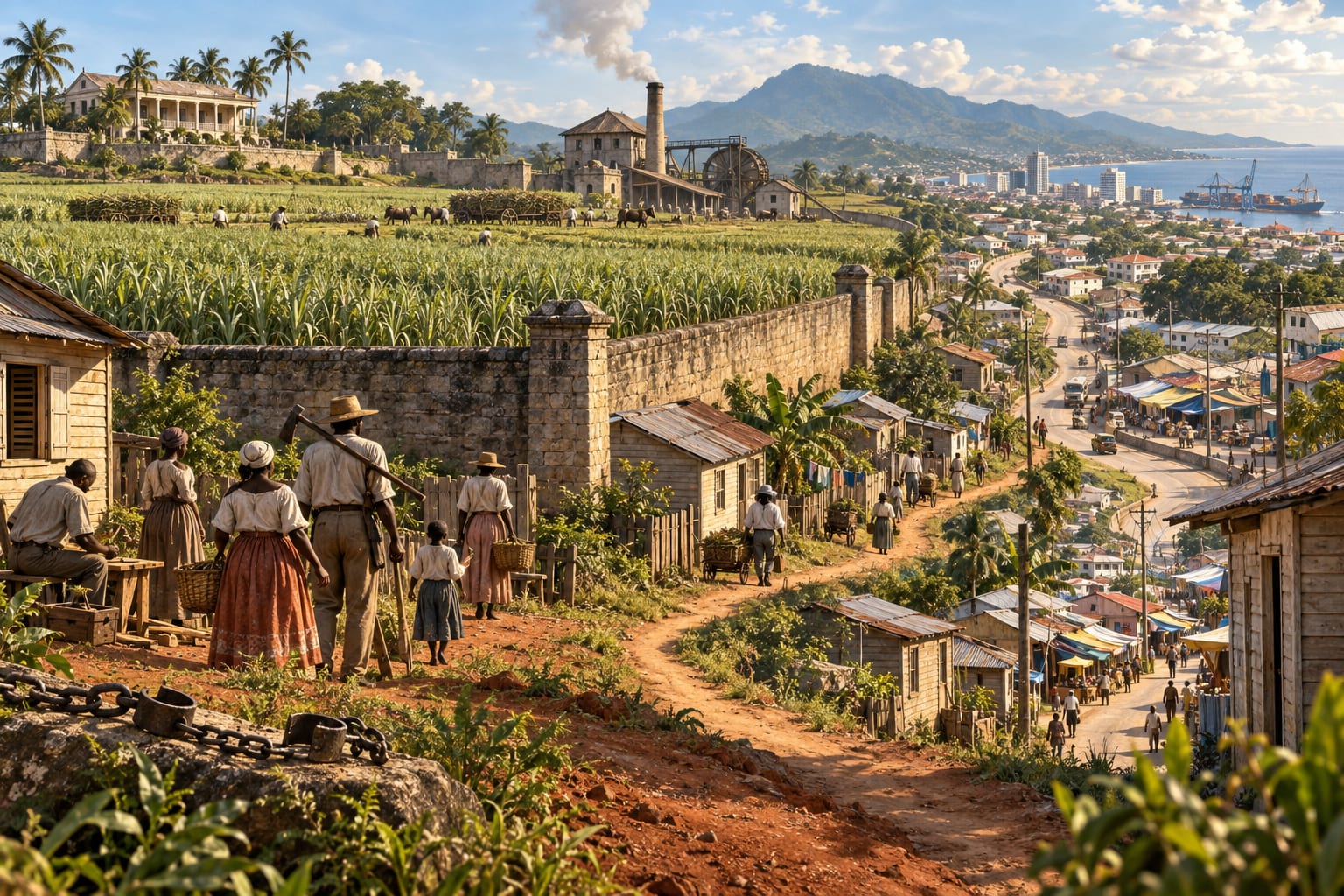
To understand squatting, we must begin with landlessness after Emancipation. Formerly enslaved people gained their freedom along with their personal resources and skills. The planter class retained the main productive asset—land—along with the advantage of controlling where jobs were located.
From that moment, a practical Jamaican pattern developed: workers lived close to where work existed. Many stayed on plantations or nearby because employment and transport options were limited. That logic never disappeared; it simply migrated as the economy changed.
Construction Booms and “Temporary” Settlements That Became Permanent
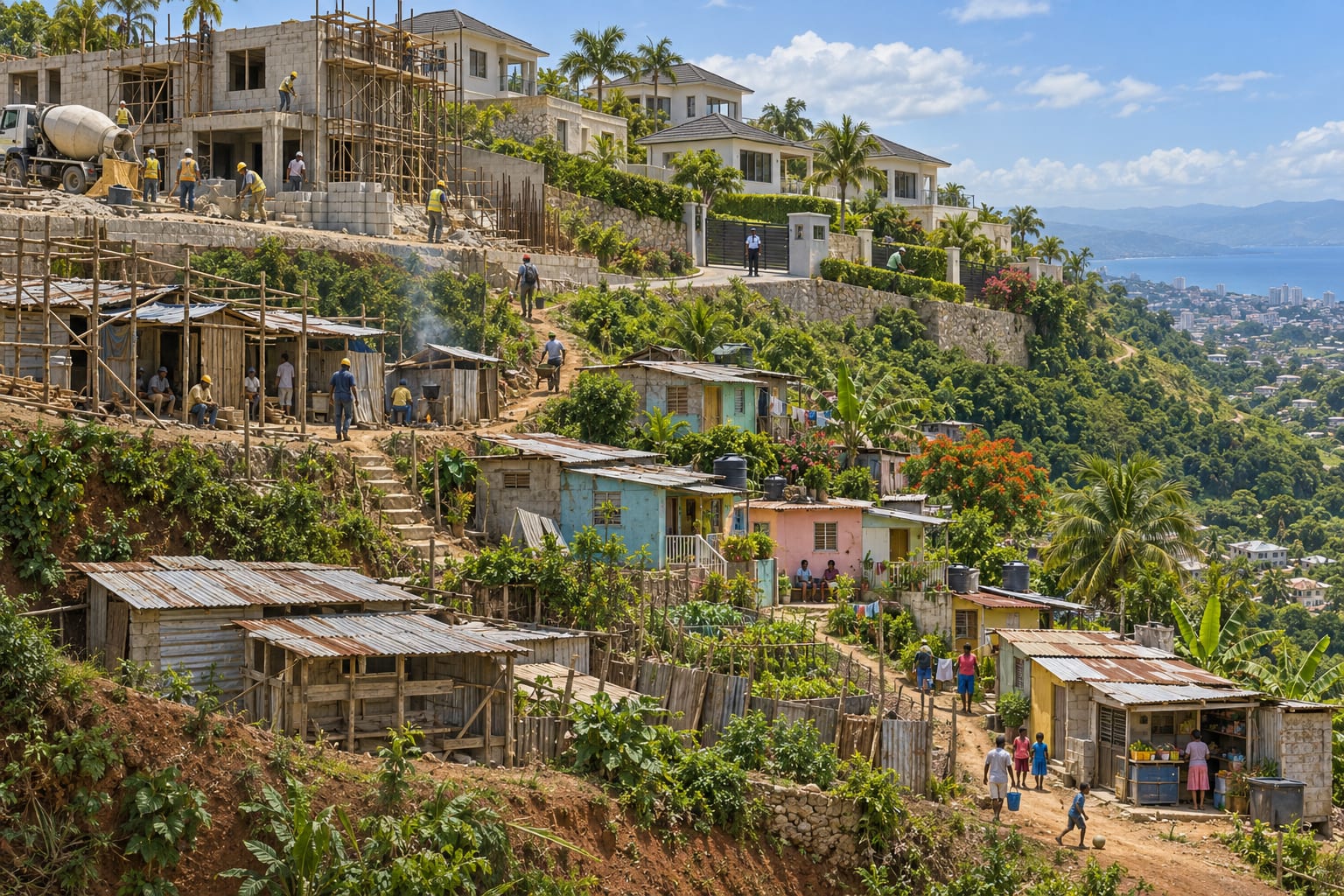
As Jamaica developed, employment shifted. Commercial and residential construction created a demand for labour, often drawing workers from rural parishes or places too far away for daily commuting. Yet large projects rarely provided housing for labourers.
Workers therefore did what workers do when the formal system offers no option: they built shacks and makeshift yards close to construction sites. The crucial point is that these settlements rarely vanished when the projects ended. In many cases, the reverse occurred. Informal camp areas became organised dormitories. Men brought their partners. Children arrived and needed schools. Communities formed.
This is the missing link that many analyses ignore. Informal settlements are not merely evidence of law-breaking; they are also informal housing solutions built around the geography of employment.
The pattern is visible in and around Upper St Andrew and similar districts. Residential communities need helpers, gardeners, watchmen, and other service workers. Those workers must live somewhere reasonably close to their jobs. This connection is well established on the ground.
It is why examples such as Coopers Pen and areas around Pear Tree Bottom matter. However one interprets their specific histories, the general pattern is consistent: labour demand during construction creates a settlement, while continuing demand for domestic work, services, and small commerce helps to cement its permanence.
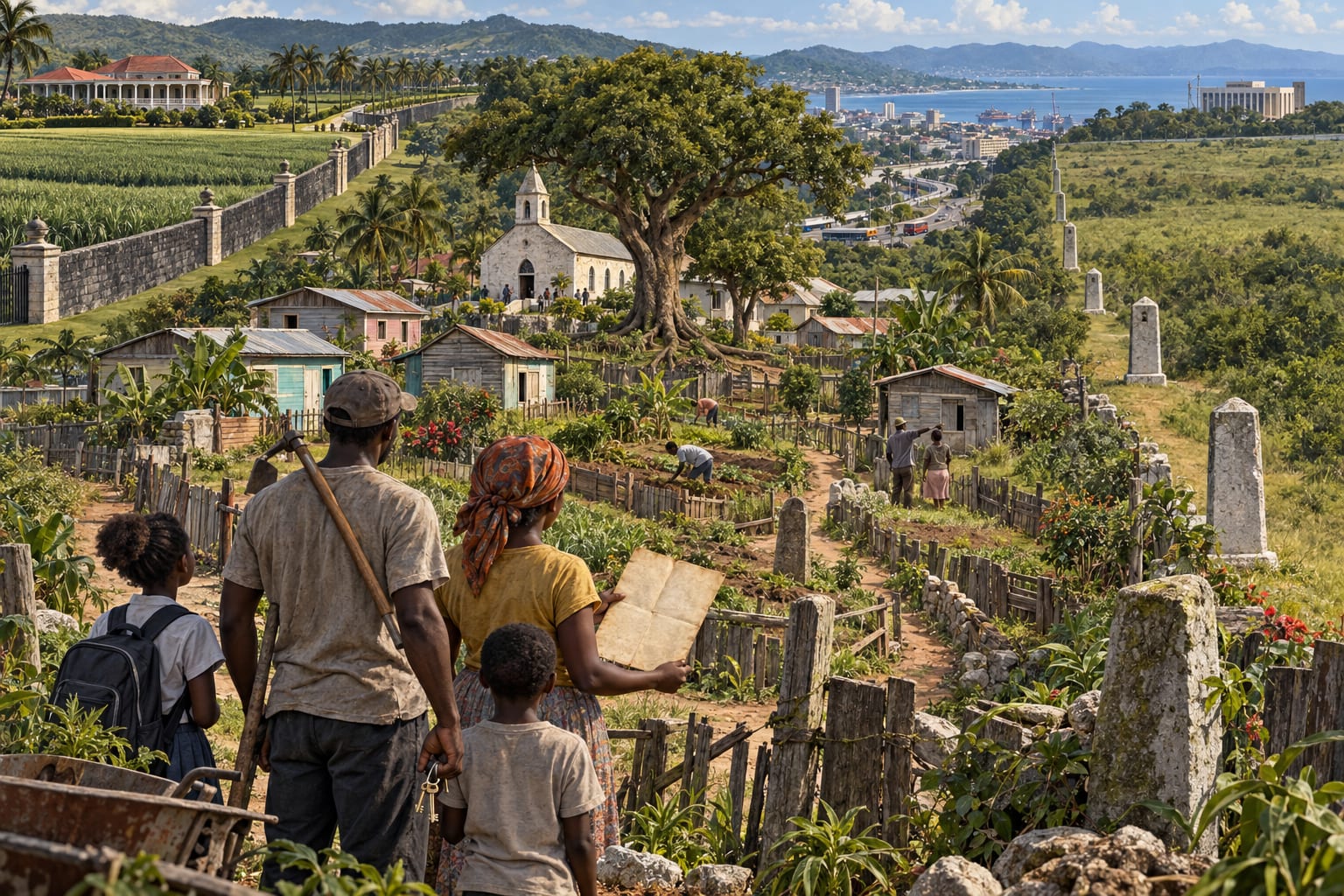
Land Distribution, Crown Lands and “Ownership Without Papers”
The squatting crisis is inseparable from Jamaica’s patterns of land ownership and its traditions of weak or incomplete documentation.
After Emancipation, churches played a major role in establishing free villages and facilitating access to land. Missionaries purchased land and subdivided it into smaller lots for formerly enslaved people. Nevertheless, over time, some arrangements produced social recognition without a registered title. In certain communities, ownership came to rest on family history, word of mouth, local understandings, and informal transfers. Across generations, such arrangements became fertile ground for disputes and vulnerability.
At the same time, Jamaica’s land remained divided between large private holdings—shaped by the plantation system and later middle-class accumulation—and extensive areas of Crown land. The divide was obvious: those with land had options; those without it had to improvise.
After Independence, rising expectations were inevitable. People wanted greater access to jobs, housing, schools, and land. Descendants of both the planter class and formerly enslaved people acquired parcels through inheritance, gifts, purchase, and personal enterprise. Yet the fundamental shortage remained for many working families: secure, affordable, and well-located land.
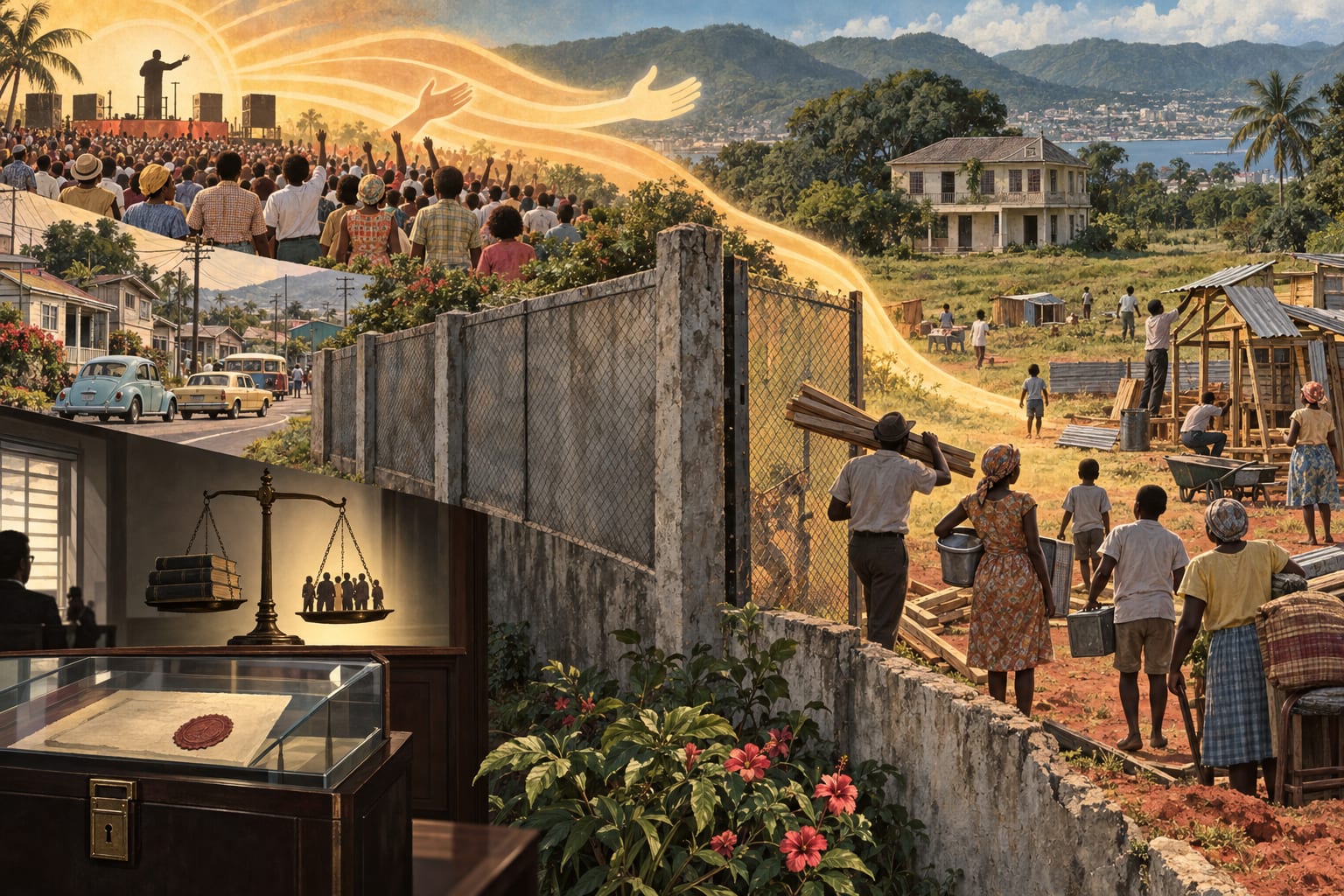
What the 1970s Changed: The Signal
Fast-forward to the 1970s and the rise of Michael Manley’s democratic socialist project, designed—at least in its rhetoric—to distinguish itself from older capitalist assumptions and authoritarian socialist models. Its moral centre was redistribution: widening opportunity and shifting power towards ordinary people.
Within that atmosphere, political language concerning property and fairness acquired unusual force. Talk of “land for the people” and anecdotes about redistributing “extra” houses, cows, or wealth—whether intended as literal policy or political shorthand—helped spread a message that many Jamaicans had long wanted to hear: the old distribution was unjust, and the State should correct it.
This is where unintended consequences matter. In a society experiencing deep land hunger and an inadequate housing supply, broad language about redistribution can be received not as a long-term policy objective, but as immediate moral permission—a sense that occupation is justified where ownership appears historically unfair or practically obstructive.
That is what soft legitimation looks like.

Regularisation, Politics and the Incentive to Occupy
A hard truth about squatting is that governments often inherit a problem they did not create and then worsen it through the incentives they establish.
Once a settlement reaches a certain size, enforcement becomes politically expensive and socially disruptive. Evictions can mean confrontation, humanitarian consequences, and the risk of disorder. The alternative—tolerance and eventual regularisation—may appear more humane and practical.
But regularisation carries a political logic as well. Informal communities become significant voting blocs. The State’s selective tolerance can become a form of bargaining: support in exchange for protection, services, or recognition. Over time, communities may learn a dangerous lesson: security of tenure is achieved not through the formal land system, but through political connections.
This is not a charge against one party alone. Jamaican political competition has repeatedly created conditions in which informality is easier to manage politically than to solve administratively. However, a party speaking the language of redistribution may find it easier to justify these outcomes, particularly when supporters interpret regularisation as the fulfilment of a moral promise.
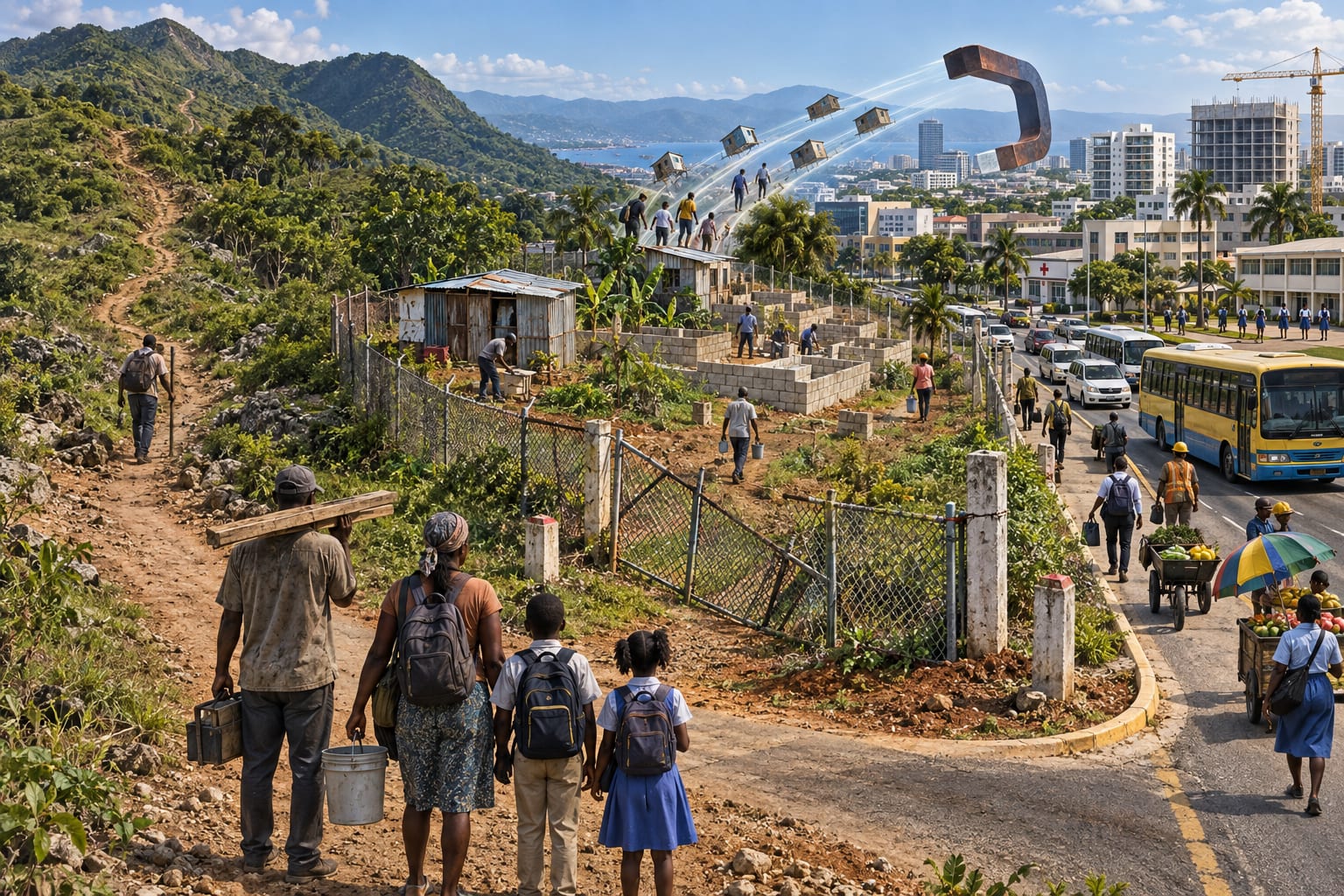
Coopers Pen, Pear Tree Bottom and the Modern “Job-Adjacent” Land Grab
This also helps to explain why squatting evolved from the occupation of marginal spaces to the targeting of more valuable property.
Crown lands are often off the beaten track. People do not merely need land; they need land close to employment, transport, and services. As job markets and urban services become concentrated, squatting naturally shifts towards prime, well-located real estate—even when it is privately owned.
That shift is not simply a matter of greed. It is structural: access to employment helps determine where people attempt to live. But when political tolerance is expected, occupation may become bolder. The argument grows louder that land belongs to the people and that the Government has a duty to provide. Sometimes, this develops into a more aggressive message: take land wherever it is available.

Adverse Possession: Structure Without Deterrence
Some point to adverse possession as a deterrent or structuring device. In reality, the doctrine does not necessarily deter occupation on its own. Instead, it may unintentionally reinforce the belief that time converts occupation into entitlement, especially where enforcement is slow and court proceedings are lengthy.
Adverse possession does not give someone an automatic right to seize another person’s property. A claimant must satisfy specific legal conditions over the prescribed period. Nevertheless, in the public imagination, the doctrine can create the impression that remaining on land for long enough will eventually produce ownership. The process becomes more structured, but not necessarily less common.

Two Counterarguments—and Why They Do Not Fully Settle the Issue
Any argument about democratic socialism and squatting must address the strongest opposing views. Without these counterarguments, the discussion risks appearing one-sided. More importantly, considering them helps clarify what is—and is not—being claimed.
Counterargument 1: “Squatting Is Driven by Poverty and Housing Shortages, Not Ideology”
There is truth in this argument. People squat because rents are high, wages are low, and the supply of formal housing is inadequate. Jamaica’s informal settlements have deep roots in urbanisation, job-seeking migration, and the failure to provide serviced lots near employment.
Rebuttal: Poverty explains the pressure, but it does not fully explain the pattern and persistence. The remaining question is why squatting becomes widely practised in particular periods and places, and why it hardens into permanence. This depends heavily on expectations about enforcement and whether the State repeatedly converts unauthorised occupation into future tenure. Ideology may not be the engine, but it can become the licence—the narrative that turns necessity into entitlement and reduces the perceived risk of occupation.
Counterargument 2: “Both parties tolerated and regularised squatting; It is unfair to single out democratic socialism or the PNP”
This is also true. Clientelism—the exchange of benefits for political support—has not belonged to one party. Governments of different political persuasions have used regularisation to reduce conflict, improve living conditions, and respond to communities that have existed for generations.
Rebuttal: The argument is not that one party invented squatting. It is that the democratic socialist period sharpened a powerful public message: the moral primacy of redistribution over inherited property arrangements. In a land-hungry society, that message could unintentionally widen the space for informal occupation, particularly where enforcement was inconsistent and political brokers could promise protection or future regularisation.
The issue is therefore less about assigning exclusive blame and more about understanding how a particular political signal interacted with incentives that already existed.
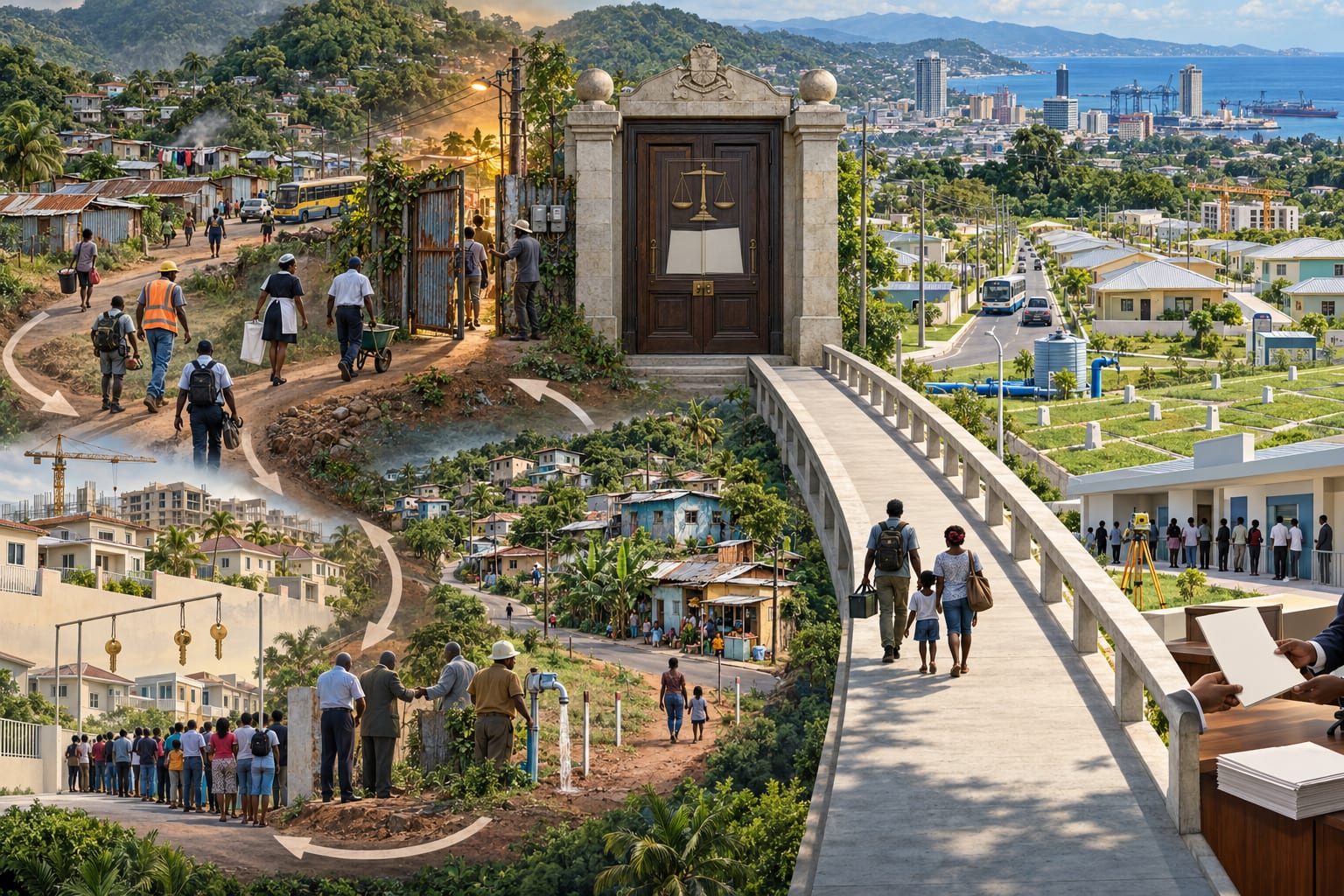
Not Legalised, but Normalised
So, did democratic socialism legitimise squatting in Jamaica?
Not in a clear legal sense. But in the broader sense that influences behaviour—moral framing, political expectations, and the belief that the State will eventually convert informality into tenure—the democratic socialist era helped to open a door. It loosened old taboos surrounding property, raised expectations of redistribution, and intersected with political incentives that made regularisation more attractive than prevention.
The deeper lesson is not simply to blame a particular decade. Jamaica will continue to reproduce squatting wherever three conditions exist:
- Low-income workers must live near employment opportunities.
- Formal housing and serviced lots are unavailable or unaffordable.
- Citizens believe that unauthorised occupation will be tolerated and later rewarded.
If Jamaica wants to stop land-grab politics, it must replace them with a credible alternative: planned affordable housing, serviced sites, faster titling and land administration, transparent regularisation criteria, and consistent enforcement that does not depend on party colour.
Otherwise, every boom—whether in construction, tourism, or urban expansion—will produce the same outcome: new informal settlements that quickly become permanent constituencies.






Comments