Douglas Levermore | The Battle for the Beach: Saving paradise before it slips away

/ Our Today
administrator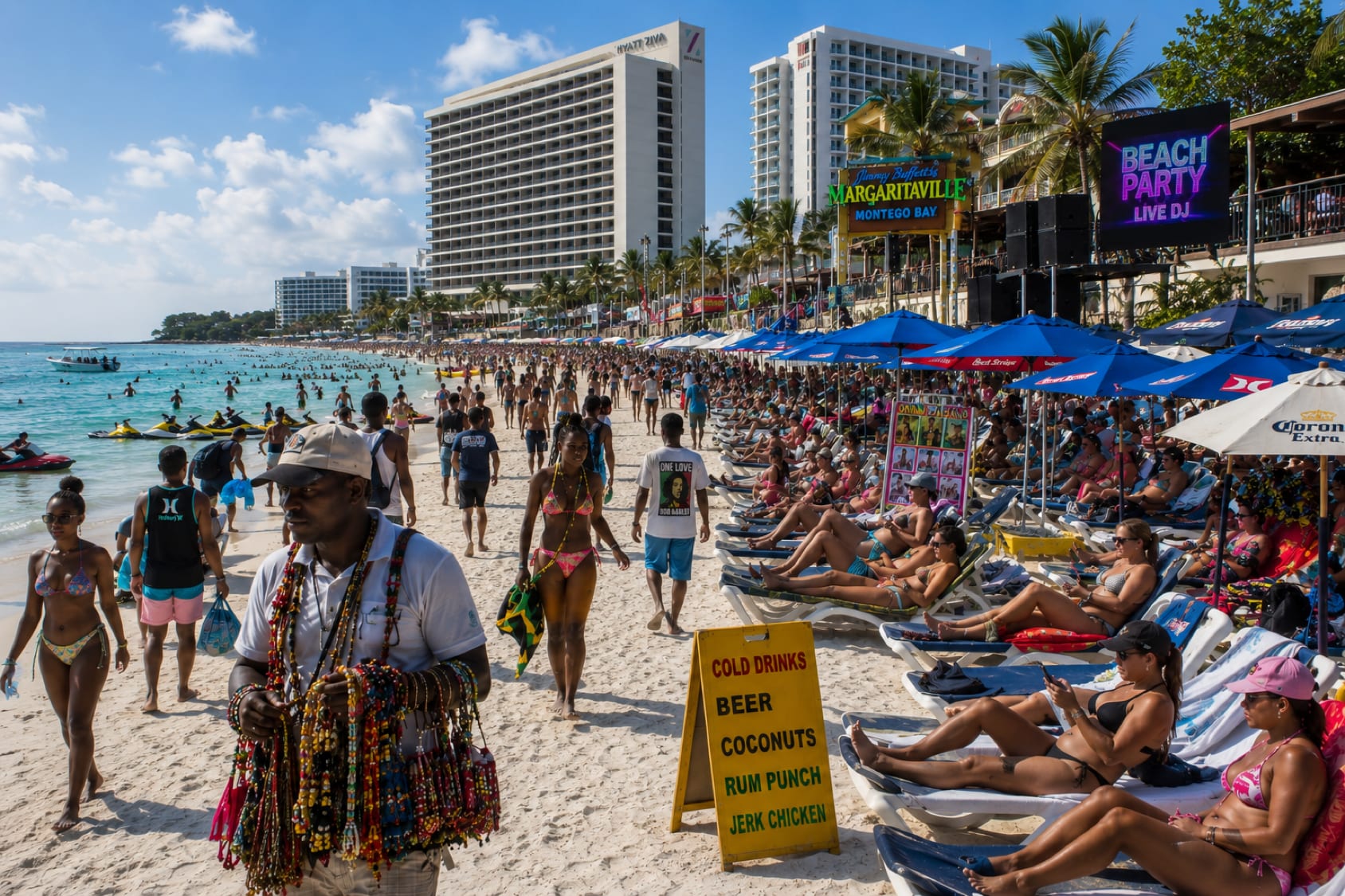
There are few experiences more calming than arriving at the beach just after sunrise.
The air is cool and fresh. The rhythmic crashing of the waves replaces the noise of traffic and telephones. Pelicans skim effortlessly across the water while tiny sandpipers dart between the receding waves. For a brief moment, the world seems perfectly balanced. Whether someone walks barefoot along the shoreline, sits quietly beneath a sea grape tree with a good book, or simply watches the horizon disappear into the sky, the beach has an almost magical ability to slow the heart and quiet the mind.
For generations, beaches have occupied a special place in our collective experience. They are where families gathered, children learned to swim, fishermen launched their boats, couples fell in love and communities celebrated life’s simplest pleasures. Long before the all-inclusive resort, the beach was already part of the Jamaican experience.
Increasingly, however, that simple relationship between people and coastline is becoming more complicated.
Around the world, the beach is fighting three battles at once. One is against nature itself. Another is against barriers created by people. The third is against the growing commercialisation of coastlines that risks turning one of humanity’s greatest shared treasures into something enjoyed primarily by those who can afford it.

Climate change is perhaps the most visible threat. Rising sea levels, stronger storms, coastal erosion, warming oceans and the spread of sargassum are changing beaches in ways that would have been difficult to imagine only a generation ago. Beautiful stretches of white sand have steadily narrowed as the sea advances inland. Protective dunes have disappeared in some places, while coral reefs that once buffered coastlines continue to suffer from warming waters and other environmental pressures.
The arrival of massive quantities of sargassum has added another challenge. What was once an occasional natural occurrence has become a recurring problem across much of the Caribbean and Atlantic. Thick mats of seaweed can blanket beaches, produce unpleasant odours as they decompose, interfere with fishing, threaten marine ecosystems and discourage visitors whose holidays often revolve around crystal-clear water and pristine shorelines.
The irony is difficult to ignore. Many Caribbean nations depend heavily upon beach tourism to support their economies, yet one of their greatest economic assets is becoming increasingly vulnerable to environmental forces they cannot completely control.
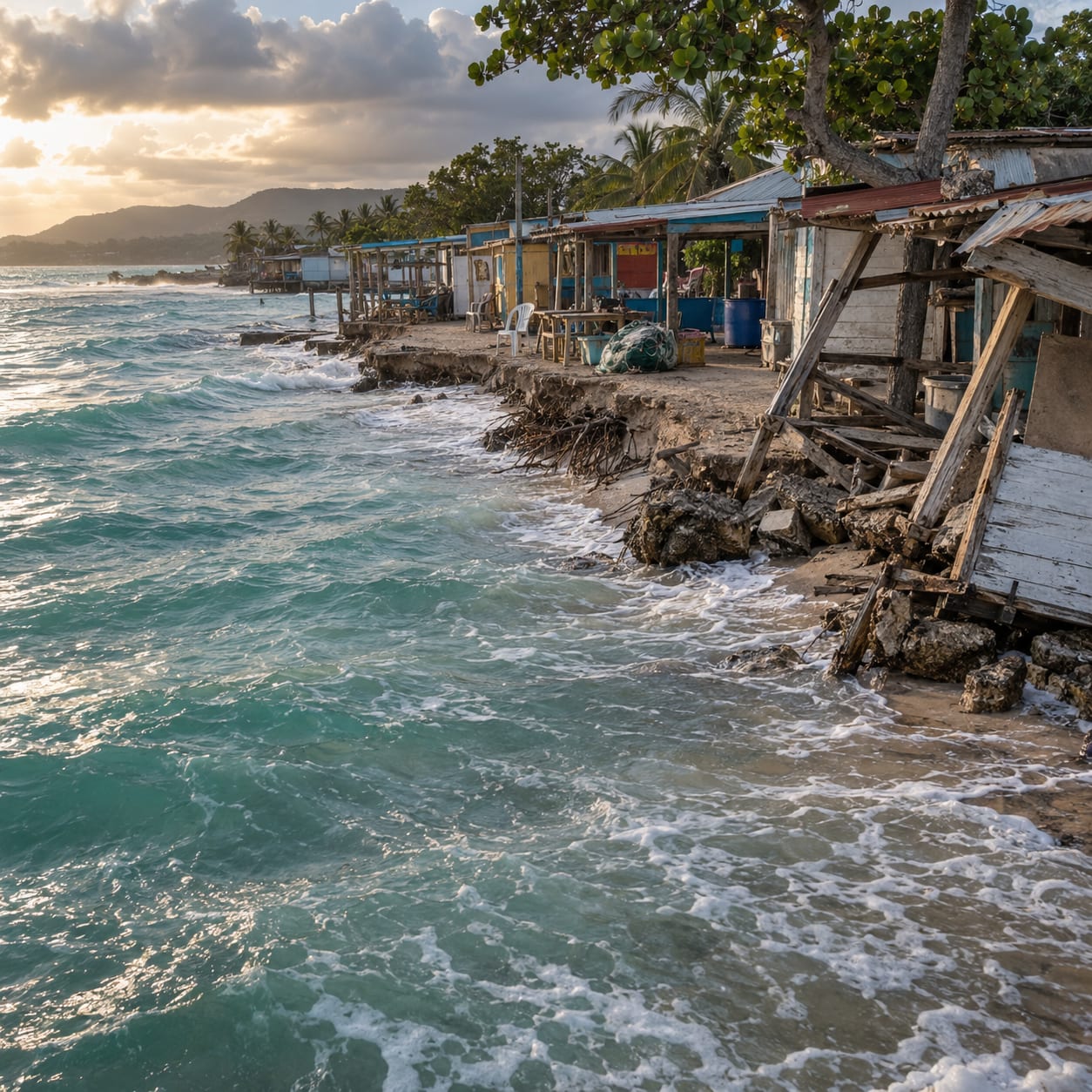
Jamaica is already witnessing the quiet retreat of parts of its coastline. Communities along sections of the south coast, including Alligator Pond and Treasure Beach, have experienced the consequences of erosion, storm surges and changing coastal conditions. Hellshire provides perhaps the most haunting example. The broad stretch of beach remembered by generations of Jamaicans has dramatically narrowed in places, leaving vendors, residents and visitors competing for considerably less sand between the sea and the businesses that depend upon it.
Beaches, therefore, are far more than beautiful places to spread a towel. They are economic infrastructure.
The global ocean economy generates trillions of dollars in economic activity. Across the Caribbean, tourism, fisheries, marine transportation and other ocean-related industries support hundreds of thousands of livelihoods. Every metre of usable coastline lost to erosion, mangrove removed, coral reef damaged and poorly planned development that weakens natural coastal defences potentially chips away at an asset supporting jobs, investment and national prosperity.
Protecting the beach is therefore not simply an environmental obligation. It is sound economic policy.
But Jamaica’s second battle is different because, unlike rising seas or Atlantic currents, this one is largely within our power to solve: who gets to enjoy the beach?
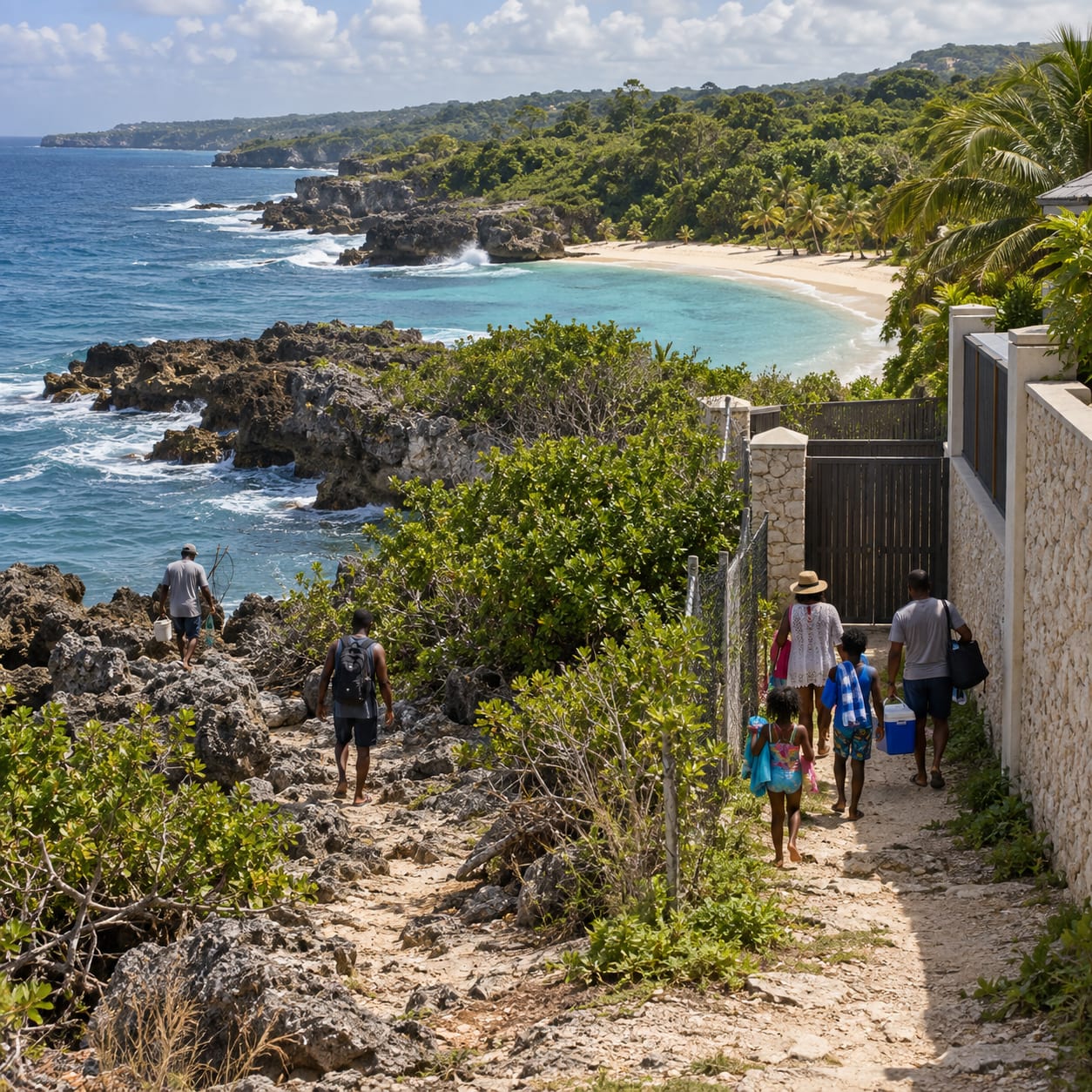
The Jamaica Beach Birthright Environmental Movement (JaBBEM) has claimed that only about 2.8 miles of Jamaica’s roughly 494-mile coastline is freely accessible to the public. The Government disputes that picture, pointing to approximately 70 public beaches, including 60 upgraded locations offering free access, while Tourism Minister Edmund Bartlett has reasonably noted that much of Jamaica’s coastline consists of cliffs, rocks and mangroves rather than usable beach.
Both arguments expose the weakness of the debate. Dividing public beach mileage by the island’s entire coastline may exaggerate the problem, but simply counting designated public beaches may exaggerate the solution. The statistic Jamaica really needs is simpler: How much of our sandy, swimmable and recreationally usable coastline can ordinary Jamaicans practically and freely access?
Because access means more than a theoretical right to stand at the water’s edge. People must be able to get there without buying a hotel room, purchasing a day pass, crossing private property or depending on an informal pathway that can disappear with the next development.
The Government’s Beach Access and Management Policy, tabled in March 2026, is therefore an important step. Prime Minister Andrew Holness has acknowledged that the 1956 Beach Control Act is inadequate for today’s realities, while environmental advocates have argued for something stronger: recognition of Jamaica’s beaches as part of the public commons, accompanied by meaningful landward access.
There must be room here for balance. Tourism creates jobs, investment and foreign exchange, and legitimate private-property rights must be respected. But development should not progressively disconnect Jamaicans from their own coastline. Traditional community and fishing access routes deserve protection, while future coastal developments should preserve clearly marked public-access corridors wherever practicable.
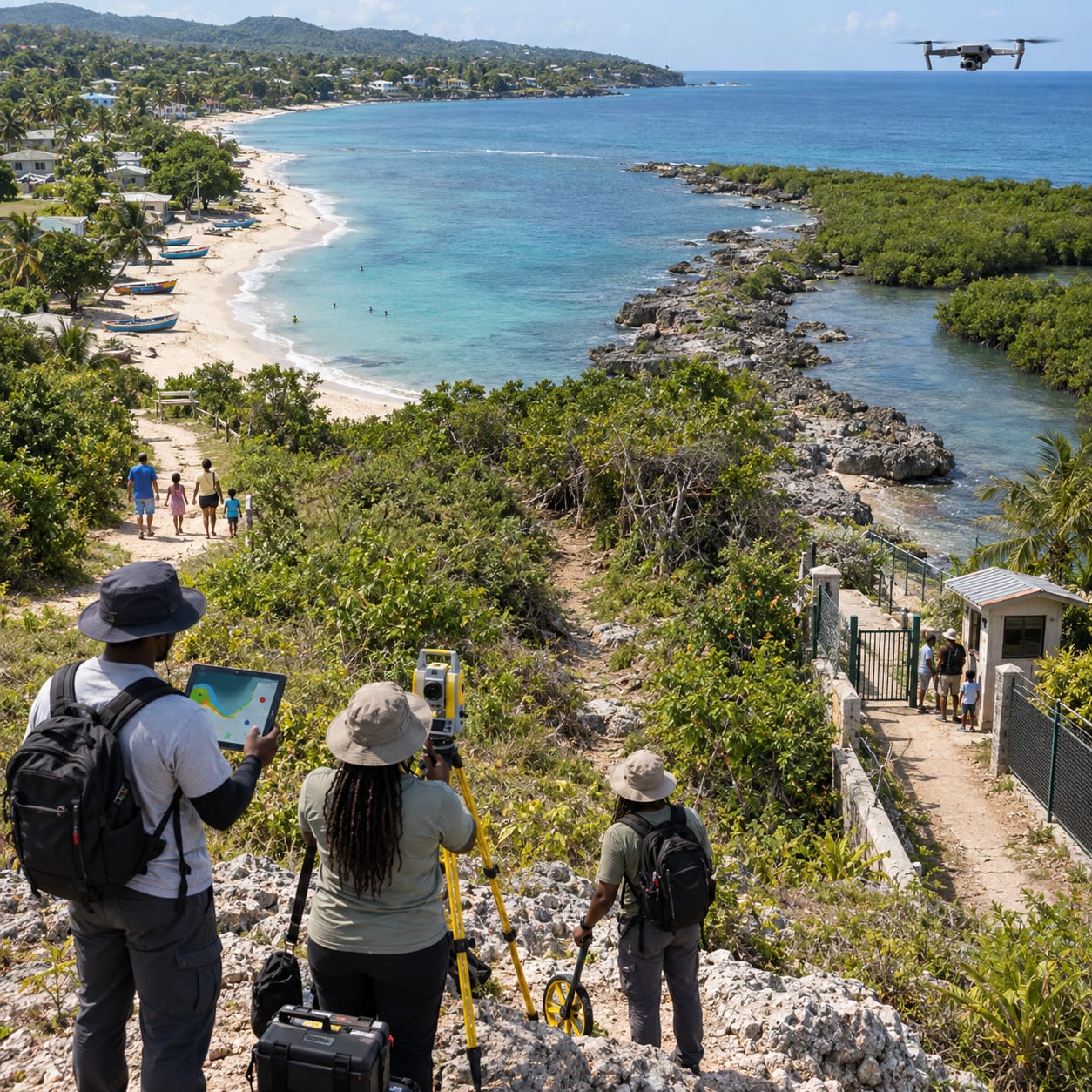
Jamaica needs better data. Map the usable coastline, identify where genuine public access exists, where it has disappeared and where fees or physical barriers effectively exclude communities. Then the country can debate the issue with facts rather than competing numbers.
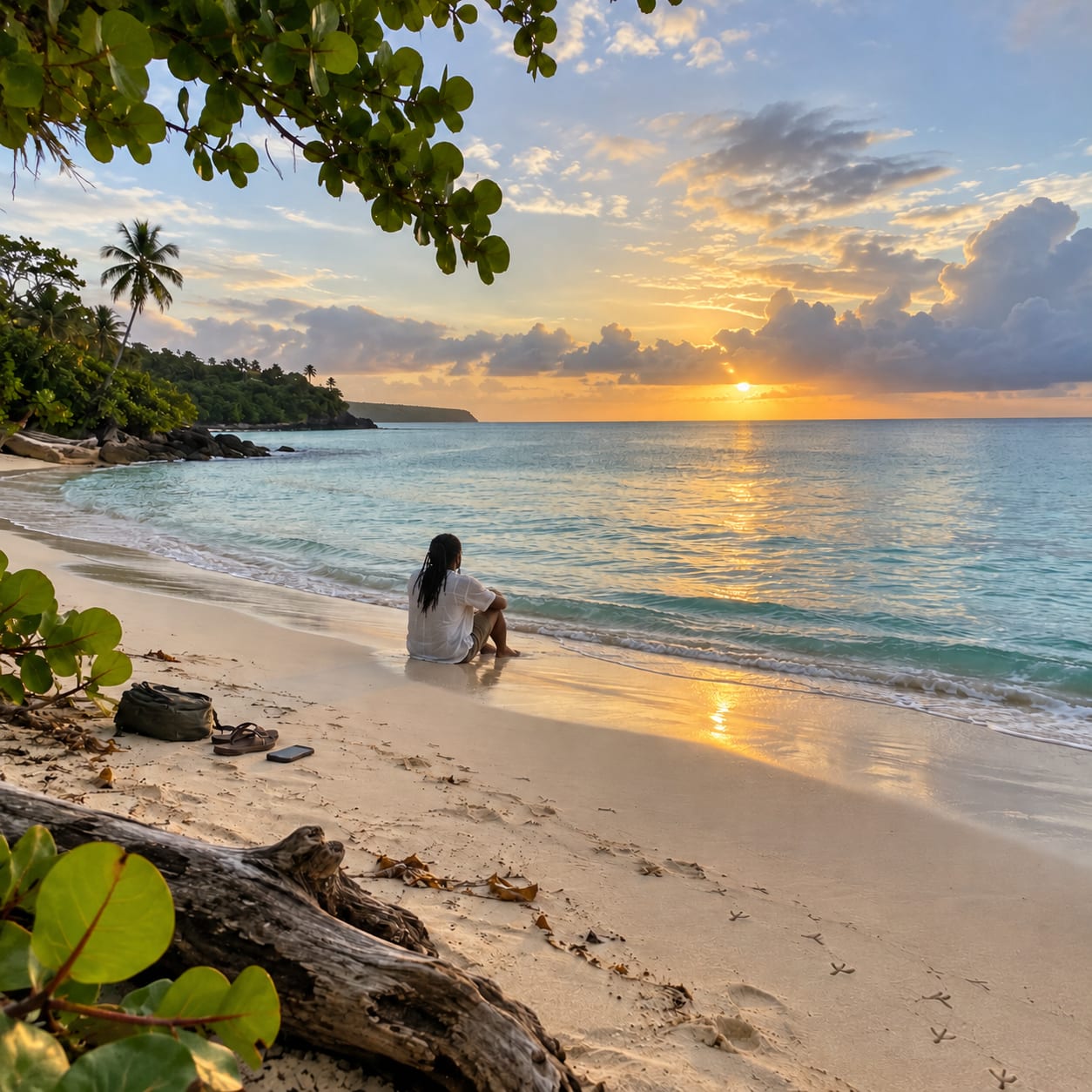
The principle should nevertheless remain simple: the beach must not become a place where enjoyment depends upon the size of one’s bank account. A child from a modest community deserves to build a sandcastle, learn to swim and watch the sunset just as much as a visitor at a luxury resort. The ocean, after all, asks neither profession nor income before sharing its beauty.
The third battle is closely related: the steady commercialisation of the coastline.
Economic development is essential. But the challenge arises when commercial activity gradually overwhelms the very experience that attracted people there.
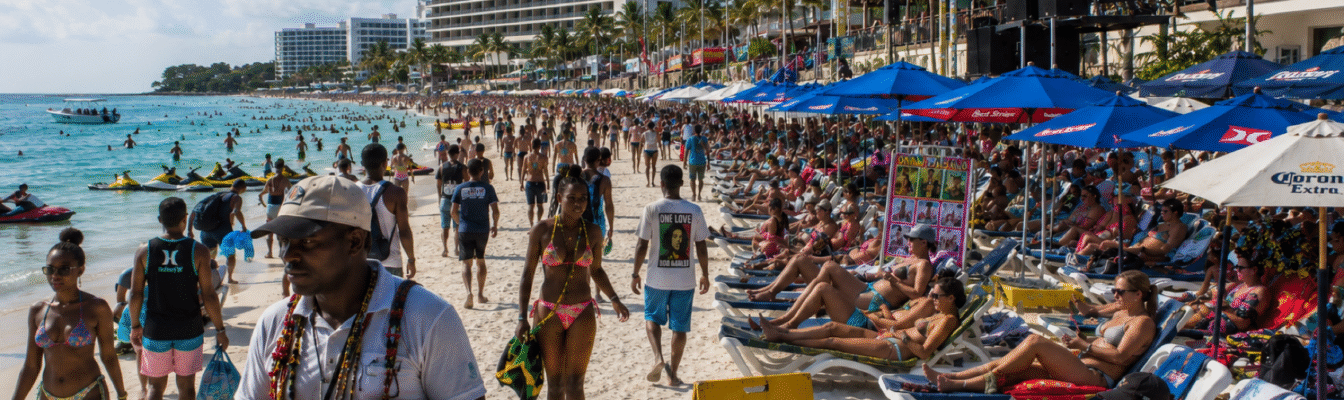
Rows of lounge chairs stretching across every available section of sand, amplified music competing with the waves, aggressive commercial activity, constant recreational traffic and walls of concrete replacing natural vegetation can slowly transform places of tranquillity into extensions of busy commercial districts.
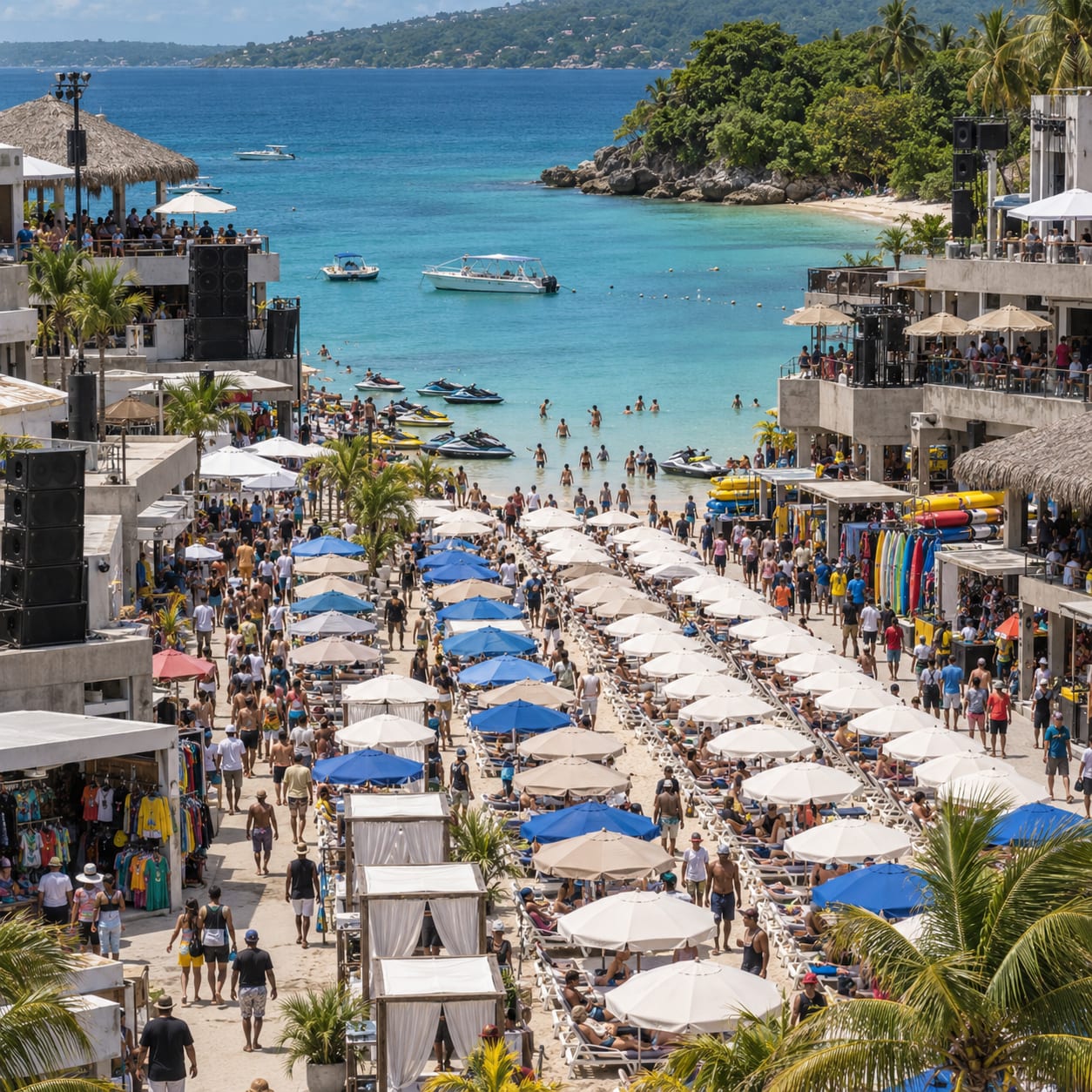
Paradise begins to resemble a shopping mall with sand.
Development should enhance the coastline, not dominate it. Sustainable planning, environmental stewardship, guaranteed public access, responsible tourism and thoughtful coastal management are not obstacles to economic growth. They are foundations upon which long-term prosperity depends.
Across the Caribbean and beyond, destinations have wrestled with this difficult balance. Hotels, seawalls, roads and other infrastructure can interrupt the natural movement of sand, damage mangroves and coral reefs or restrict the shoreline’s ability to recover after storms. At the other extreme, destinations overwhelmed by their own tourism success have begun introducing visitor-management measures to reduce pressure on fragile environments and communities.
The lesson is not that development is the enemy. It is that development which ignores nature — or excludes the people who have traditionally lived beside it — eventually begins undermining the tourism product itself.
The beach belongs to every Jamaican. The greatest tragedy is not losing a few metres of sand to erosion. It is losing the relationship Jamaicans have historically enjoyed with the sea.
The beach offers something increasingly rare in modern life: silence, perspective and connection. It reminds us that some of the most valuable things on Earth cannot be manufactured, downloaded or purchased. They must be protected.
There was a time when tourism success could be measured largely by one statistic: more visitors. That calculation is changing. Around the world, destinations struggling with overcrowding, environmental degradation and pressure on fragile coastlines are discovering that unlimited growth carries its own costs.
Greece offers an instructive lesson. Faced with overtourism, Santorini has limited daily cruise arrivals, while authorities have considered visitor controls at environmentally sensitive beaches such as Balos in Crete. The concern is that overcrowding can strain infrastructure, damage fragile environments and ultimately diminish the very experience that attracts visitors. Sometimes protecting tourism means protecting a destination from too much tourism.
Sustainable tourism is therefore no longer simply about attracting the greatest number of people. It is about ensuring that the destination being sold today remains worth visiting tomorrow — and, equally important, remains available to the people who call it home.
This is not an argument against development. Sensible, sustainable development has lifted economies, created jobs and improved lives. It is, however, an argument for balance.
We are not absolute owners of the coastline. We are its temporary custodians.
And perhaps that principle applies equally to governments, developers, hoteliers and citizens.
Some treasures are simply too precious to be permanently altered in pursuit of short-term gain. Jamaica’s beaches were shaped over thousands of years by wind, waves, coral, currents and time. We have an economic, environmental and moral responsibility to protect them, steward them wisely and leave them, wherever possible, in better condition than we found them.
Development should complement nature, not conquer it.
Access should be managed responsibly, not quietly extinguished.
The old environmental wisdom reminds us that we do not inherit the Earth from our ancestors; we borrow it from our children. Every metre of coastline we allow to disappear, every mangrove we destroy, every traditional pathway we surrender without careful thought and every beach we fail to protect becomes a debt the next generation must repay.
The current Jamaican debate should therefore produce something more enduring than an argument over percentages.
It should answer a simple question: when the next generation of Jamaican children looks toward the Caribbean Sea, will they merely be able to see it — or will they still be able to reach it?
If we lose the battle for the beach, we lose far more than coastline.
We lose one of the few places where nature still whispers that the world can slow down, breathe deeply and simply be.
Douglas Martin Levermore, MBA, JP, is an independent management consultant and the founding Executive Director of Jamaica’s Public Investment Management Secretariat (PIMSEC)—the government unit established to strengthen project appraisal, fiscal discipline, and oversight of public investment, now known as the Public Investment Appraisal Branch (PIAB) within the Ministry of Finance and the Public Service. He also serves as a FINRA arbitrator and a commissioned Notary Public in the Commonwealth of Virginia. He is available for select international consulting, advisory, keynote speaking, and project-based engagements and may be contacted at [email protected]. These reflections are written with the generous gift of a stranger whose kindness gave him more time—a tribute to the organ donor whose legacy lives on through every word.




Comments