FAO urges banks to fill Caribbean farm finance gap as grant funding shrinks

/ Our Today
administrator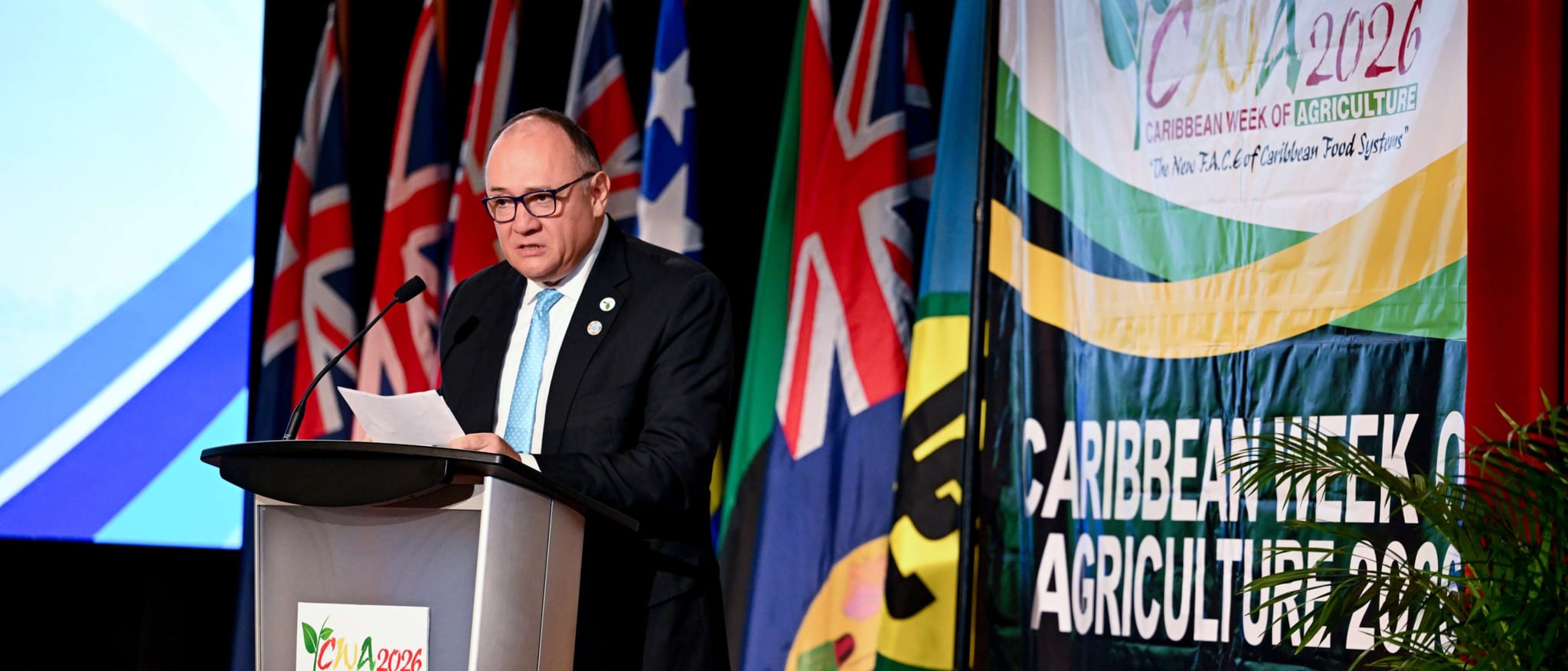
The Food and Agriculture Organisation of the United Nations (FAO) is pressing multilateral and commercial banks to channel more credit to Caribbean small farmers, arguing that falling grant finance and tight government budgets have made closing the region’s agricultural financing gap an urgent priority.
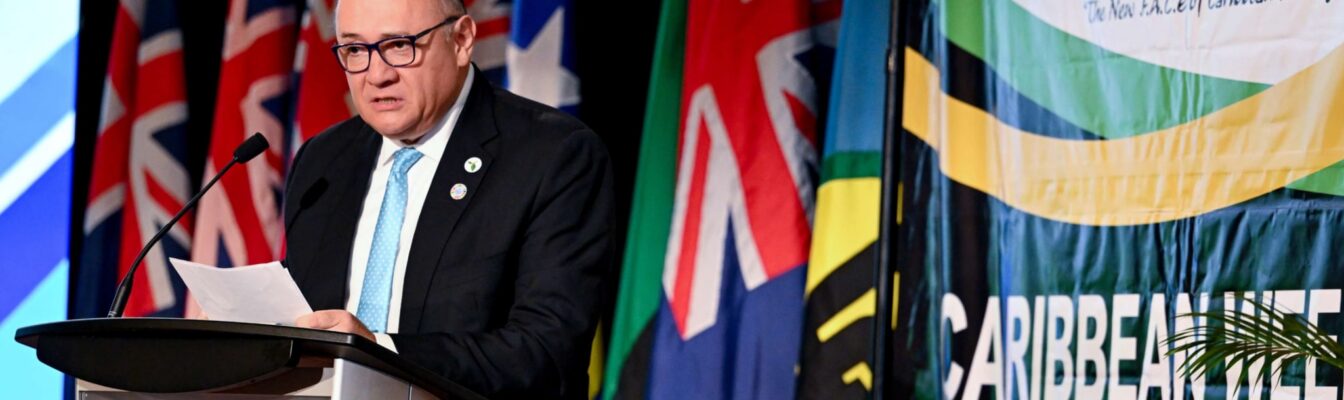
Rene Orellana Halkyer, FAO Assistant Director-General and Regional Representative for Latin America and the Caribbean, set out the position at the 20th Caribbean Week of Agriculture (CWA 2026), which opened on September 27 at Ocean Coral Spring in Trelawny, Jamaica, and runs until October 2.
Speaking on a ministerial panel on September 28, he said organisations such as the FAO now need to act as mobilisers of “financial resources from the multilateral banks, in alliance with the commercial banks.”
With grant funding down sharply, he said banks could route money from their private-sector windows into agricultural value chains, reaching individual producers as well as their associations and cooperatives. He also urged the region to strengthen its microfinance institutions and cooperatives, and named irrigation technology, livestock and cold-chain logistics as investment opportunities.
Jamaica featured as an example. Orellana Halkyer said the country’s national agriculture plan focuses on building markets for producers, and that the upcoming ADAPT Jamaica project, a US$50 million initiative with the Green Climate Fund, will include a credit component for small producers. Measures of that kind, he said, are what the moment requires to shore up the private, community and cooperative sectors.
He also pointed to tourism as an advantage specific to the Caribbean, saying the sector can drive demand for locally produced food and generate jobs in surrounding communities.
The panel examined the roadmap for “25 by 2025+5,” CARICOM’s commitment to cut the region’s food import bill by 25 per cent, with the original deadline now extended to 2030. Panellists included agriculture ministers Lisa C. Jawahir of Saint Lucia, Floyd Green of Jamaica, Rodwell Ferguson of Belize and Shantal Munro-Knight of Barbados, along with Dr Muhammad Ibrahim, Director General of the Inter-American Institute for Cooperation on Agriculture (IICA). Ministers on the panel called for the region to move from rhetoric to action.
At the opening ceremony, Orellana Halkyer told ministers and delegates that the conference’s 20th edition should mark a faster shift from commitments to implementation. He cited progress in Antigua and Barbuda, Barbados, Dominica, Grenada, Guyana, Jamaica, Saint Kitts and Nevis, Saint Lucia, and Saint Vincent and the Grenadines, covering digital tools, soil analysis, crop and pest management, traceability and certification, water-efficient production, climate adaptation technology and protected cultivation.
Held under the theme “The New F.A.C.E of Caribbean Food Systems,” this year’s event has brought together 11 agriculture ministers, CARICOM officials, development partners, farmers, fisherfolk, youth and private sector representatives from more than 40 countries. Sessions continue through Friday.

Comments