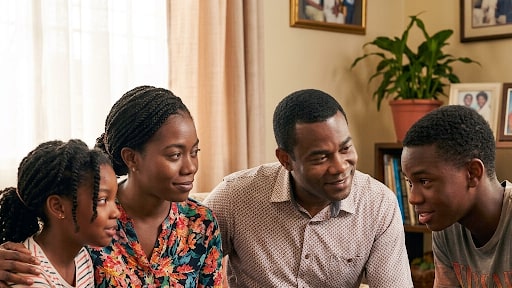
Parents and Children Need to Reconnect; the NPSC is Rebuilding Our Approach to Help

/ Our Today
administrator
Jamaica’s parents and children are drifting apart according to the findings of the 2026 Global School-Based Student Health Survey (GSHS). Confirming what the National Parenting Support Commission (NPSC) has long identified as an urgent priority: parenting support must become more strategic and targeted if it is to reverse the decline in parent-child connection.
As the country’s lead agency for parenting support, the NPSC is meeting that gap head-on by focusing its operations and targeting the communities where disconnect runs deepest with practical skills-building. To better support the needs of parents, NPSC will be strengthening our multi-sectoral collaborative approach by deepening coordination across ministries, public and private stakeholders, civil society and community partners.
The GSHS, released Wednesday by the Ministry of Health and Wellness in collaboration with the National Council on Drug Abuse, surveyed 3,058 students in grades seven to 12 and found that only 25.9 per cent of students felt their parents understood their problems, down from 31.9 per cent in 2010 and 31.3 per cent in 2017.
“These numbers are not a surprise to us, they are a confirmation,” the National Parenting Support Commission said. “For some time now, the data coming out of our own programmes has been telling us that parents are stretched, disconnected from the daily realities their children face, and often unsure of how to re-engage. What this survey does is put a national, independently verified figure on a trend we have been working to address. Our response is that we are increasingly deliberate in how, where and with whom we work. Parents need practical tools they can use the same day: how to start a hard conversation, how to notice when a child has withdrawn, how to set boundaries without losing connection.”
The survey also found that 39.2 per cent of students said their parents knew what they did in their free time, 42.7 per cent received guidance or advice from a parent, and 40.7 per cent said their parents spent quality time with them, the latter two measures both down from 2017.
“No single ministry or agency can move these numbers alone,” the Commission said. “The risks this survey points to, substance use, unsafe relationships, violence, exploitation, disengagement from school, sit squarely at the intersection of health, education and community life. That is why we are strengthening how we work alongside the Ministry of Health and Wellness on the health and psychosocial dimensions of adolescent risk, the National Council on Drug Abuse on substance-use prevention, for instance. It is also why community-level partners, churches, community-based organisations and local leaders, remain central to our delivery model, since they reach parents in the spaces they already trust.”
The Commission noted that the survey’s own recommendations, determining the scope of parenting initiatives needed to strengthen parent-child communication, assessing how well parents are equipped to recognise and respond to risk, and establishing strategies to deepen parental engagement with schools, align closely with work already under way. This includes the national expansion of the Parent Place model, cross-agency referral pathways with HEART/NSTA Trust, PATH, Ministry of Labour and Social Security among others, and the Commission’s continuing work with the Ministry of Education, Skills, Youth and Information on school-based parent engagement.
“Every parent has a village, but a village only works if it is organised. Our job is to make sure parents are not left to figure this out alone, and that the support reaching them is matched to what the evidence says they actually need. That is what operating more strategically means in practice, and it is the standard we are holding ourselves to.”

Comments