
Paul A. Blake | Abka, your assertion makes no sense: The historical record makes the “anti-Jamaica” accusation unsustainable

/ Our Today
administrator
At the heart of my rebuttal is a simple thesis: the charge that the People’s National Party harbours an “anti-Jamaica culture” is contradicted by decades of nation-building achievements and enduring contributions to Jamaica’s development. This accusation does not withstand serious historical scrutiny. There is a larger problem with Senator Fitz-Henley’s argument that cannot be resolved by clever rhetoric or selective quotations. The accusation that an “anti-Jamaica culture” has overtaken the People’s National Party collides directly with the historical record of Jamaica itself.
One cannot credibly accuse the PNP of harbouring an institutional hostility toward Jamaica while simultaneously living in a Jamaica whose social, economic, constitutional and institutional architecture bears unmistakable evidence of PNP governments. This is not a matter of sentimentality about former leaders, and it is certainly not an assertion that every PNP administration was flawless. It is a question of historical fact.
If Senator Fitz-Henley wants to question the patriotism of the PNP, he must first account for the considerable portion of modern Jamaica that PNP administrations helped to build. That is where the historical record begins to matter.
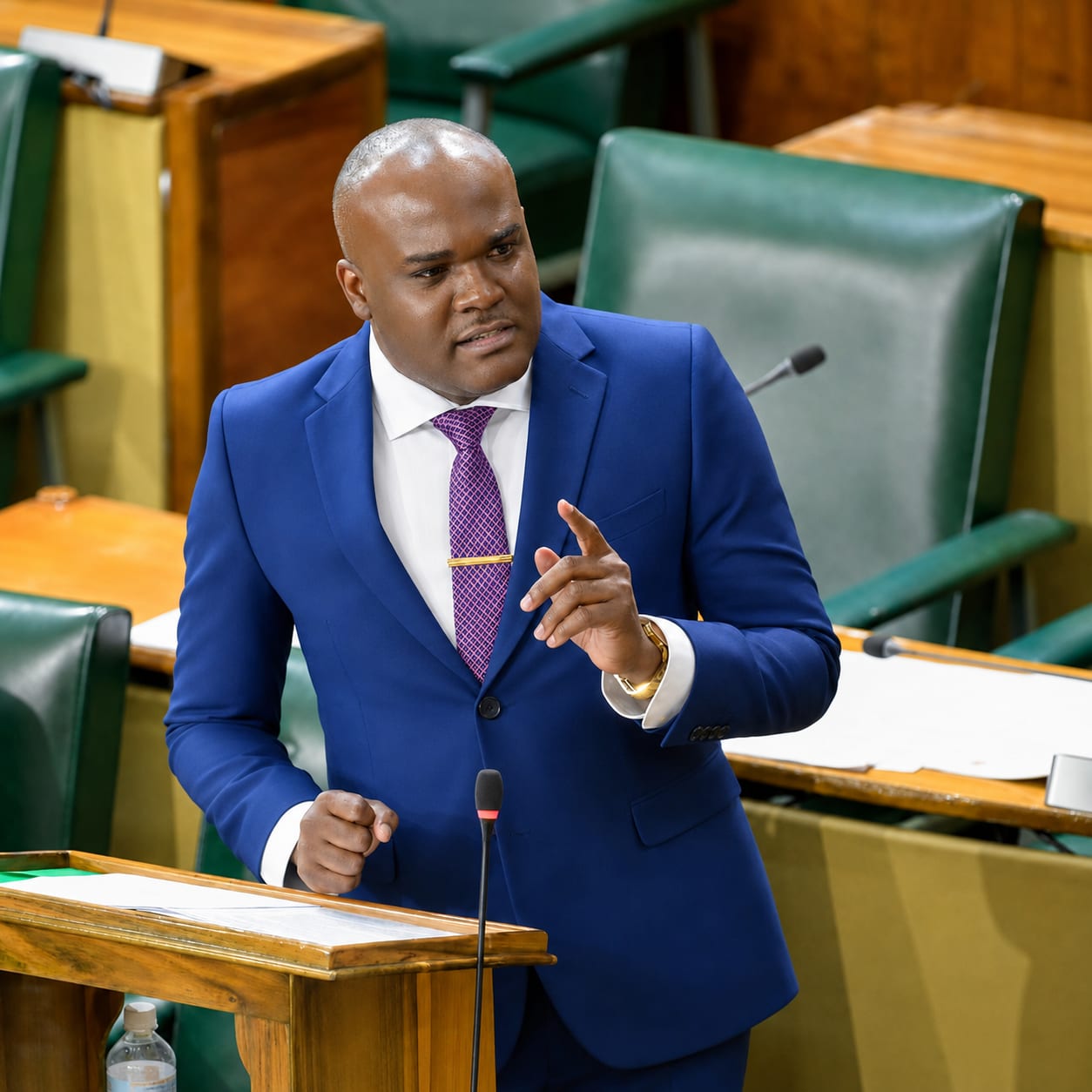
Michael Manley did not simply occupy Jamaica House. His Government changed the social contract between the Jamaican state and ordinary citizens. Under his leadership came landmark reforms involving the minimum wage, maternity leave, compulsory recognition of trade unions and the removal of legal discrimination against children born outside marriage. The National Library of Jamaica records these reforms among the defining achievements of the Manley period.
Most significantly, Michael Manley created the National Housing Trust in 1976. The NHT itself records its establishment in that year, and Jamaica Information Service has explicitly credited Manley with orchestrating its creation.
This is not some forgotten institution whose relevance expired with the Government that created it. Fifty years later, the National Housing Trust remains central to Jamaica’s housing policy. In July 2026, the current JLP Administration announced another set of NHT policies intended to expand housing access and affordability.
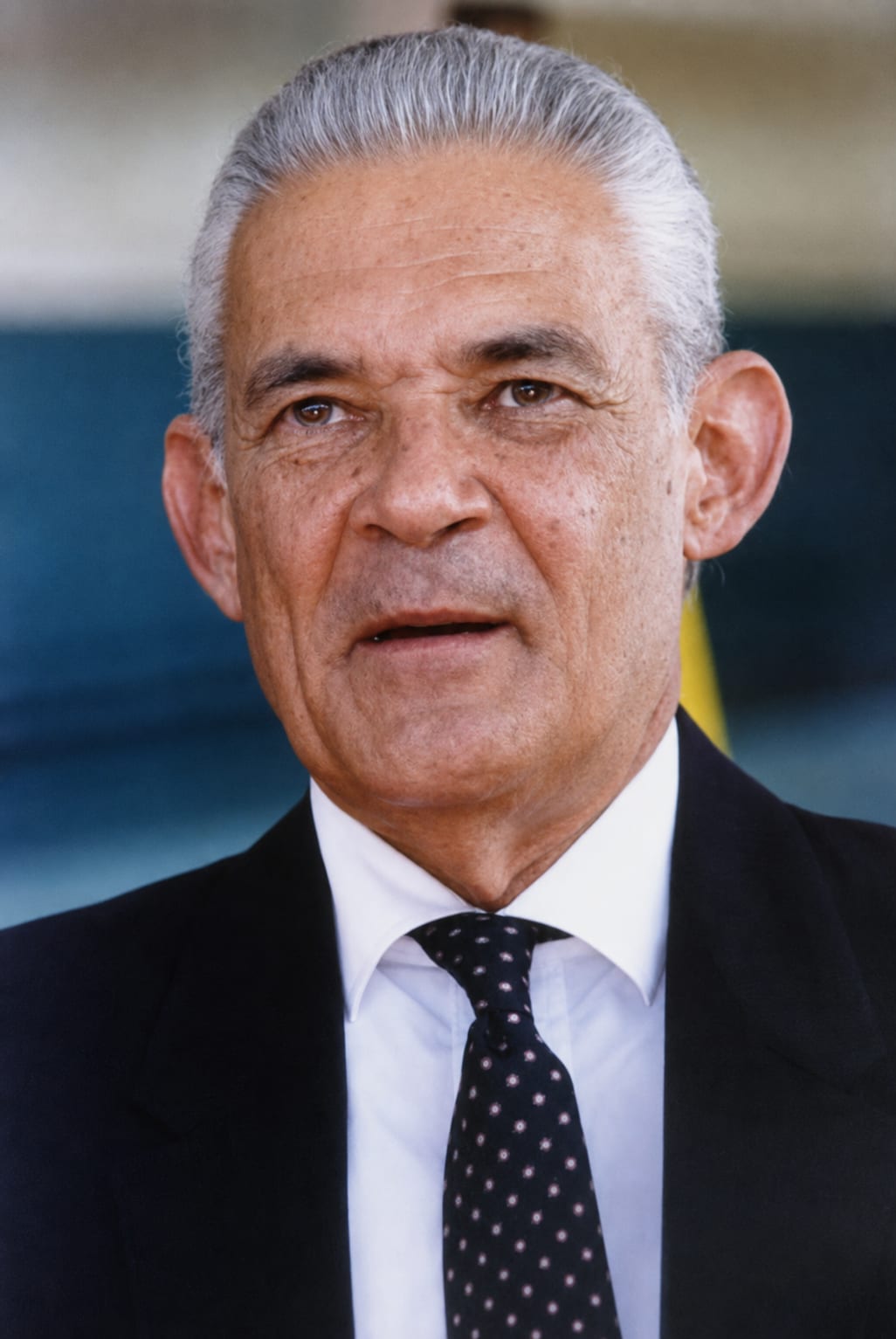
That presents a rather embarrassing contradiction to the thesis that the political movement that created the NHT is inherently hostile to Jamaica. The present JLP Government is actively using, expanding, and celebrating an institution born under Michael Manley to implement its own housing agenda.
The institution was sufficiently Jamaican for successive JLP administrations to retain it, sufficiently useful for them to build policies around it, and sufficiently valuable for generations of Jamaican families to rely upon it. Yet we are now expected to believe that the political tradition that created it has become fundamentally “anti-Jamaica”.
That proposition is not exclusively partisan. It is historically incoherent, and the record shows why.
The same examination should be applied to P.J. Patterson.
Patterson’s contribution to Jamaica’s physical and technological modernisation cannot seriously be erased. His Government announced Highway 2000 in September 1999 as a major infrastructure project intended to improve transportation, facilitate economic growth, and create employment. The Toll Authority of Jamaica continues to record Patterson’s announcement of the project as the beginning of Highway 2000.
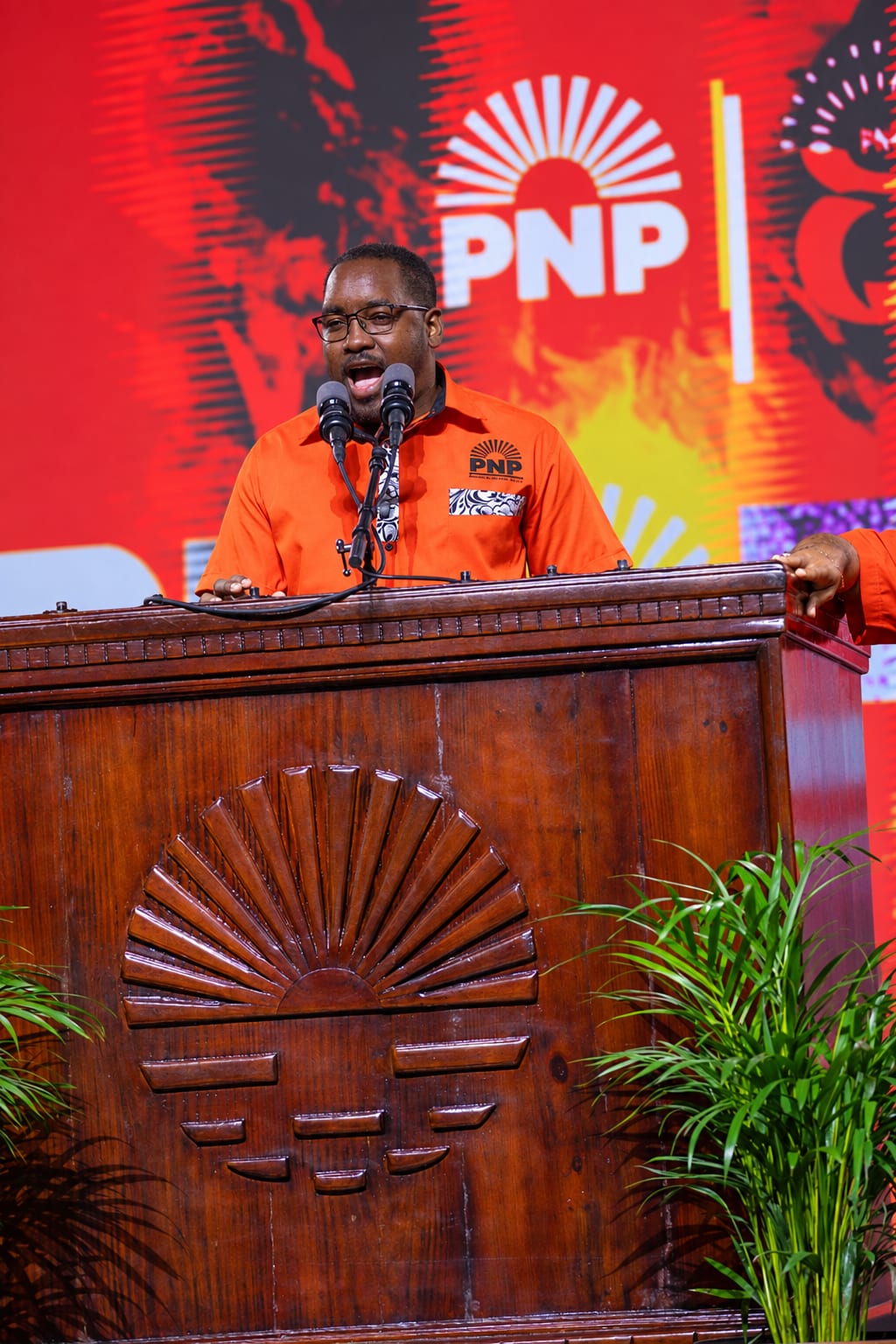
Today, Jamaicans travel on infrastructure conceived and advanced under a PNP administration. Businesses move goods along it. Workers use it. Tourists use it. Successive governments have expanded and celebrated it.
The Patterson Administration also undertook the liberalisation of Jamaica’s telecommunications industry. The Office of Utilities Regulation records that, before March 2000, Cable & Wireless held a monopoly over telecommunications services, and that negotiations between the Government and the company in 1999 resulted in an agreement to terminate that monopoly and liberalise the sector in phases, beginning in 2000.
The consequences proved transformative. Competition entered the mobile market, access expanded dramatically, and telecommunications ceased being the preserve of a single monopoly provider. OUR data later recorded mobile subscriptions increasing from fewer than 250,000 in 2000 to nearly 2.5 million by 2006.
That transformation helped democratise communication in Jamaica. It altered how Jamaicans conducted business, maintained relationships, accessed information and eventually participated in the digital economy.
Is that the historical record of a movement opposed to Jamaica’s development?

Then there is Portia Simpson Miller, whose political life was centred overwhelmingly on working-class Jamaicans, social protection and the dignity of people who were too frequently invisible to political and economic elites.
Her ministerial record included the significant expansion of Jamaica’s Overseas Employment Program, strengthening the National Insurance Scheme, advancing local government reform, and overseeing the establishment of the Municipality of Portmore. Jamaica Information Service also identifies her as the leading architect of the Master Plan for Sustainable Tourism Development.
Those contributions are not simply claims made by the PNP about one of its own leaders. In May 2026, Prime Minister Andrew Holness himself participated in the renaming of the Labour Ministry building in Portia Simpson Miller’s honour. JIS reported that the current prime minister described the occasion as one of national gratitude and acknowledged her contributions to workers, social protection, and opportunities for Jamaicans through the overseas employment program.
That fact deserves attention because it frames the contradiction that follows.
The current JLP prime minister can publicly participate in a national tribute recognising Portia Simpson Miller’s substantial contribution to Jamaica. Yet, only months later, a senior JLP communicator advances an argument suggesting that an “anti-Jamaica culture” has overtaken the political movement through which she spent her entire career serving the country.
At some point, political rhetoric has to answer to intellectual consistency. That issue becomes unavoidable here.

The Simpson Miller Administration must also be credited with confronting one of the most dangerous economic situations Jamaica had gone through in decades. When the Government entered the 2013 Extended Fund Facility with the International Monetary Fund, Jamaica was carrying public debt approaching 150 per cent of GDP, had severely impaired market access, had seen economic growth remain chronically weak, and faced acute balance-of-payments pressures. The IMF described the program as one designed to avert urgent risks of crisis and establish the conditions for fiscal and debt sustainability.
That economic program demanded extraordinary political discipline because many of the measures were painful and electorally unattractive.
Dr Peter Phillips, as minister of finance, carried central responsibility for that program. It required fiscal consolidation, debt restructuring, tax reform, structural reform, the preservation of the financial system, and the strengthening of social protection, while Jamaica attempted to rebuild its international credibility.
The IMF’s subsequent assessment is particularly important. It identified the reform program that began in 2013 as a critical turning point in Jamaica’s economic stabilisation and acknowledged the progress made under the 2013 Extended Fund Facility and the program that followed under the succeeding administration.

This is precisely where political honesty becomes necessary, because the record does not reset with a change of government.
The financial steadiness subsequently enjoyed and politically celebrated by the JLP did not begin from nothing on February 25, 2016. Governments inherit states, institutions, liabilities, policies, programs and reforms from those who preceded them. The JLP Government inherited an economic adjustment program in which difficult fiscal decisions had already been taken, and substantial credibility had already been rebuilt.
That does not deny the JLP credit for preserving fiscal discipline after 2016. It simply refuses to falsify history by pretending the foundation did not exist before the change of government.
Peter Phillips and the Simpson Miller Administration did not choose the politically easy road. They pursued a program that imposed enormous political costs on their own Government because they believed that stabilising the Jamaican economy was necessary.
One may disagree with particular components of that program. One may argue about its social costs. One may debate whether different decisions should have been made. What cannot reasonably be argued is that taking responsibility for a country facing severe debt and economic vulnerability constitutes evidence of being “anti-Jamaica”.
If anything, knowingly implementing unpopular measures that may cost an administration political capital because the state requires economic stabilisation is an extraordinary example of placing the country above immediate political comfort.
Then there is Mark Golding, whose record also belongs in this discussion.

Before becoming Opposition leader, Golding served as Minister of Justice during a period of major legislative reform. Under the PNP Administration, the Dangerous Drugs (Amendment) Act of 2015 radically changed Jamaica’s approach to Ganja. The legislation made possession of two ounces or less a non-arrestable, ticketable offence, recognised the sacramental use of Ganja by Rastafari and provided the legal basis for the development of a regulated medicinal and industrial cannabis industry.
That was not purely an amendment to a statute. It corrected a longstanding social injustice that had resulted in large numbers of Jamaicans, particularly young men from poorer communities, being criminalised for possession of small quantities of Ganja. It also represented an important recognition of Rastafari, a movement born in Jamaica and now recognised internationally as one of this country’s most significant cultural and spiritual contributions. Taken together, these reforms show a political tradition acting to correct injustice and affirm Jamaican identity, not one hostile to Jamaica. It is therefore difficult to sustain any serious claim that the political tradition behind this reform is “anti-Jamaica”.
Golding also piloted the DNA Evidence legislation through the Senate in 2015, creating a legal framework for forensic DNA evidence and the national DNA database as part of the modernisation of Jamaica’s crime-fighting capabilities.
It is therefore remarkably curious to hear suggestions that the current leadership of the PNP harbours hostility toward Jamaica, when the present leader has a legislative record that includes significant criminal justice reform and one of the most consequential changes to Jamaica’s Ganja laws since Independence.
This is why the “anti-Jamaica” accusation cannot survive sustained historical examination.
The argument asks Jamaicans to forget too much.

It asks us to forget that Michael Manley expanded workers’ rights, introduced major social reforms and created the National Housing Trust.
It asks us to forget that P.J. Patterson initiated Highway 2000 and presided over the liberalisation of telecommunications.
It asks us to forget Portia Simpson Miller’s contributions to labour, social protection, local government, overseas employment, and tourism development.
It asks us to forget that the Simpson Miller Government, with Peter Phillips as finance minister, undertook the painful economic reforms that helped restore macroeconomic stability.
It asks us to forget that Mark Golding helped lead major justice reforms, including the decriminalisation of possession of small quantities of Ganja and the passage of important forensic legislation.

More importantly, it asks Jamaicans to ignore the fact that succeeding JLP governments have retained, utilised, expanded, or benefited from many of these very institutions and reforms.
The JLP did not abolish the National Housing Trust because it was some dangerous PNP experiment. It governs through it.
The JLP did not bulldoze Highway 2000 because P.J. Patterson initiated it. It continues expanding Jamaica’s highway infrastructure.
The telecommunications market was not returned to monopoly because liberalisation occurred under the PNP.
The current Government did not reverse the 2015 Ganja reforms.
The JLP did not discard the fiscal discipline and macroeconomic framework created during the economic reform program. It continued much of that framework and has repeatedly cited Jamaica’s fiscal credibility as one of the achievements of the modern economy.
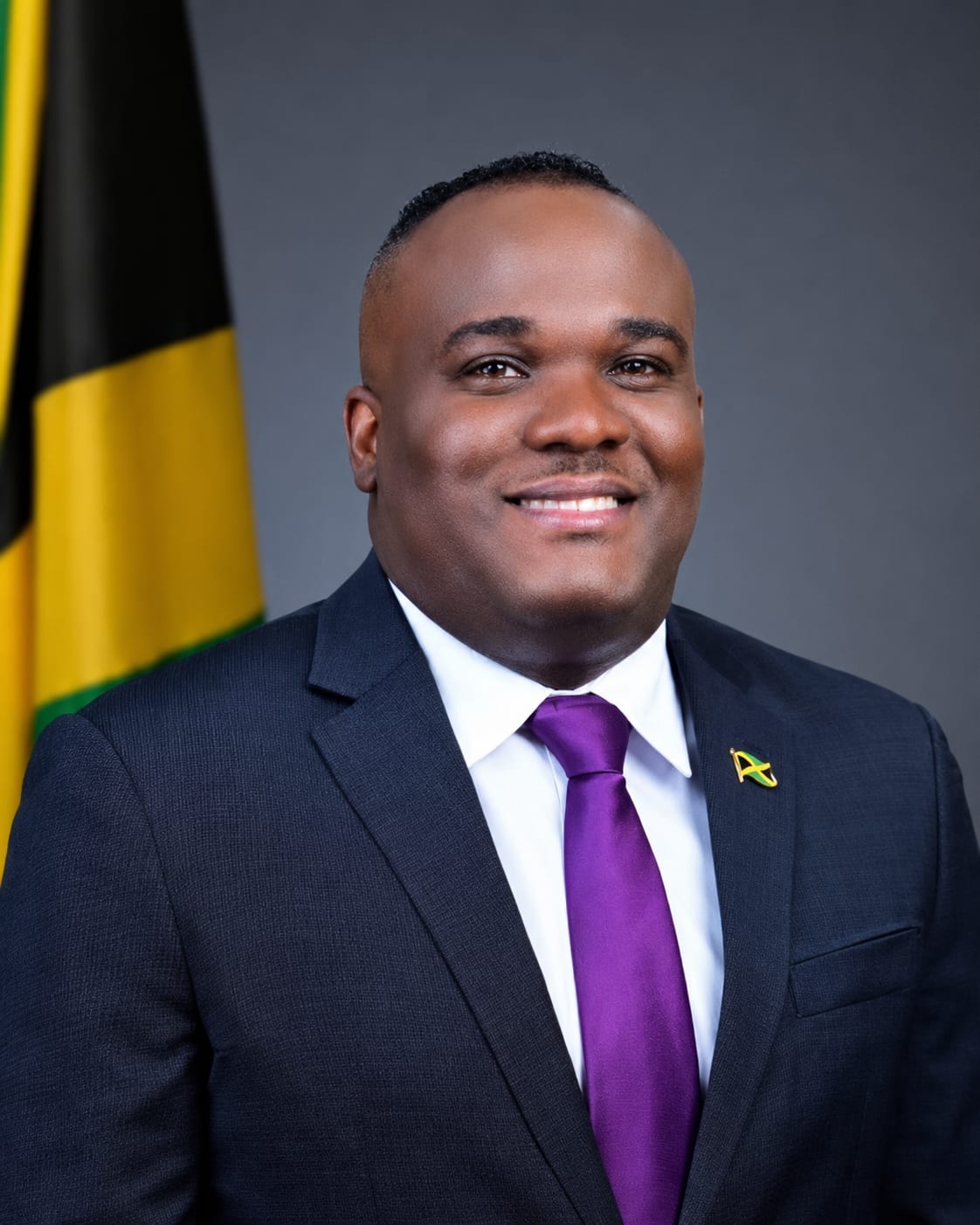
That is why Senator Fitz-Henley’s accusation ultimately becomes self-defeating. If PNP administrations were so fundamentally hostile to Jamaica, why has so much of what they constructed become part of the permanent machinery of the Jamaican state?
The answer is obvious. Because serious governments understand that national development is cumulative. Governments change, but useful institutions survive. Good reforms outlive the administrations that introduced them. Successive governments build upon the work of predecessors, sometimes improving it, sometimes modifying it, and sometimes taking political credit for outcomes whose foundations were laid years earlier.
There is nothing wrong with that. That is how countries develop.
What is wrong is attempting to erase that continuity when partisan convenience requires a caricature of one’s opponent.
The PNP does not have to manufacture evidence of its pledge to Jamaica. Its record is apparent in legislation, institutions, infrastructure, social programs, economic reforms and constitutional development.
One may criticise Michael Manley’s economic policies while accepting the permanence of his social reforms. One may criticise aspects of the Patterson years while driving on Highway 2000 and benefiting from the telecommunications revolution. One may disagree with Portia Simpson-Miller while recognising her lifetime of service to working Jamaicans. One may criticise Peter Phillips while recognising that the 2013 economic program helped pull Jamaica away from a dangerous fiscal precipice. One may oppose Mark Golding politically while living under laws he helped reform.
That is the complexity of history.
Senator Fitz-Henley may continue to manufacture partisan outrage if that is the political assignment before him, but he should not confuse rhetorical aggression with intellectual seriousness. Calling the PNP “anti-Jamaica” does not become profound merely because it is printed in a newspaper. It is a shallow accusation unsupported by any honest reading of Jamaica’s political history.
The difficulty for the Senator is that history is not as obedient as party propaganda. It cannot simply be edited to accommodate the week’s talking points. The National Housing Trust still exists. Highway 2000 still exists. The telecommunications reforms still exist. The social and labour reforms still exist. The fiscal architecture strengthened under the Simpson Miller administration still exists. The justice reforms advanced under Mark Golding remain in place. Jamaicans continue to benefit from them whether or not it is convenient for the JLP’s communications machinery to acknowledge who helped create them.
If the best intellectual contribution Senator Fitz-Henley can offer is to label a political movement with an extensive record of nation-building “anti-Jamaica”, then perhaps the problem is not the PNP’s relationship with Jamaica. Perhaps the problem is the poverty of the argument being advanced against it.
There is something almost comical about a senior government communicator attempting to lecture the PNP on patriotism while standing within the institutions, systems, and reforms that PNP governments helped construct. It is the political equivalent of sitting comfortably in a house, benefiting from the roof, plumbing and electricity, and then declaring that the builders were opposed to shelter.

That is not serious analysis. It is partisan theatre performed with an astonishing degree of historical amnesia.
So, Senator, by all means criticise the PNP. Attack our policies. Challenge our leadership. Debate our record. But if you are going to question our allegiance to Jamaica, you will need something considerably more substantial than recycled talking points, selective quotations and an inflated headline.
The PNP does not require a certificate of patriotism from the JLP, and certainly not from one of its communications operatives.
Our record is written into the country’s development.
If Senator Fitz-Henley wishes to dispute that record, he should bring history, evidence, and intellectual discipline.
If all he has is propaganda, then he should at least have the courtesy not to dress it up as scholarship.






Comments