Phillip A Patterson | How UWI’s rise in rankings conceals crisis in science education

/ Our Today
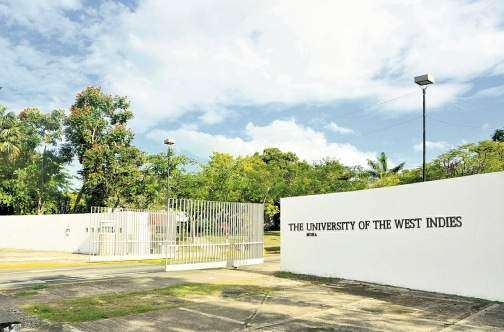
administratorWhen the University of the West Indies advertises its position in the top 3.6% of universities worldwide, it projects an image of excellence that resonates across the Caribbean.
For Jamaican parents sacrificing to send their children to Mona, for policymakers celebrating regional achievement, that statistic is a seal of quality—proof that local education meets global standards.
But beneath this marketing triumph lies a troubling reality: the same institutional evolution that boosted UWI’s rankings has systematically hollowed out its foundational science programmes, creating a self-perpetuating cycle of declining rigour that now threatens the nation’s scientific future.
This is the story of how academic inbreeding, curriculum dilution, and a captive examination system have trapped Jamaican science education in a feedback loop of regional mediocrity—all while a prestigious ranking convinces the public otherwise.
Part I: The Drivers of Academic Inbreeding
For decades, UWI has faced a dilemma familiar to regional universities worldwide.
Geographic isolation, brain drain concerns, and financial constraints have made “growing your own” faculty an attractive strategy. Why watch your brightest PhDs emigrate to North America or Europe when they can stay and strengthen local institutions?
This logic is understandable, even admirable. In fields like tropical medicine or Caribbean ecology, where UWI genuinely leads global research, locally trained experts are indispensable.
But in mathematics and the hard sciences, this “inbreeding” carries hidden costs. Science thrives on cross-pollination—the collision of ideas from different intellectual traditions, the challenge of unfamiliar methodologies, the networks that connect researchers to global collaborators.
When a department consists largely of people who studied under the same three mentors, they inherit not only their strengths but their blind spots. The result is intellectual stagnation disguised as institutional stability.
Part II: The Applied Pivot and the Death of Pure Science
Look closely at UWI Mona’s Physics Department today. Its research priorities tell a clear story: Materials Science. Medical Physics. Renewable Energy. Climate Studies.
These are applied fields, responsive to regional needs and, crucially, attractive to funders. Making education more “regionally relevant” is a noble goal in social sciences or literature. However, in Science and Mathematics, the laws of the universe are not regional.
For students whose passions run to Theoretical Physics, Quantum Field Theory, or Pure Mathematics, this environment can feel like a hostage situation. Research funding flows to applied projects. Supervisors exist only in applied niches. The curriculum itself bends toward regional relevance.
A student dreaming of string theory finds themselves steered toward solar cell efficiency—not through any conspiracy, but simply because that’s where the grants are, where the experts teach, where the department’s historical strengths lie.
When those students become the next generation of lecturers—as they do in an inbred system—they naturally perpetuate these applied priorities. The department becomes world-class in its chosen niches but a desert for anyone wanting to explore the fundamental laws of the universe for their own sake.
Part III: The Hollowing of the B.Sc.
The consequences extend beyond research specialisation. To maintain enrollment numbers in an era of expanded access, UWI has had to accommodate students entering without rigorous A-Level or Additional Mathematics backgrounds.
This creates what might be called “remedial drift.” The first year of the B.Sc. increasingly becomes “Year Zero,” spent teaching concepts that should have been mastered in secondary school. Advanced pure physics gets pushed later, then compressed, then gradually replaced by applied alternatives that require less mathematical stamina.
The assessment shifts accordingly. Exams move away from multi-step derivations toward multiple-choice questions and “plug-and-play” problems. Students emerge with degrees certifying them as physicists while lacking the mathematical authority to derive basic equations from first principles.
Compare this to the Cambridge A-Level syllabus—the gold standard that once anchored Jamaican science education. Cambridge Physics demands calculus-based intuition, holistic understanding, the ability to explain phenomena through mathematical reasoning. It was designed as preparation for rigorous university science.
Yet UWI graduates, products of this hollowed-out B.Sc., would struggle to teach it.
Part IV: The Teacher Training Trap
This failure is institutionalised in the structure of teacher education itself. At UWI, the B.Ed. (Secondary) splits its credits between pedagogy and content. Where a B.Sc. student might take ninety credits of pure science and mathematics, a B.Ed. student receives barely a third of that—the rest consumed by educational psychology, curriculum theory, and classroom management.
The philosophy behind this division holds that pedagogical technique can compensate for content weakness. A master teacher, the argument goes, can teach anything.
In physics and mathematics, this is demonstrably false. No amount of learner-centred strategy helps a teacher explain Maxwell’s Equations if they don’t understand vector calculus. No classroom management skill substitutes for the ability to derive a kinematic equation on a whiteboard when a curious sixth-former asks “why?”
The result is a teaching force graduating with professional credentials but insufficient content mastery—particularly for the Cambridge syllabus that remains the benchmark of genuine scientific preparation.
Part V: The CAPE Mandate and the Closing of the Loop
Here is where the system seals itself.
The Ministry of Education, seeking regional sovereignty over curriculum and increased access to tertiary education, mandated that government schools follow the Caribbean Advanced Proficiency Examination (CAPE) track. On paper, CAPE is equivalent to A-Levels. In practice, its modular structure and softer mathematical prerequisites make it more accessible—and less rigorous.
This mandate serves multiple functions for the system:
- It eliminates the external benchmark. Without Cambridge examinations, there is no independent validation of whether CAPE passes represent genuine mastery. Pass rates can soar into the 90% range, proof of “success” to a public that doesn’t know what’s been sacrificed.
- It creates a captive market for UWI. The university aligns its first-year curriculum to CAPE’s outputs, lowering its own standards to match. It never has to compete with international universities that might find CAPE preparation insufficient.
- It protects teachers. UWI graduates, trained in the hollowed-out B.Sc., would struggle to teach Cambridge. CAPE matches their actual content mastery. The mandate shields them from exposure.
- It perpetuates the loop. Students prepared by CAPE enter UWI needing remediation, which further dilutes the B.Sc. They graduate, become teachers, and prepare the next generation for CAPE—closing the circle.
Part VI: The 3.6% Mask
And all the while, UWI ranks in the top 3.6% of universities worldwide. How is this possible? The Times Higher Education rankings, like most global university league tables, measure indicators that UWI has learned to optimise:
- Citations. By focusing on regional crises—climate change, Caribbean health, renewable energy—UWI faculty cite each other and regional partners frequently. This creates high impact scores even when research doesn’t advance fundamental science. International outlook. Recruiting across the Caribbean and maintaining global partnerships boosts this metric regardless of curriculum quality.
- Teaching reputation. Based on surveys of other academics, this score reflects UWI’s status as the dominant institution in a regional pond—academic inbreeding at the institutional level.
The ranking becomes a marketing shield. Parents see “top 3.6%” and assume excellence. Policymakers cite it as proof that regional education competes globally. The university uses it to silence internal critics who might question whether the B.Sc. still delivers what it promises.
Meanwhile, the gap between the ranking and reality widens. It becomes possible to be a “world-class university” that cannot produce graduates capable of teaching the world-class syllabus that once defined scientific preparation.
Part VII: The Singapore Alternative
The tragedy is that regional control need not mean declining standards. Singapore offers a compelling counterexample.
Singapore’s Ministry of Education writes its own syllabuses, ensuring cultural relevance and national sovereignty. But those syllabuses continue to be examined jointly with Cambridge University. Singaporean students’ papers are marked in the UK against global standards. The external benchmark remains.
This model prevents hollowing out at every level:
Teachers must master content because their students’ results will be judged externally. Universities must teach rigorously because they admit students who’ve survived Cambridge-marked exams. The public knows exactly what qualifications are worth because they’re benchmarked globally.
If Jamaica had followed this path—retaining Cambridge examination while developing local curriculum input—the feedback loop of mediocrity would have been impossible to sustain. External examiners would have flagged any decline in mathematical requirements. Universities would have been forced to teach to a standard they don’t control.
Part VIII: The Cost of Comfort
The current system serves the institutions involved remarkably well.
The Ministry gets high pass rates to celebrate. The university gets a prestigious ranking to market. The faculty get to pursue their applied research niches without distraction. The teachers get a curriculum that matches their training.
Only the students pay the price.
They are told they are receiving a world-class education while being prepared for a world that no longer exists. They graduate with credentials that signify “success” within a closed loop but that increasingly fail to open doors to international graduate programmes, global research careers, or the capacity to teach the next generation at the highest levels.
The wealthy have already voted with their feet—opting for private schools and overseas universities. It is the students of the public system, the majority of Jamaican children, who remain trapped in the loop.
Conclusion: Breaking the Mirror
The 3.6% ranking is not false. UWI is, by the metrics it has learned to optimise, among the world’s top universities. But those metrics measure institutional performance, not educational outcomes. They measure research output, not teaching quality. They measure citation counts, not whether graduates can derive the equations that underpin modern physics.
The mask has become the message. The ranking has become the goal. And beneath it, the scientific foundation of a nation has been quietly hollowed out by the very institutions charged with preserving it.
Breaking this cycle would require painful reforms: reintroducing pure mathematics as a non-negotiable core; requiring external faculty hires to break the inbreeding; restoring an external examination benchmark that holds the system accountable to global standards.
It would require admitting that “top 3.6%” and “world-class preparation” are not the same thing. Until then, the loop continues. The mask stays in place. And Jamaica’s students pay the hidden cost of regional mediocrity, convinced by a prestigious statistic that they are receiving an education that, in truth, they are not.
Philip A Patterson has served as a lecturer at Shortwood and Moneague Teachers’ Colleges, as well as the College of Agriculture, Science, and Education



Comments