
Robinson says virtual assets law is built to contain risk, not grow an industry

/ Our Today
administrator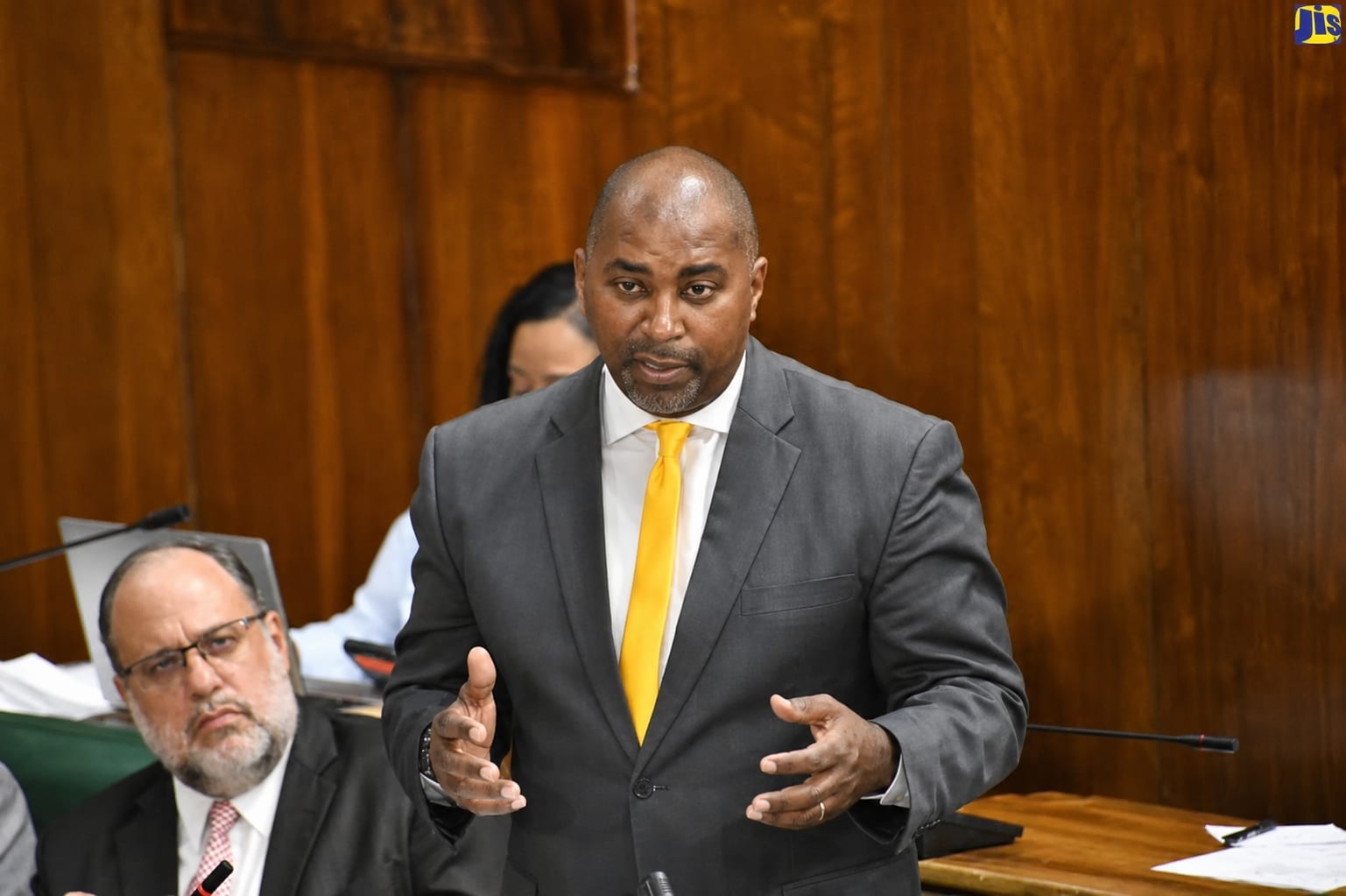
Opposition Spokesman on Finance Julian Robinson says Jamaica’s new virtual assets law will keep startups out and leave most digital asset activity offshore, and he wants it amended to make industry growth a legal objective.
The House of Representatives passed the Virtual Asset Service Providers Act, 2026 on Tuesday with three amendments. Introduced by Finance Minister Fayval Williams on September 22, the bill requires any business offering virtual asset services to Jamaican consumers to hold a Financial Services Commission (FSC) licence, wherever it is based, and makes unlicensed operation a criminal offence.
In a written response dated September 28, Robinson argued the bill is almost wholly defensive. Its Memorandum of Objects and Reasons cites only crime prevention and compliance with Financial Action Task Force Recommendation 15. The FSC is given a duty to promote innovation, but Robinson said it carries no statutory weight against the anti-money laundering mandate, so regulators will lean restrictive whenever they use discretion.

He listed features he said favour large incumbents. Six licence classes, from trading platforms to wallet services, are licensed separately, so a wallet that also offers brokerage and custody would need three licences. Capital is described only as “solvency and liquidity requirements,” with no published tiers. Applicants must be locally incorporated, keep a local presence and hold quarterly board meetings in Jamaica. There is no sandbox, provisional licence or staged entry.
Recurring costs such as quarterly proof-of-reserves and cold storage fall hardest on custody and wallet providers, where local startups are most likely to emerge, he said. The bill also lacks dedicated stablecoin rules, which Robinson called a missed opportunity for a remittance-dependent economy, and any pathway for tokenising assets such as receivables or property.
No licensed virtual asset service providers currently operate in Jamaica, though Chainalysis puts the country’s annual crypto transaction value at roughly US$2.07 billion.

Robinson pointed to JAM-DEX, the Bank of Jamaica’s (BOJ) digital currency, as a cautionary case. His paper puts circulation below 0.1 per cent of currency in issue, with no redemptions, two wallet providers and no merchant acceptance network. He attributed this to incentive design rather than technology, describing JAM-DEX as “currency without a network.”
He proposes seven amendments: a clause requiring the FSC to weigh innovation alongside financial integrity; capital tiered by licence class, modelled on the European Union’s MiCA regime; a VASP-specific sandbox; explicit technology neutrality; stablecoin rules on reserves, redemption and audits; phased compliance for startups; and a lighter regime for tokenising real-world assets.
A second track would turn the BOJ from currency issuer into operator of open payment rails similar to Brazil’s Pix and India’s UPI, carrying JAM-DEX, licensed stablecoins and regulated virtual assets. He cited Pix’s more than 180 million users and UPI’s 172.2 billion transactions in 2024. Robinson proposed the system be free for individuals, adding a merchant discount rate of 0.4 to 0.5 per cent in a later phase, with part of that revenue funding merchant onboarding in underserved communities. He suggested a two-year pilot through the existing sandbox and full operation within 36 months.
Without changes, Robinson warned, Jamaica risks repeating its cannabis experience: international obligations met on paper while the promised industry never arrives.
The bill now goes to the Senate





Comments