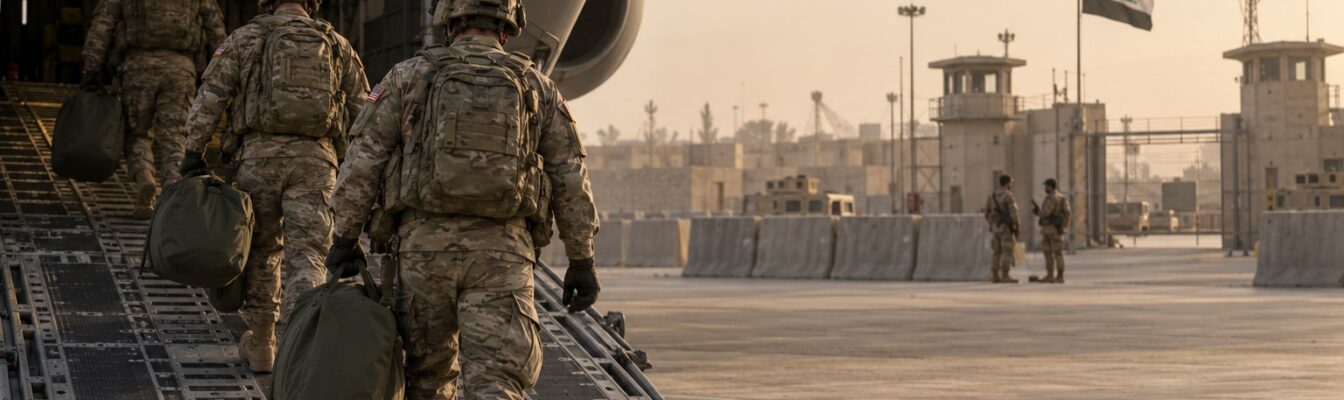


Pullback marks end of more than two decades of US involvement in Iran
The United States has withdrawn its remaining troops from Iraq this morning, marking an end to its military presence there, where the country is still battling to overcome the bloody legacy of the invasion that toppled dictator Saddam Hussein more than two decades ago.
The pullback comes at a pivotal moment for Iraq, which has been dragged into the US-Israeli war against Iran, with Iranian-backed Iraqi Shia militia drone and missile attacks on Gulf states underlining the Islamic republic’s deep influence. Those assaults have drawn air strikes from the US and Saudi Arabia, threatening more conflict and instability from the conflict triggered by the 2003 US-led invasion.
Pentagon spokesman Sean Parnell reports that the departure of the remaining US forces from Erbil, the semi-autonomous Kurdistan region of Iraq, marked “the successful conclusion of the military mission that defeated ISIS in Iraq. It also marks a transition from a wartime coalition mission to an Iraqi-led security effort supported by a more normal bilateral security relationship.”
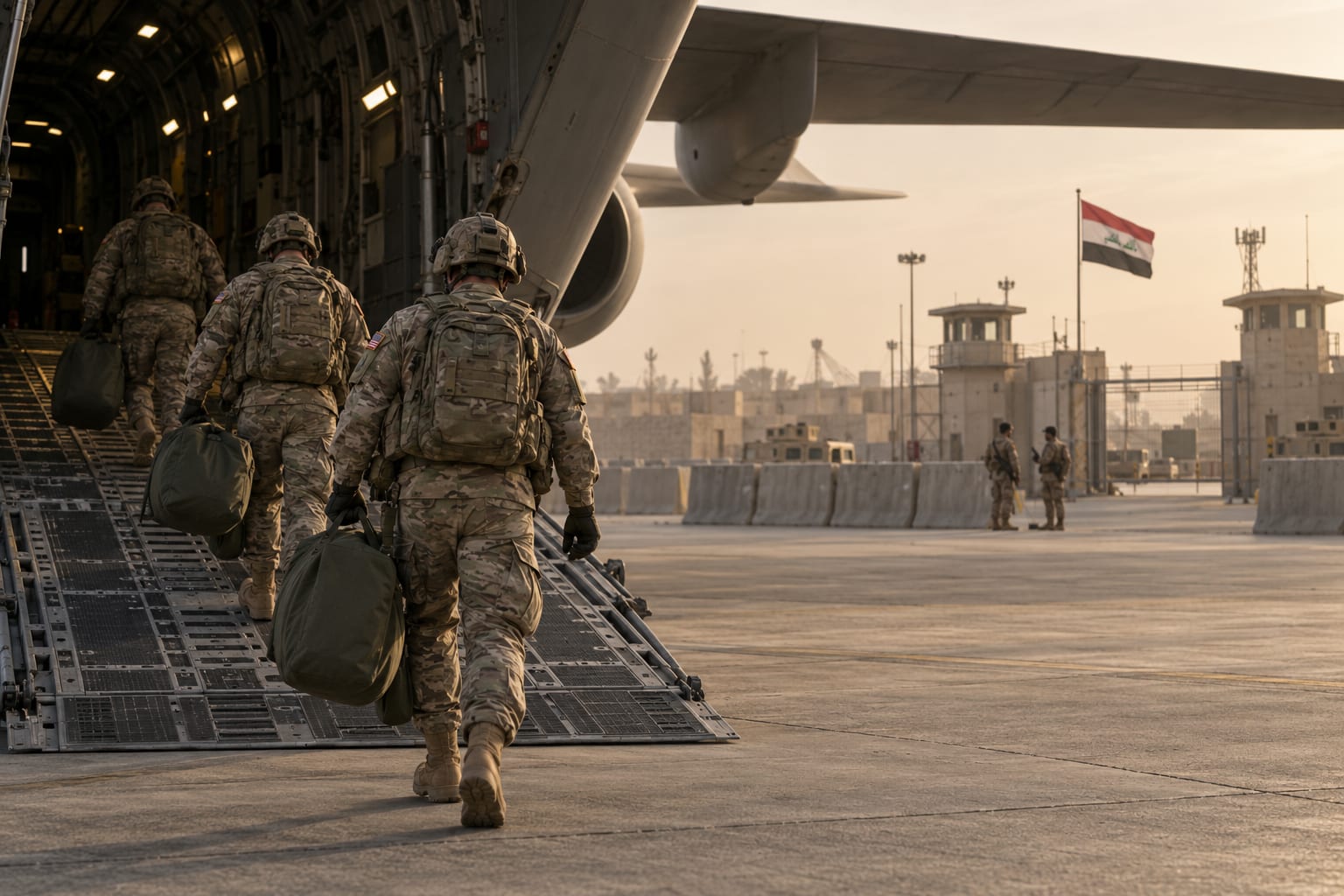
Pullout brokered from 2024
The US pullout was agreed with the Iraqi government in 2024 as a coalition to fight ISIS, which had drawn American forces back into combat in the Arab state, began to wind down. Renad Mansour, an Iraq expert at Chatham House, explains that the Iraqis had made that agreement ‘‘in a very different regional context. There wasn’t a regional war on the scale we are seeing today, and Iraq itself wasn’t a battleground in that conflict.”
In recent years, there were about 2,500 US troops in Iraq, but most were withdrawn from Iraq long before today’s deadline, with those remaining deployed in Erbil. The Obama administration first pulled American combat troops out of the country in 2011 — two years after the US opened the largest embassy in the world in Baghdad.
However, America was reluctantly dragged back after ISIS exploited the weakness of the state to launch a blitz across Iraq and Syria in 2014. The Iraqi army that the US had spent tens of billions of dollars arming and training melted away in the face of the jihadis’ advance.
The country stabilised after ISIS militants were largely defeated and driven from the territory they controlled, but Iranian-backed factions capitalised on their role in fighting the Sunni extremists to deepen their influence in the state and politics. Speaking at a ceremony in Baghdad this morning, Iraqi Prime Minister Ali al-Zaidi remarks that a “new phase has begun whose headline is Iraq’s sovereignty, the power of its institutions, the readiness of its forces, the unity of its decision and its balanced partnership with its friends”.
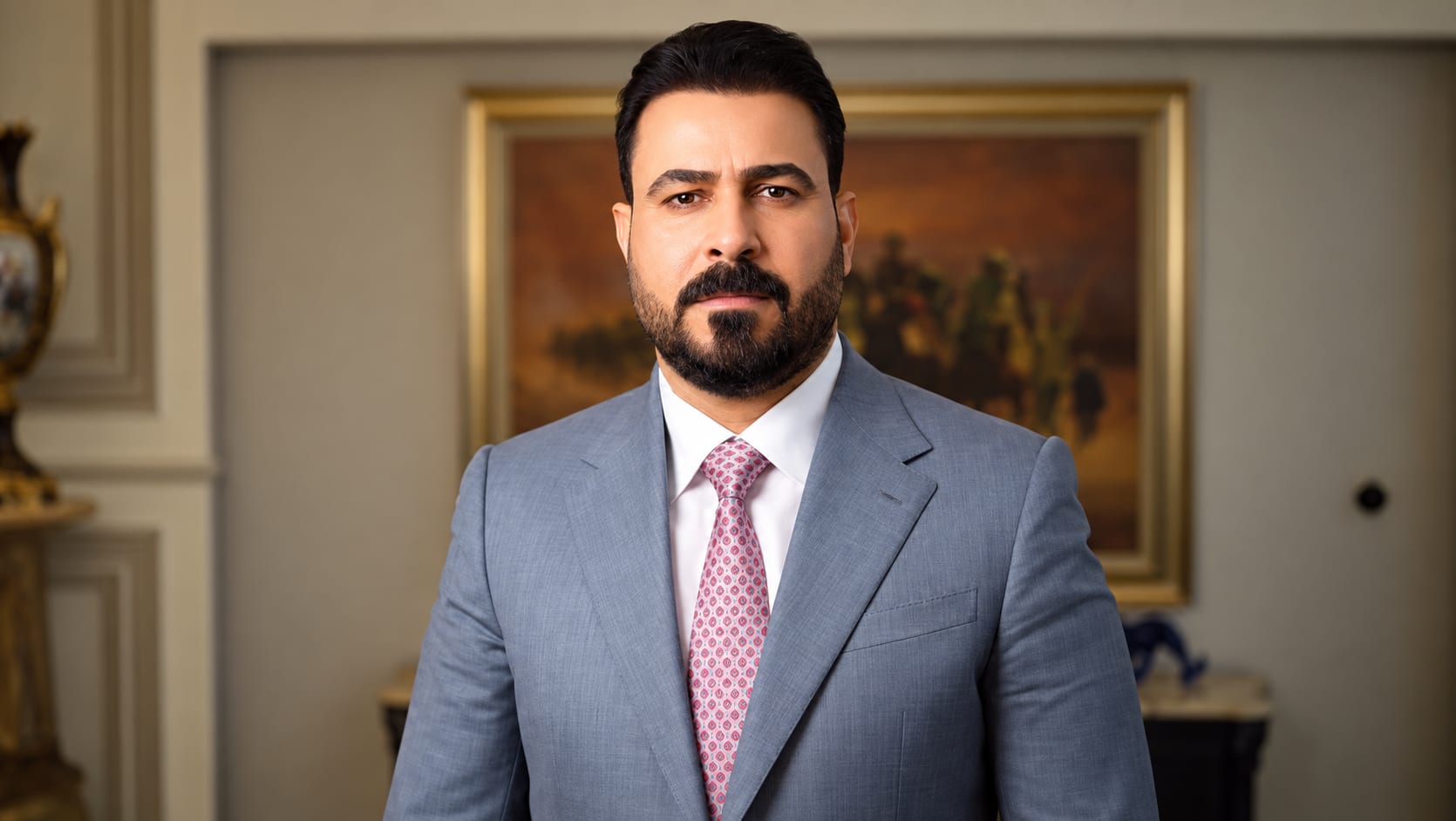
Iraqi President faces massive challenge
After holding talks with US President Donald Trump at the White House in July, Zaidi, a political neophyte who took office in May as a compromise candidate in Iraq’s fractious political system, promised to disarm the Iran-backed militias. But many of the militias have resisted such moves, and analysts say he faces a massive challenge to fulfil his pledge.
Victoria Taylor, former US deputy assistant secretary for Iraq and Iran says the withdrawal of US troops was “a major turning point” in the US-Iraq relationship that could allow the relationship to be less dominated by security issues. “The Iraq war really embodies many of the failures of the interventionist era of US foreign policy and for that reason, many Americans are eager to turn the page,” Taylor reasons.
However, Iran and the Iran-backed militias will view the US departure as a victory. Mansour contends that after promising democracy, state-building, and the end of dictatorship 23 years ago, the US legacy would be leaving behind a “fragmented Frankenstein state. But for many Iraqis, life is very difficult, and the government isn’t able to control its territory.”

Comments