Strikes may be coming to the video game industry

Shemar-Leslie Louisy / Our Today

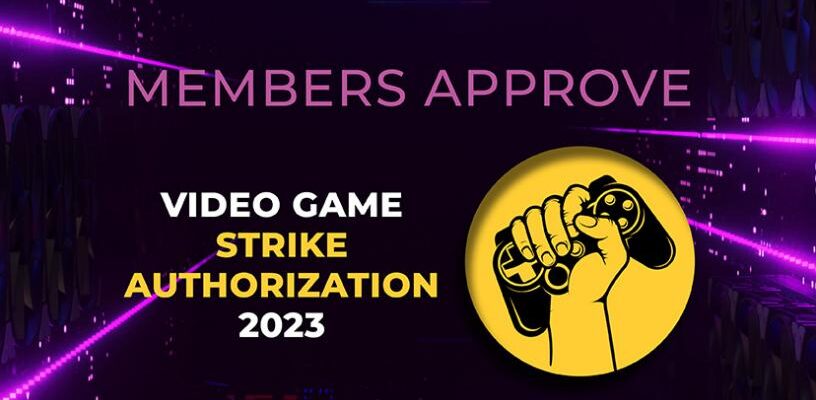
Members of The Screen Actors Guild-American Federation of Television and Radio Artists (SAG-AFTRA) have voted overwhelmingly in favour of a strike authorisation related to the Interactive Media Agreement governing their work in the video game industry.
This critical development comes after months of tense negotiations between the union and several major video-game companies.
With 98.32 per cent of members voting in favour of the strike authorisation, it is clear that the membership is determined to secure better terms and conditions for their work in the video-game sector. A total of 34,687 members participated in the vote, representing a significant 27.47 per cent of eligible voters.

This strike authorisation does not signify an immediate strike action. Instead, it empowers the union to use as leverage during ongoing negotiations with major video-game companies such as Activision Productions Inc, Blindlight LLC, Disney Character Voices Inc., Electronic Arts Productions Inc., Formosa Interactive LLC, Insomniac Games Inc., Epic Games, Take 2 Productions Inc., VoiceWorks Productions Inc., and WB Games Inc.
The negotiations, which commenced in October 2022, have hit a snag on several key issues that are of paramount importance to SAG-AFTRA members. These issues include demands for wages that can keep pace with inflation, safeguards against exploitative uses of artificial intelligence, and fundamental safety measures.
The next round of bargaining sessions is scheduled for September 26, 27, and 28. The union is hopeful that the overwhelming support for the strike authorisation will compel the video-game companies to make substantial concessions on the contentious issues that have thus far hindered progress.

SAG-AFTRA president Fran Drescher conveyed the sentiment of the membership, stating: “It’s time for the video-game companies to stop playing games and get serious about reaching an agreement on this contract. The result of this vote shows our membership understands the existential nature of these negotiations, and that the time is now for these companies — which are making billions of dollars and paying their CEOs lavishly — to give our performers an agreement that keeps performing in video games as a viable career.”
SAG-AFTRA national executive director and chief negotiator Duncan Crabtree-Ireland expressed frustration at the lack of meaningful engagement on critical issues, saying: “After five rounds of bargaining, it has become abundantly clear that the video game companies aren’t willing to meaningfully engage on the critical issues: compensation undercut by inflation, unregulated use of AI and safety. I remain hopeful that we will be able to reach an agreement that meets members’ needs, but our members are done being exploited, and if these corporations aren’t willing to offer a fair deal, our next stop will be the picket lines.”
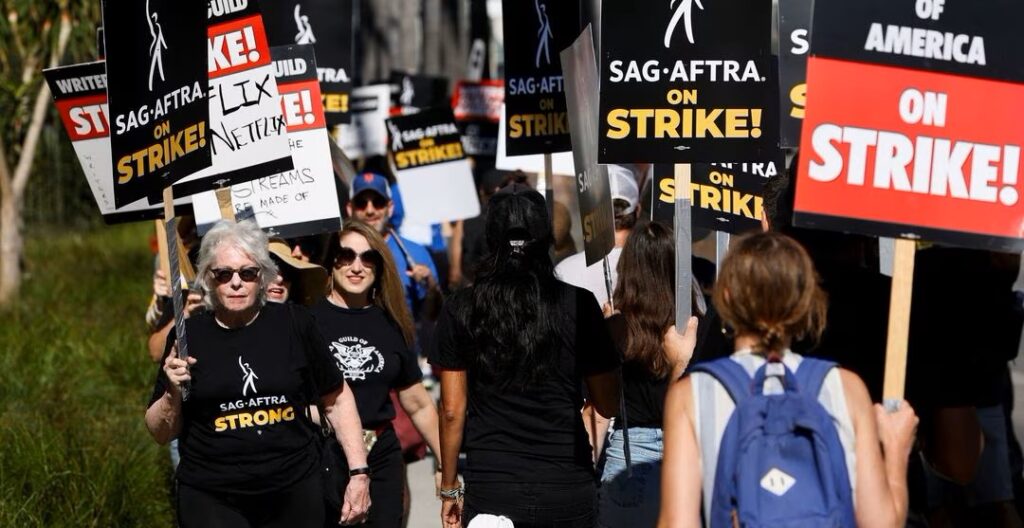
SAG-AFTRA chief contracts officer Ray Rodriguez emphasised the commonality of issues faced by those in the video-game industry and those in film and television, noting: “Between the exploitative uses of AI and lagging wages, those who work in video games are facing many of the same issues as those who work in film and television. This strike authorisation makes an emphatic statement that we must reach an agreement that will fairly compensate these talented performers, provide common-sense safety measures, and allow them to work with dignity. Our members’ livelihoods depend on it.”
The decision to initiate the strike authorisation vote was made unanimously by the SAG-AFTRA Interactive Media Agreement Negotiating Committee and National Board. Voting information was disseminated to eligible members on September 5, with the final deadline for casting votes concluding Tuesday at 5 p.m. PT.




Comments