
Pamela Redwood | Going digital must never mean erasing our history

/ Our Today
administrator
I have no objection to a nation embracing digital technology.
In fact, digitisation can make government services more efficient, improve access to information, reduce bureaucracy and preserve records in ways that were once unimaginable. But as we rush toward becoming a digital society, we must also be honest about the limitations and vulnerabilities that come with putting almost everything into a digital environment.
A nation must never become so dependent on technology that it loses the ability to function when that technology fails.
What happens when the digital system goes down?
What happens when there is a major cyberattack, a natural disaster, a prolonged power outage or a technical failure? What happens when critical government databases are corrupted, compromised or deliberately destroyed? And perhaps most importantly, what happens to our national history when the records that document that history exist only in digital form?
These are not hypothetical questions. Around the world, governments, businesses and institutions have experienced cyberattacks in which information has been stolen, encrypted, corrupted or destroyed. Technology can be incredibly powerful, but it is not infallible.
There is also a deeper concern: the preservation and integrity of history.
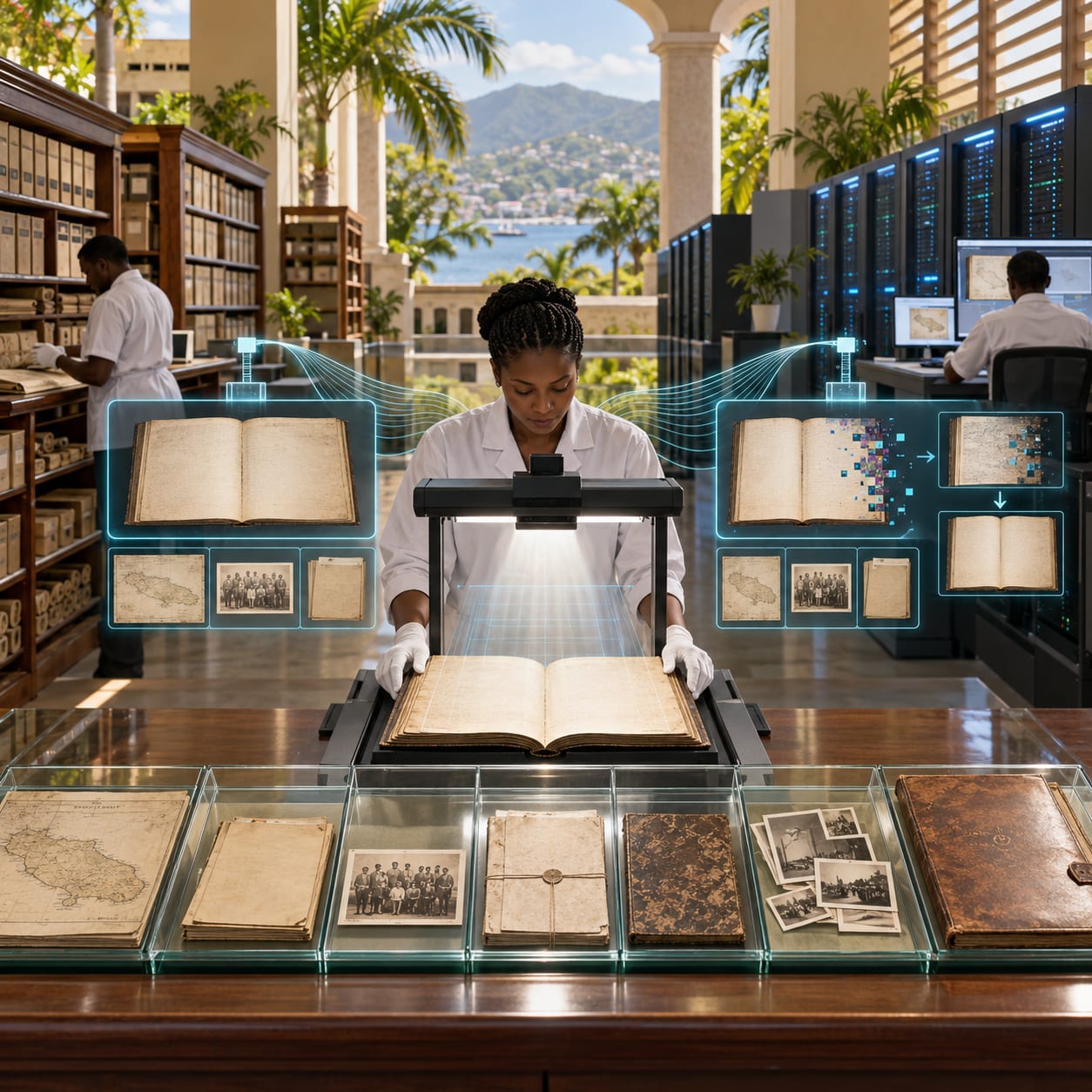
History is not simply a collection of old documents. It is the institutional memory of a nation. Birth records, land records, parliamentary proceedings, government decisions, court documents, historical research, cultural records, archives, maps and other official documents help future generations understand where their country came from and how it developed.
If such information exists only in digital systems, then we must ask who controls those systems, who has access to them, how changes are recorded, and whether there are independent copies that cannot be altered or erased.
Digital information can be manipulated. Records can be changed. Databases can be compromised. Information can disappear. A person examining the historical record decades from now may have no way of knowing that something was altered if there is no independent original against which to compare it.
That is why paper records still have a place in modern society.
This is not an argument against digitisation. It is an argument for responsible digitisation.

Critical national records should have multiple layers of protection. Digital copies should exist, but so should secure physical archives and independent backups. There should be geographically separated repositories, offline backups and strict systems for documenting any alteration to official records.
For particularly important national documents, the original physical record should not simply be destroyed because it has been scanned and uploaded to a database.
We must also recognise that cybersecurity is now a matter of national security. A sophisticated cyberattack does not necessarily have to steal information. Its objective could be to destroy it, alter it or make it inaccessible.
Imagine a scenario in which years of historical research, government records, land documentation or other critical information are wiped out. Reconstructing that information could take decades, if it can be reconstructed at all.
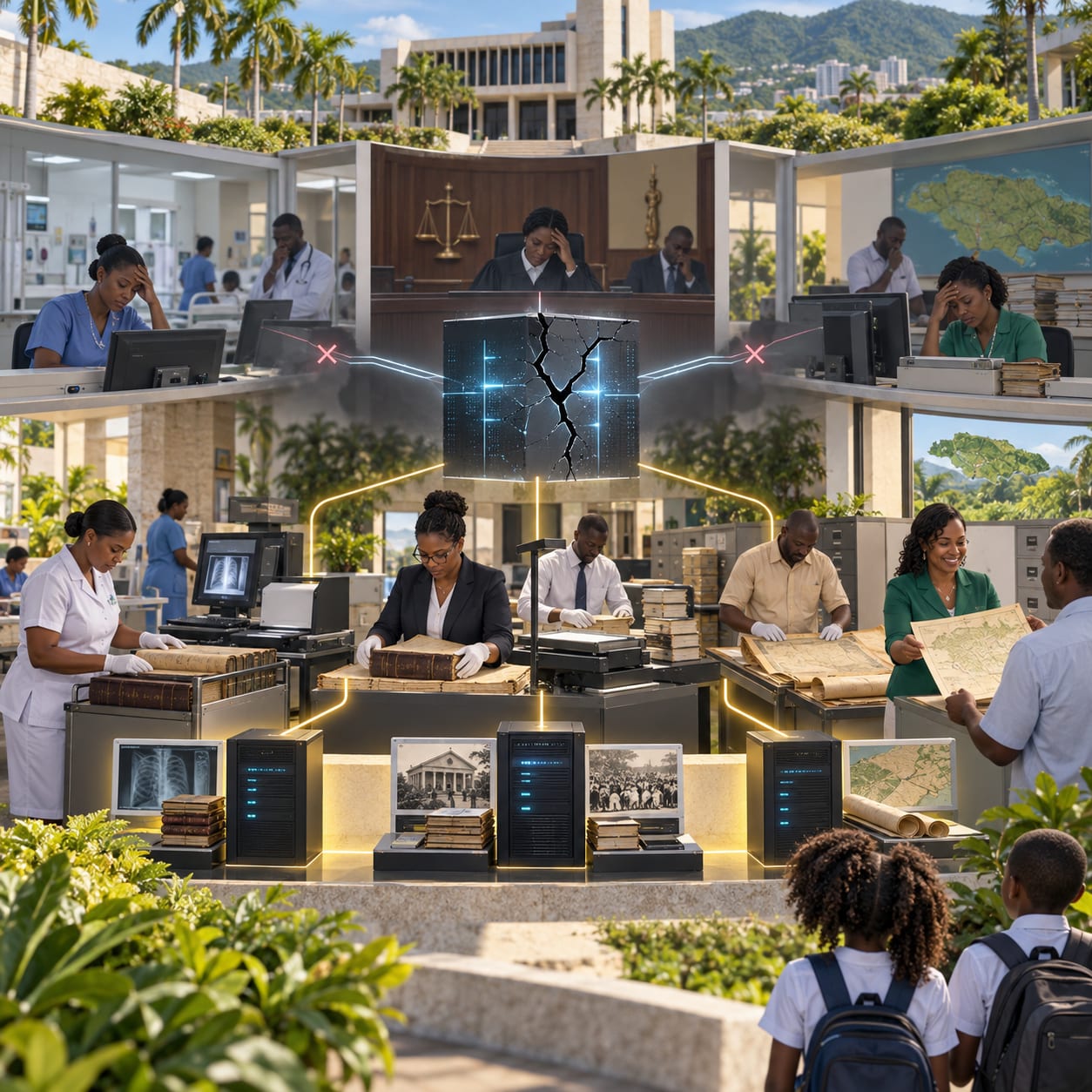
There is another danger that deserves serious consideration: digital dependence can create a single point of failure.
If an entire institution depends on one digital platform and that platform becomes unavailable, the institution can effectively become paralysed. A hospital may not be able to access patient information. A government agency may not be able to verify records. A court may be unable to access documents. A citizen may be unable to establish ownership or prove a transaction.
A resilient nation therefore needs redundancy.
We should not think of paper and digital systems as competing with each other. They should complement each other.
The question should not be, “Why are we still keeping paper records when we have technology?” The better question is, “Which records are so important that we cannot afford to lose them?”
Those records deserve the highest level of protection available.
As Jamaica modernises, policymakers must think beyond convenience and efficiency. They must think about resilience, cybersecurity, disaster recovery, historical integrity and the rights of future generations.
Going digital is progress.
But progress must never come at the expense of institutional memory.
We should embrace technology without becoming its prisoner. We should digitise without destroying the originals. We should modernise without creating vulnerabilities that could allow a hacker, a technical failure or a catastrophic event to erase pieces of our national story.

A nation that forgets its history is vulnerable to having its history rewritten.
And once the original record is gone, proving what really happened may become almost impossible.
Digital transformation must therefore be accompanied by digital resilience, physical preservation and independent verification.
Because technology may change with the times, but the responsibility to preserve the truth of a nation’s history must remain permanent.






Comments