Denton Smith | The world is not leaderless-it is differently led

/ Our Today
administrator
The world is not leaderless—it is differently led. What we are witnessing is not the absence of power, but its concentration in fewer hands, exercised less through moral vision and more through economic leverage, strategic silence, and quiet agreements that rarely face public scrutiny. Geopolitics feels unmoored because the old language of leadership—principle, ideology, solidarity—has given way to the colder dialect of markets, influence, and survival.
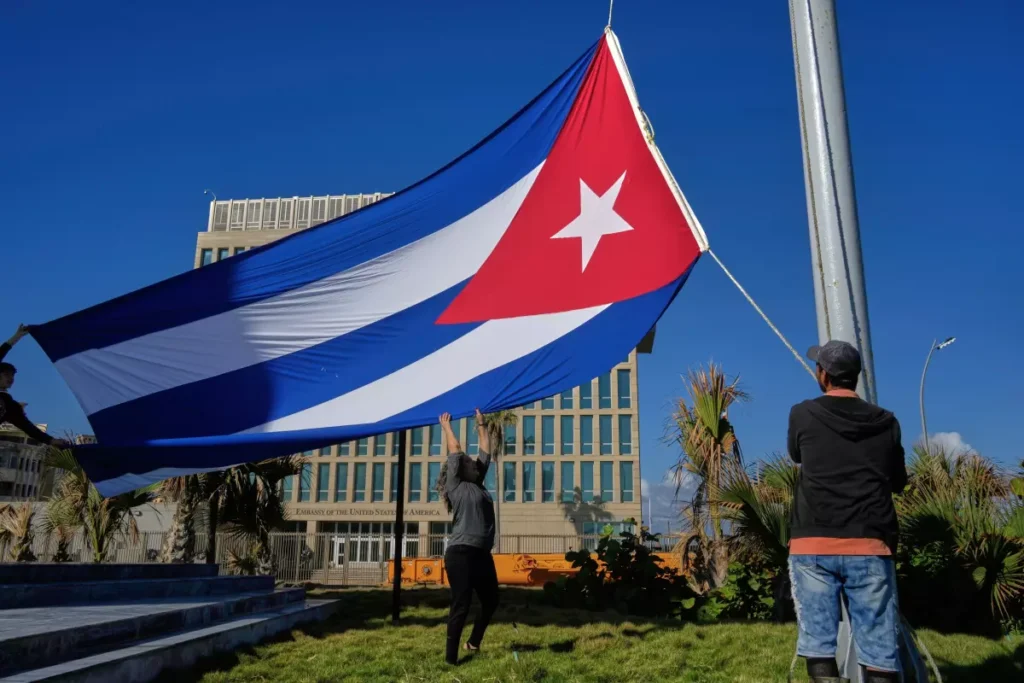
Nowhere is this tension more visible than in the sustained pressure placed on Cuba. Decades of economic isolation have not only constrained a nation but have also exposed the contradictions of a global order that speaks of sovereignty while selectively undermining it. What was once framed as a relic of Cold War politics now sits uneasily in a 21st-century world that claims to champion human rights and self-determination.
Yet history does not simply repeat itself—it evolves.
Across regions, there are signs of ideological reawakening. Grassroots movements, labour coalitions, student groups, and diaspora communities are reconnecting with traditions of collective struggle once thought to have faded after the Cold War. These are not replicas of past socialist movements; they are more fluid, less rigid, and often grounded in lived inequality rather than abstract doctrine. What binds them is not uniform ideology, but a shared resistance to systems perceived as unjust.
Renewed solidarity with Cuba is therefore symbolic of something larger. It reflects growing dissatisfaction with a global system where wealth accumulation often outpaces human development, and where smaller nations must navigate power structures they did not design. In parts of Latin America, Africa, and the Caribbean, economic independence and political dignity remain unfinished struggles.
This moment raises a critical question: is this the rise of global “people power,” or simply the rebranding of old resistance?

There is evidence for both. Digital connectivity has transformed mobilisation, allowing local voices to resonate globally within hours. Yet those same systems can diffuse, co-opt, or silence dissent. Power has evolved just as quickly as resistance.
Still, something fundamental is shifting. What we are seeing is not a unified global movement, but a convergence of discontent—a shared recognition that the current order is imbalanced. The language of justice and dignity is re-entering geopolitical discourse, driven less by states and more by ordinary people demanding accountability.
For countries like Jamaica, shaped by leaders such as Michael Manley, the question is especially relevant. The past shows that small nations can assert moral leadership even in polarised times. The present challenges whether that courage can be rediscovered in a more complex world.
Is this a rebirth? Yes—but not in the way history textbooks define it. It is quieter, decentralised, and still taking shape. It lives in protests, policy debates, and everyday organising. It may not yet overturn the global order, but it is strong enough to question it—and that is often where transformation begins.
Denton Smith can be contacted at: [email protected]


Comments