
Donovan White | Jamaica’s Recovery Is Taking Flight — One Room and One Seat at a Time

/ Our Today
administrator
Post Hurricane Melissa, the numbers reveal a destination rebuilding capacity, protecting demand, and preparing for renewed growth.
When Hurricane Melissa crossed Jamaica on October 28, 2025, it struck at more than buildings. It interrupted the carefully connected system that brings a visitor from intention to booking, from an airline seat to a hotel room, and from an airport terminal into the wider Jamaican economy. In the western parishes, where tourism is most concentrated, that system was hit hardest.
Ten months later, the honest story is neither that everything is back to normal nor that Jamaica’s tourism industry is failing. The more accurate story is one of disciplined recovery under extraordinary constraints and of an industry producing far more than its temporarily reduced capacity would normally allow.
Between January and August 2026, Jamaica welcomed 2.34 million visitors and earned approximately US$2.5 billion. That performance was delivered while about 30 per cent of the country’s room inventory remained out of service and scheduled air-seat availability was one-quarter below the comparable period. Arrivals and earnings are below 2025, as they must be when fewer rooms can be sold and fewer airline seats can be offered. But the more important fact is how much demand Jamaica has retained despite those limitations.
This distinction matters: tourism cannot sell a hotel room that is closed for reconstruction, and an airline cannot carry a passenger in a seat that was never placed in the schedule. The 2026 numbers are therefore not simply a measure of consumer appetite. They are also a measure of the physical capacity available to convert that appetite into travel.

The global skies are crowded with challenges
Jamaica’s recovery is taking place in a global aviation market that is growing, but under severe pressure. OAG reported 525.1 million scheduled seats worldwide in September 2026, about 2.5 per cent more than a year earlier. Yet the Caribbean remained slightly below the previous year, even as other regions expanded. Growth is uneven, planes are scarce, and airlines are constantly deciding where limited equipment can earn the strongest return.
The International Air Transport Association expects 5.1 billion passengers to fly in 2026, but it also expects airline profitability to be cut in half. Its forecast points to a 70 per cent rise in average jet-fuel prices, record load factors of about 84 per cent, and industry net profit of only US$4.50 per passenger. IATA also says the global plane-order backlog exceeds 18,000 and that supply-chain failures cost airlines at least US$11 billion in 2025. Put plainly: airlines have strong demand, too few planes, high operating costs, and little margin for error.
Tourism faces the same crosswinds. UN Tourism reported that international arrivals grew only 2 per cent in the first quarter of 2026 amid geopolitical tension, high transport and accommodation costs, and economic uncertainty. Extreme weather adds another layer of risk. For island destinations dependent on aviation, a climate event can remove rooms, disrupt airports, shake confidence, and cause airlines and tour operators to redirect customers within days.
That is exactly what happened after Melissa. The Dominican Republic authorised hundreds of additional regular and charter flights to accommodate travellers redirected from Jamaica and other affected destinations. The demand did not disappear; it moved to where rooms and seats were immediately available. Winning it back requires the same coordination with which Jamaica reopened its airports, restored utilities and roads, supported tourism workers, and returned properties to market.
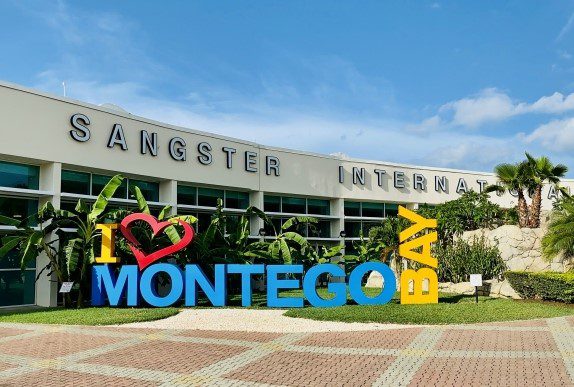
MBJ tells the clearest story
Sangster International Airport is the gateway through which the shock is most visible. Between January and June 2026, MBJ handled 1.91 million passengers, 26.7 per cent fewer than in the same period of 2025. That fall closely matches the 27 per cent contraction found in ICF’s analysis of MBJ’s top 15 origin-and-destination markets for January through July.
The gateway detail is revealing. Passenger volumes across those 15 markets fell from 1.98 million to 1.45 million, a loss of more than half a million passengers. Yet the passenger-weighted average fare rose only 1.6 per cent, from US$217.33 to US$220.75. New York, Toronto, Fort Lauderdale, and Washington accounted for 63.5 per cent of the net passenger loss. Miami was the only market to grow, up 9.6 per cent.
If high fares alone had caused the decline, lower-fare markets should have performed better. They did not. Toronto’s average fare fell 5.4 per cent while passengers declined 26.2 per cent. Chicago’s fare fell 8.1 per cent while traffic dropped 27.3 per cent. Washington’s fare fell 2.5 per cent while passengers fell 32.8 per cent. Apart from the exceptional Fort Lauderdale result, there is almost no consistent relationship between fare movement and passenger movement across the gateways.
The stronger explanation is constrained supply: fewer hotel rooms, fewer scheduled seats, disrupted packages, shortened booking windows and travellers temporarily choosing competing destinations. That does not dismiss concerns about affordability. Airfares matter to visitors and Jamaicans travelling for family, business, or emergency reasons. It does mean that broad discounting alone cannot repair a capacity problem.
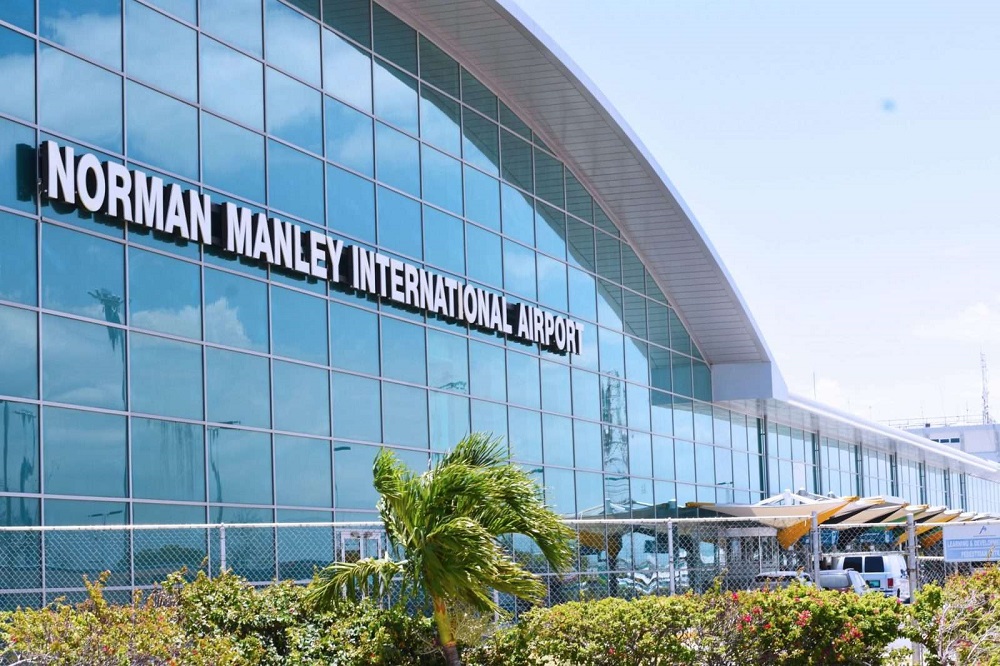
Two airports, two recovery roles
The published OAG schedule evidence reinforces this reading. Early in 2026, scheduled capacity at MBJ was running 20 to 30 per cent below 2025 during the first four months, with the deficit expected to narrow from May onward. At Norman Manley International Airport in Kingston, published capacity remained comparatively stable because its hotel catchment and airport infrastructure suffered less hurricane-related damage.
This is an important national advantage. Kingston has acted as Jamaica’s stable aviation anchor, serving business, diaspora, visiting friends and relatives, and leisure traffic while MBJ rebuilds. MBJ, by contrast, is connected to the large resort inventory of Montego Bay, Negril, Trelawny and the wider north and west coasts. When those rooms went offline, airline schedules followed. As those rooms return, MBJ has the larger rebound opportunity.
The direction is already visible: more than 160,000 seats flew from the United Kingdom and continental Europe for summer 2026. Continental European capacity into MBJ rose 45.9 per cent year on year, with service from Amsterdam, Frankfurt, Milan, and Lisbon. New links to Medellín, Bogota, and Guadeloupe, alongside expansion through established North American and European gateways, show that airlines still see massive commercial value in Jamaica.
Schedules, however, are not promises carved in stone; airlines revise them in response to bookings, plane availability, fuel costs, and competing opportunities. That is why the relationship between hotel reopening and airlift restoration is so direct. Verified reopening dates give carriers the confidence to commit aircraft and frequencies. Marketing then converts those seats, while strong load factors encourage airlines to keep and expand them.

Recovery has been a partnership, not a slogan
The progress since October has come from sustained coordination. The Ministry of Tourism activated a recovery task force and the Tourism Resilience Coordination Committee to align product rehabilitation, infrastructure, logistics, communications and support for workers and small businesses. The Jamaica Tourist Board moved quickly from crisis messaging to a multi-market recovery campaign, engaging airlines, travel advisers, tour operators, media, and consumers with accurate information about Jamaica’s readiness.
The Jamaica Hotel and Tourist Association and its member properties have carried the challenging work of assessment, reconstruction, rehiring, retraining, and reopening. Airlines, airport operators, attractions, ground-transport providers, cruise partners, communities, and thousands of tourism workers have each restored a link in the visitor journey. Recent reopenings have returned rooms and livelihoods together: Royalton Negril brought 573 rooms and 960 employees back into operation, while more properties in Trelawny and Montego Bay have been scheduled to follow.
This public-private partnership is not incidental to recovery; it is the operating model. A destination cannot market what is not ready, a hotel cannot fill rooms without airlift, and an airline will not add seats without credible demand and dependable inventory. The Ministry, JTB, JHTA and their partners have kept those decisions connected.

The next six months: capacity returning to meet demand
The outlook is positive because the principal constraint is now easing. Jamaica expects approximately 90 per cent of its room inventory to be available by December 2026 and full restoration by April 2027. That sequence aligns with the winter booking cycle and creates a practical runway for scheduled air capacity to return in stages.
The first effect should be a narrowing of MBJ’s year-on-year seat deficit as reopened resorts restore package allotments and airline demand from the United States, Canada, and Europe. The second should be better frequency and competitive choice in the largest gateways, especially New York, Toronto, Fort Lauderdale, and Washington, which together explain almost two-thirds of the passenger loss. The third should be expansion beyond the traditional base, using connections from Latin America and Europe to reduce overdependence on any single market.
Norman Manley International Airport in Kingston should continue to provide stability rather than dramatic hurricane-recovery growth. Its schedules were not reduced to the same degree, and its traffic mix is broader. MBJ should provide the acceleration. Because its fall was tied to room closures, the return of those rooms can unlock a corresponding recovery in seats, passengers, employment, and visitor spending, provided reopening dates remain firm and marketing stays ahead of the capacity curve.
There are risks! Fuel prices may keep fares elevated, aircraft and engine shortages may limit how quickly airlines can add service, and geopolitical events, weather, and economic uncertainty can change schedules abruptly. Jamaica therefore must compete for every plane deployment with reliable data, strong partnerships, targeted incentives where justified and disciplined conversion of the seats already secured.

A recovery measured in confidence
The fairest measure of Jamaica’s 2026 tourism performance is not whether it matched a year in which all rooms and seats were available. It is whether the country protected its brand, sustained demand, kept earning foreign exchange and created a credible path back to full capacity. On those tests, the progress is clear.
2.4 million visitors and US$2.5 billion in earnings, achieved with materially fewer rooms and seats, are not evidence of complacency. They are evidence of resilience and of the economic value preserved by coordinated action. They also impose a responsibility: every reopening must translate into jobs, local purchases, community opportunity and a stronger, more climate-ready tourism product.
Hurricane Melissa interrupted Jamaica’s trajectory, but it did not weaken the world’s desire to visit. The task now is to bring supply back into line with that demand. As room inventory approaches 90 per cent in December and 100 per cent by April, the airlift should follow. One room, one seat and one returning worker at a time, Jamaica is not merely reopening. It is building forward stronger.





Comments