The Wright Way | Facts, Constraints, and Confidence: Democratic Socialism and Jamaica in the 1970s

/ Our Today
administrator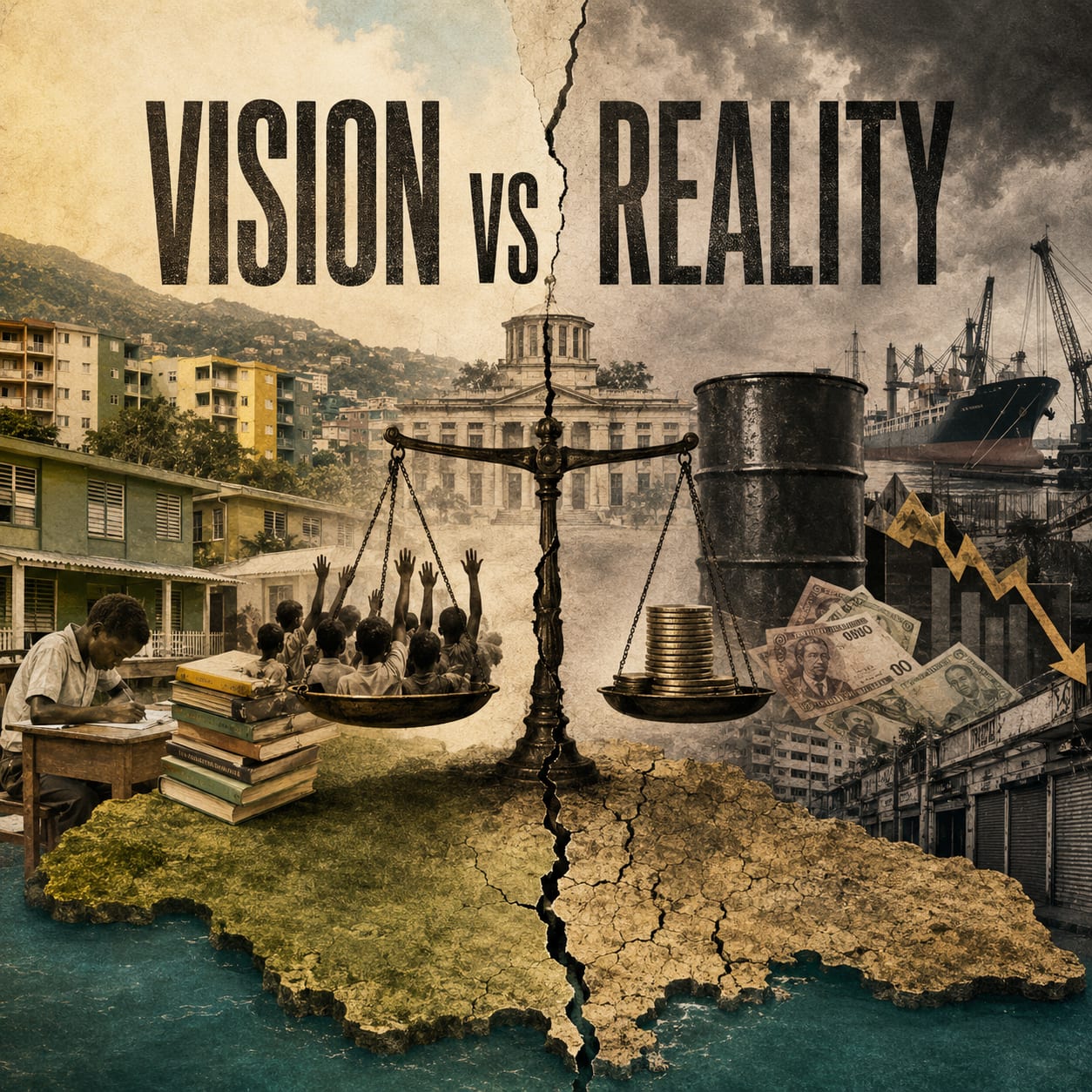
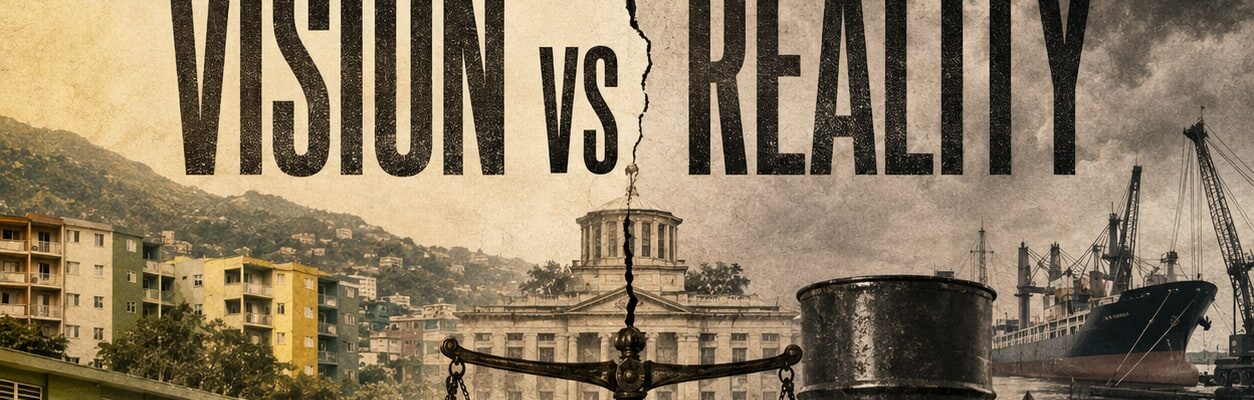
Jamaica’s turn toward “democratic socialism” in the 1970s is still debated today as if it were a straightforward moral referendum: either a courageous crusade for social justice betrayed by hostile forces, or a reckless ideological gamble that predictably imploded. Neither narrative offers genuine insight. The decade is far better understood as an instructive case study in how an ambitious governing vision—whatever its ethical merits—can be dismantled by fierce political polarisation, thin institutional capacity, punishing global economic shocks, and the delicate “confidence mechanics” inherent to a small, import-dependent economy.
Adopting this perspective does not mean romanticising the era, nor does it require branding it as an enduring cautionary tale against social reform. Instead, it demands separating intent from feasibility, and evaluating feasibility against the uncompromising realities Jamaica confronted.
A Hybrid Model Under Built-In Legitimacy Stress
Democratic socialism is often championed as a bridge: a political philosophy designed to deliver meaningful social justice and broaden economic inclusion while safeguarding competitive elections, civil liberties, and constitutional governance. In practice, the Jamaican project necessitated an expanded state role in social safety nets, economic planning, and collective bargaining—all while continuing to rely heavily on private capital, export revenues, vital imports (energy, food, capital goods), and sustained access to external financing.
In a polarised society, such a hybrid framework proves structurally precarious. It invites simultaneous attacks from opposing flanks: to ideological purists on the left, it resembles a compromised settlement that preserves too much entrenched capitalist power; to the domestic private sector and foreign observers, it looks like the opening stage of arbitrary state control. The resulting friction is far more dangerous than simple rhetorical dispute—it generates a persistent legitimacy deficit that swiftly translates into economic distress.
The Environment Matters: Confidence as an Economic Input
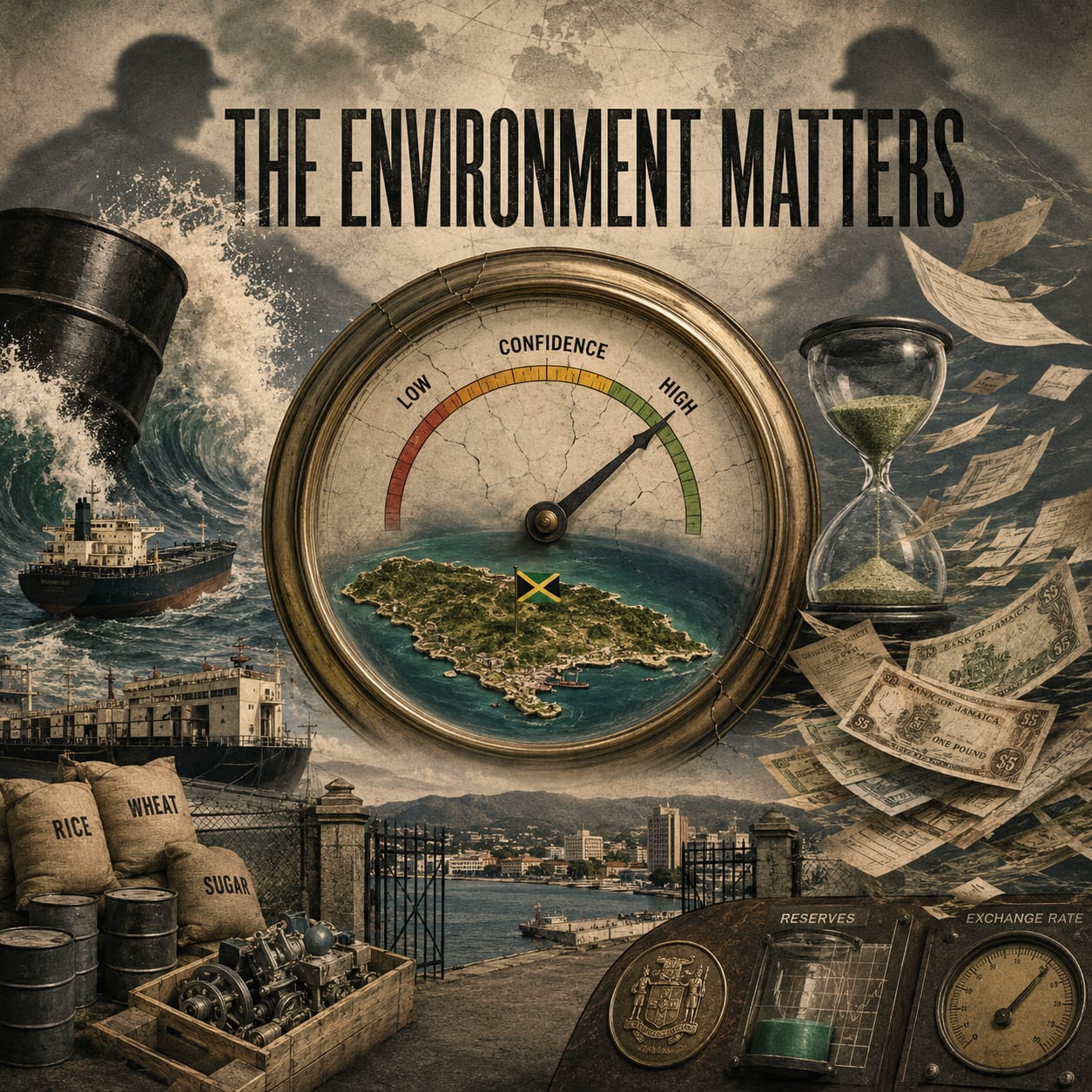
Even when social objectives are morally compelling, the macro environment dictates whether high-stakes policy shifts can be sustained. Jamaica entered the 1970s constrained by deep structural vulnerabilities that magnified market uncertainty:
● Heavy Import Dependence: Foreign exchange reserves were a day-to-day survival bottleneck rather than a theoretical macroeconomic metric.
● Severe External Shocks: The 1973 and 1979 global oil crises dramatically inflated the national import bill, fueling domestic inflation and widening balance-of-payments deficits.
● Intense Cold War Geopolitics: In an era defined by ideological confrontation, any governing initiative branded “socialist” drew immediate scepticism abroad and anxiety among domestic asset owners, regardless of democratic safeguards.
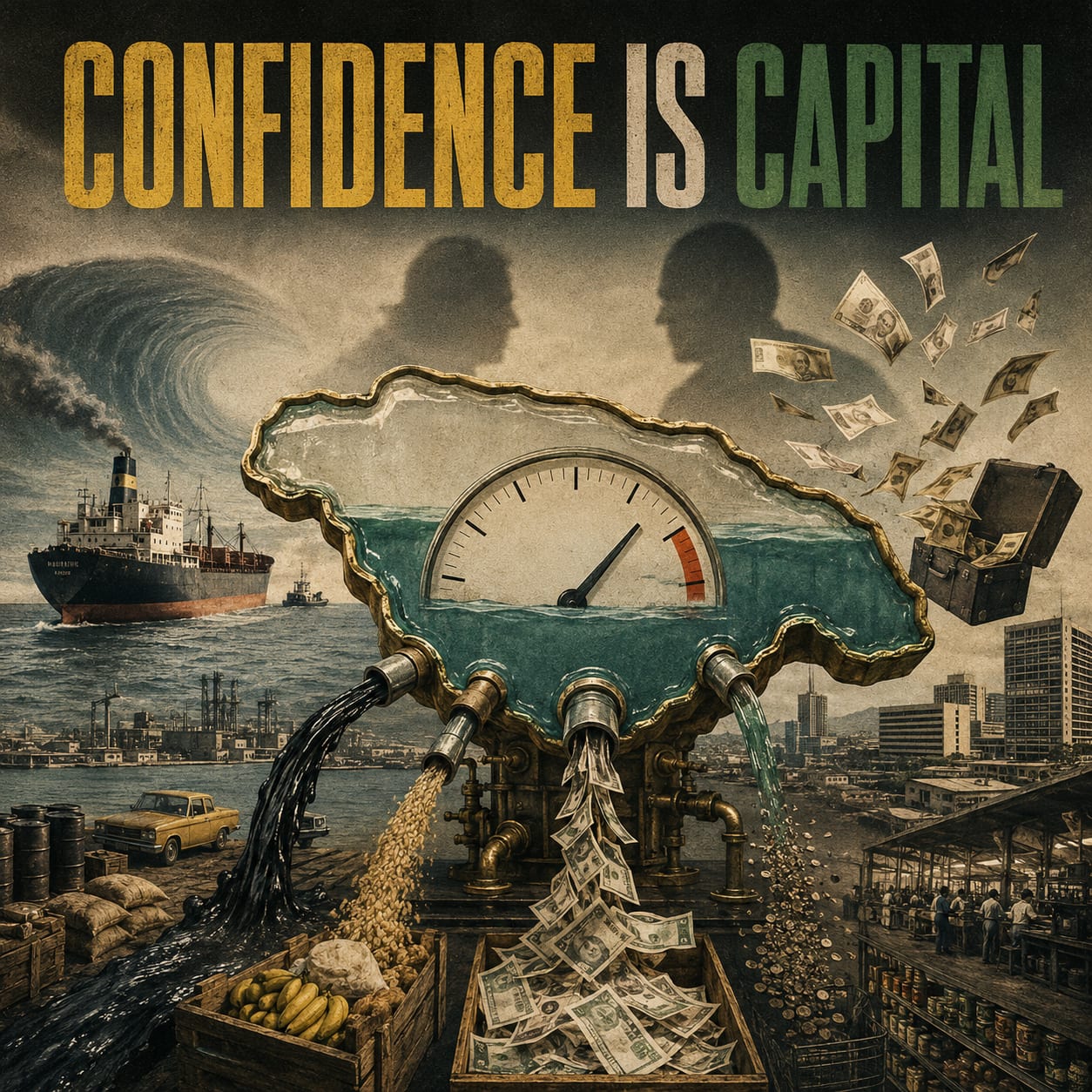
Within this volatile ecosystem, uncertainty quickly triggered concrete economic disruption: stalled capital investment, heightened hoarding of foreign currency, capital flight, rapid reserve depletion, forced import cutbacks, and soaring inflation expectations. A government need not nationalise broad swathes of industry to catalyse such reactions; it only needs to convince enough households and business leaders that property rules may shift unpredictably or that institutional stability is eroding.
This is why the historical debate cannot be resolved through moral arguments alone. The governing agenda faced an unforgiving confidence test. In open island economies, market confidence is not an abstract sentiment—it directly dictates whether currency reserves, capital flows, and exchange rates hold steady or cascade into systemic crisis.

Coalitional Fractures and the Cost of Mixed Signals
An equally critical vulnerability arose within the governing coalition itself. Transformational national projects demand meticulous alignment across the cabinet, party hierarchy, organised labour, the civil service, and key regulatory agencies. When competing factions diverge on the speed of reform, the posture toward domestic and foreign investment, or the trade-off between social redistribution and fiscal discipline, governance becomes erratic and public messaging turns discordant.
Conflicting signals carry a severe economic penalty. They encourage market actors to assume worst-case scenarios, dampening long-term investments. In a cash-strapped economy starved of foreign exchange, this crisis of confidence fed shortages, price surges, and sluggish growth—outcomes that in turn fueled deeper partisan street conflict.
This dynamic exposes the limitation of viewing the era strictly through the binary lens of “foreign destabilisation” versus “self-inflicted ruin.” Hostile external pressures and domestic policy missteps can—and did—coexist. Yet even an administration confronting intense international resistance can endure if its policy execution remains cohesive, predictable, and disciplined. When coalitional discipline crumbles, external adversaries do not need to orchestrate a collapse; the governing project bleeds stability from within.

Balancing Democratic Gains Against Economic Breakdown
A balanced historical ledger must account for both social achievements and macro breakdown.
On one hand, the period secured enduring social and democratic gains. It catalysed mass democratic mobilisation and civic consciousness, elevated foundational concepts of worker dignity and human rights, and permanently reshaped the national consensus on what citizens are entitled to demand from the state. Landmark strides were made in adult literacy, statutory minimum wages, and progressive welfare legislation.
On the other hand, the model suffered catastrophic macroeconomic and political breakdowns. These took the form of chronic balance-of-payments deficits, pervasive basic-good shortages, runaway double-digit inflation, widespread private disinvestment, and escalating political violence that ultimately forced the country into IMF structural adjustment programs. The historical problem was not that redistribution lacked moral legitimacy; rather, redistribution could not outrun the hard balance-of-payments boundaries of an import-dependent economy once domestic and external confidence collapsed.
The Structural Realities Behind the Debate
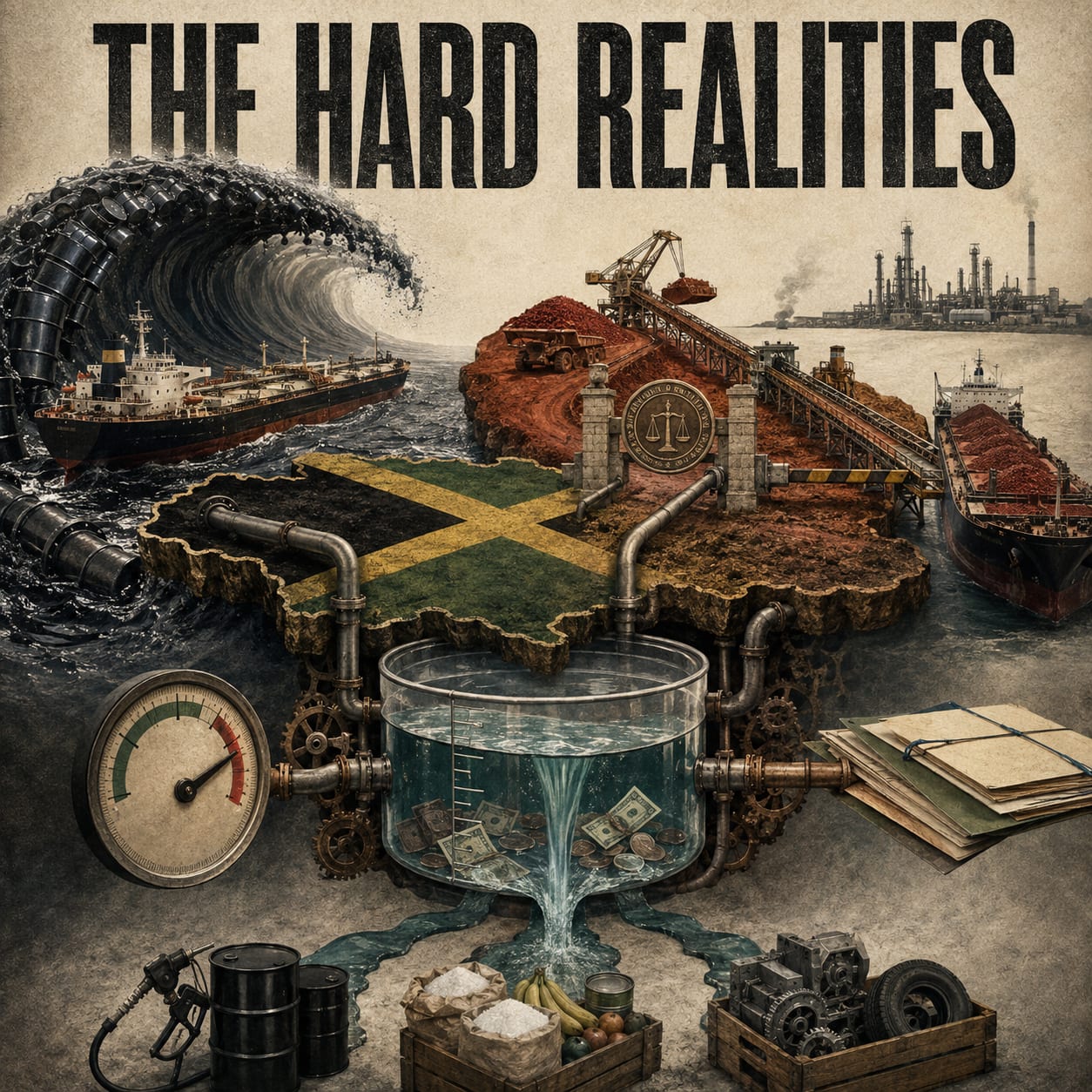
To move beyond partisan mythology, any credible analysis must ground itself in three hard economic facts:
1. Global Commodity and Energy Shocks: The OPEC oil spikes imposed staggering import costs on non-oil developing nations, severely straining the national treasury.
2. Bauxite Sector Friction and Revenue Volatility: The introduction of the bauxite production levy asserted national sovereignty and generated vital revenue, but heightened tensions with multinational mining conglomerates and dampened international investment sentiment.
3. Balance-of-Payments Fragility: Without substantial foreign exchange reserves, negative confidence shifts triggered rapid reserve flight, forcing emergency stabilisation agreements with multilateral lenders.
Conclusion: Ideals Are Not Self-Executing
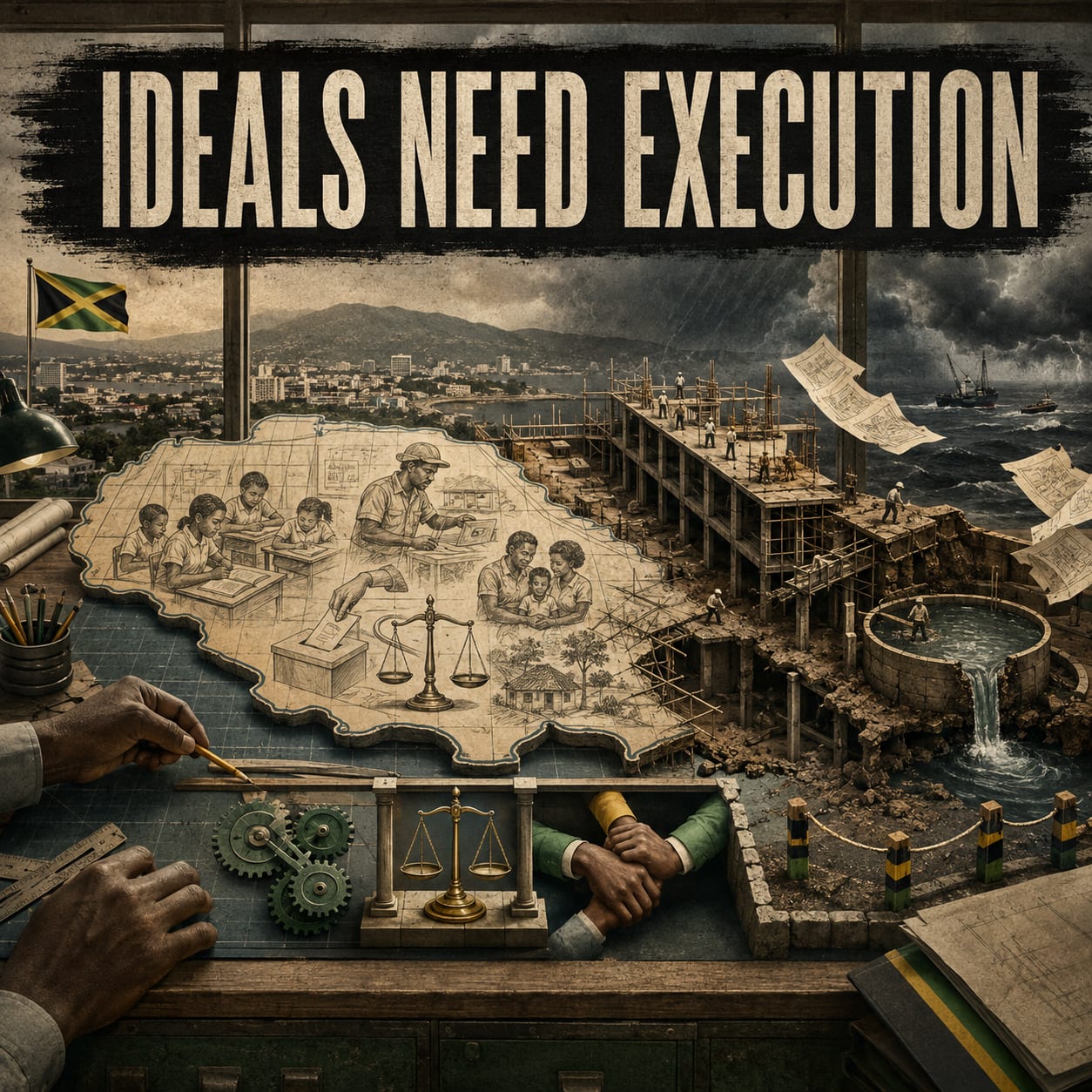
A rigorous evaluation of Jamaica in the 1970s yields neither nostalgic idealisation nor summary dismissal. Ambitious social reform demands rigorous technical design, disciplined execution, and realistic economic guardrails—particularly within small developing nations subject to volatile global markets and geopolitical friction.
Could democratic socialism have achieved a durable outcome under different management? Quite possibly—provided there were unambiguous operational boundaries regarding what would remain in private hands, a professionalised administrative apparatus, unified public communications, a genuine tripartite social compact, and strict fiscal sequencing to preserve macroeconomic equilibrium.
Ultimately, Jamaica’s 1970s expanded the Caribbean political imagination and demonstrated a deep commitment to social justice. Yet it stands equally as an enduring reminder that when market confidence evaporates faster than public institutions can deliver stability, even the most noble ambitions face rapid unravelling. In governing, moral ideals are not self-executing—and economic constraints are never optional.
Selected Archival & Research References
● Bank of Jamaica (BOJ): Historical statistical bulletins, monetary policy reviews, and balance-of-payments data (1972–1980).
● International Monetary Fund (IMF): Historical country staff reports, Stand-By Arrangements, and program documentation on Jamaica.
● World Bank: World Development Indicators (WDI) and historical economic country memoranda.
● UN Economic Commission for Latin America and the Caribbean (ECLAC): Comparative historical analyses of Caribbean post-colonial development.






Comments